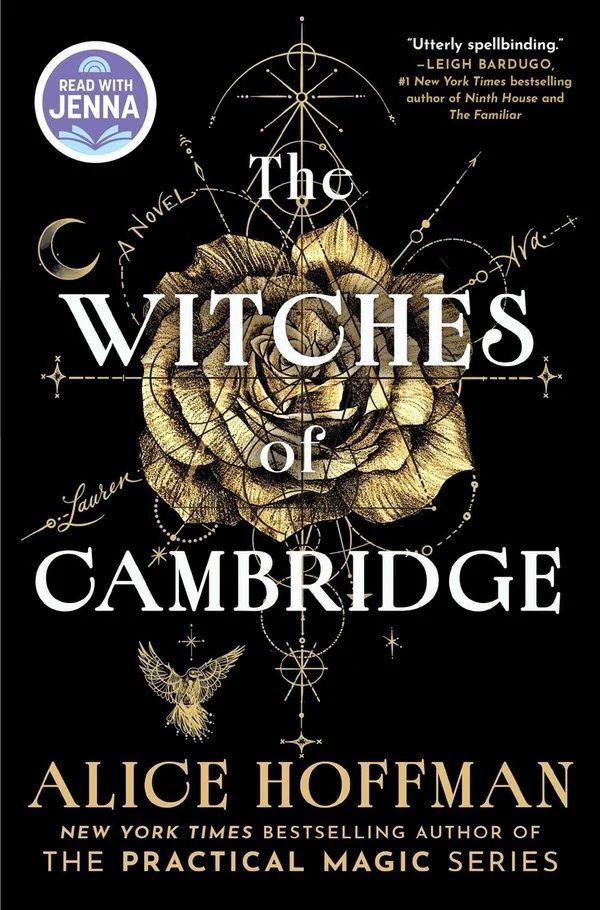
The Witches of Cambridge by Alice Hoffman is a 416 page novel published on 2026, the first in a planned series.
Genre
Fantasy: Magical Realism
Description
The brand-new series from the bestselling author of Practical Magic, following two brilliant young women in 1950s Cambridge, Massachusetts, as they become immersed in a mysterious secret group of witches at Radcliffe known as the Lilith Society.
Once upon a time, women were drowned in the river and the only witnesses were the crows in the trees. The Puritans blamed Eve for the sins of the world. That was when we began to meet in the name of Lilith, Adam’s first wife—banished for refusing to do as she was told.
We Fly Together…
By the 1950s, Cambridge, Massachusetts feels far removed from the legendary witch trials that marked its early days as a colony. Ava, a bright young woman from a small town in Maine, arrives for her first year at Radcliffe College. There, she meets Lauren, her opposite in every way—the wild and brazen daughter of a wealthy and well-established Cambridge family. But the two have more in common than they think. Both are recruited by the Lilith Society, a secret organization of witches at Radcliffe dating back to colonial times. As they learn more about their legacy, Ava and Lauren form a close bond that is put to the test as they learn to navigate their new power, friendship, and love.
While Radcliffe seems like a safe haven, the shadow of McCarthyism looms large, an ever-present threat to the flourishing creative and intellectual life in Cambridge. And as girls from the Lilith Society begin to go missing, Ava and Lauren realize the witch trials of the past may not be as deeply buried as they once believed.
Opening Line
Dear Reader,
Once upon a time, women were drowned in the river and the only witnesses were the crows in the trees.
My Thoughts
What happened here? Did they say, “The marketing power behind your name alone is enough, you can go ahead and ignore all the rules for writing”?
This book is maybe 10% infodumping, 75% telling instead of showing, and 15% of actual scenes playing out for the reader. It spans the course of four years while the two main characters attend Radcliffe College in the 1950s, but don’t think you ever actually accompany them to a single class. They live at Lilith House, where magic is taught at Sunday meetings, but you’ll never actually see a single one of these meetings as it happens. Instead we are treated to only a list of classes they are enrolled in, are told what kind of things they learn in their witch meetings. And if the severe paucity of actually showing readers a scene as it unfolds isn’t bad enough, there is very little plot driving this story.
There is quite a bit of repetition of information, several characters appear on page and are given a name solely for the purpose of very quickly disappearing or dying or otherwise attempting to set a tense and mysterious tone. There are no rules to the magic, the author can just spew out another bit of whimsy ad hoc, making it feel fairly meaningless. These witches are polydactyl, pointy-toothed, and black-blooded–but good lord, don’t get me started on the characters who have apparently never shed blood in their lives, or the one who has never, not once, looked at her own menstrual blood.
As far as the earlier timeline with “the first witch of Cambridge”, as told through letters read by our 1950s protagonists: novels that highlight the horrors of the witch trials at the hands of Puritans and draw parallels with modern day women and/or McCarthyism are a dime a dozen these days. Many of these books are beloved, but in a publishing world now oversaturated with them, you have to make sure yours really offers something new and exciting to the effort. I’m not sure this one did quite enough of that.
A note on the audiobook: I found Mena Suvari’s voice during the narration very pleasant, but her performance of the dialogue for almost every character made them all sound absolutely insufferable, just the worst identical-sounding bunch of buttholes. I hated nearly every one of them because of this. I did find myself thinking that, had I read certain lines (not limited to just dialogue) on the page in a manner that seemed more appropriate to me, they would have hit different.
I just…I can’t wrap my head around someone who has written such well-performing novels in the past producing THIS. But it’s Goodreads ratings aren’t terrible, so I guess the witchy vibes alone were enough for some people. Just not this people.

