
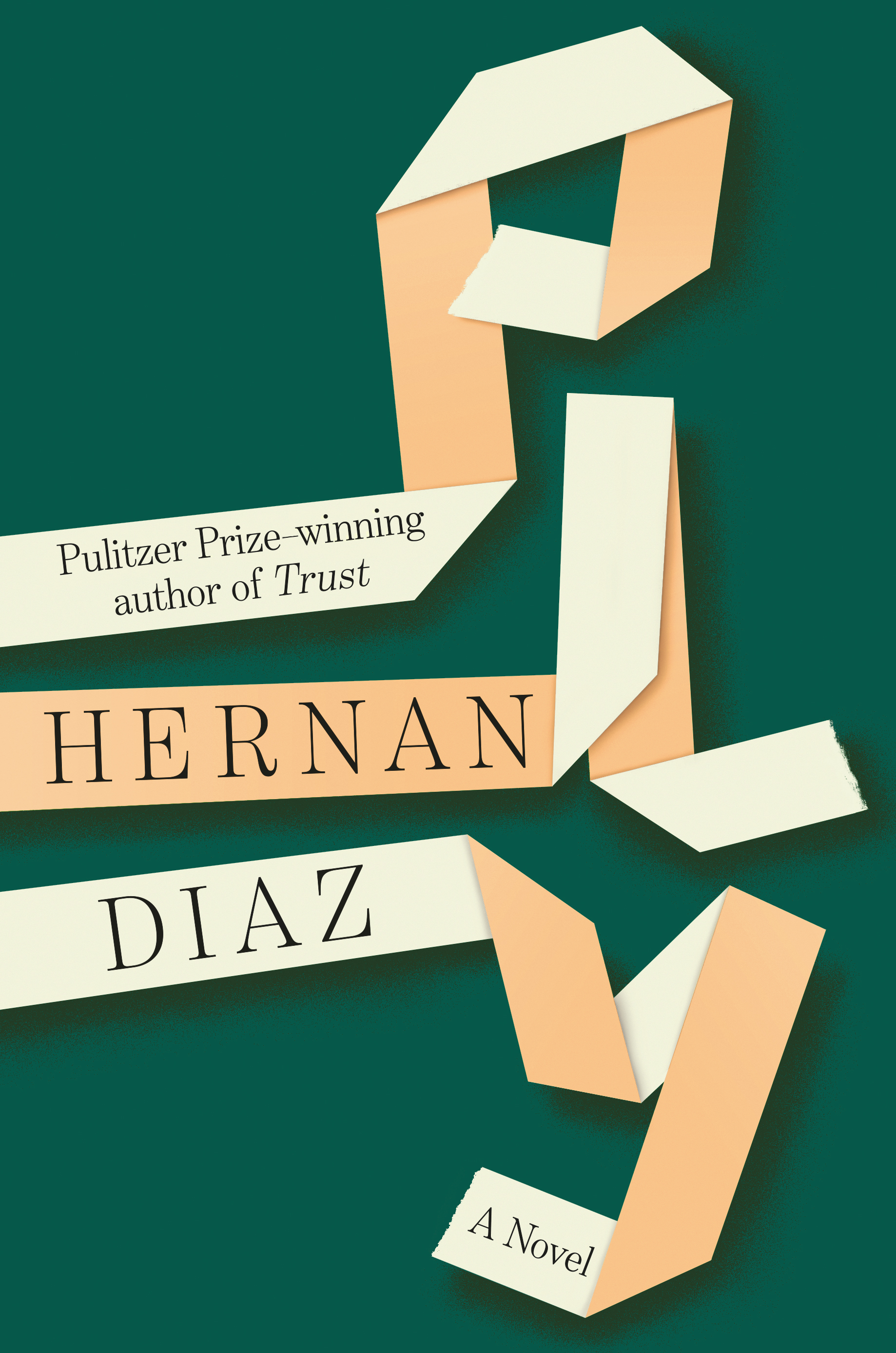
Ply by Hernan Diaz is a 464 page standalone novel published in 2026 by Riverhead books.
Genre
Science/Speculative Fiction, Literary Fiction
Description
The Pulitzer Prize–winning author of Trust turns to the future with a novel that examines the place of technology in the American imagination
Centuries from now, at the dawn of a historical epoch filled with both uncertainty and promise, an orphan is adrift in a city on the brink of a great transformation. The state has been dismantled, and humans are reinventing social bonds and learning new ways to coexist with nature. Following a childhood defined by loss, survival, and found family, the orphan grows up to become a “pincher,” someone who steals electricity from the grid to sell it on the black market. It’s a high-risk life, one that brings her into a rich art and music scene where she powers underground concerts. It also leads her to a colossal scientific invention that could change the very fabric of reality.
After rewriting America’s past with his two previous novels, Hernan Diaz defies expectations with his third and gives us a breathtaking glimpse into the future. A major achievement from a major contemporary writer, Ply questions the place of technology in the American experiment with a plot that grabs both heart and mind. It is a novel of ideas built from a story of people. Combining Dickensian odyssey, family drama, and scientific thriller, Ply poignantly charts the tenuous boundaries of selfhood and the distance that inevitably stands between us and those we love.
Opening Line
Even at night, the bridge throws a shadow on the river–a black lane where the otherwise shimmering waters seem to deepen.
My Thoughts
This book was okay, but nowhere near the 5 star perfection I found the author’s previous novel, Trust, to be.
The story follows an unnamed character in the distant future when civilization has pretty much collapsed. She gets by as a pincher, a dangerous role that has her stealing electricity from the power grid and selling the use of her juiced up equipment to power events such as concerts. A scientific researcher reaches out to her explaining that they have a machine that could do incredible things, if only it were provided with enough power.
I really just wasn’t feeling the first half of this book. It’s very bleak, I didn’t much care for any of the characters, and some of them I just didn’t understand (were they supposed to be satirical representations of people?) And at that point, there was no story keeping me interested (in fact, the inciting incident doesn’t actually happen until the very end of this first part of the book). But I read some reviews in which people said they had been hooked by the first half but then disappointed by the science-heavy second, and so I wondered if the opposite might be true for me.
And thankfully, that was the case! I found the second half of the story MUCH more engaging. Eventually, the cleverness behind the author’s choices (such as with changing POV at the halfway mark) become clear, which I thought was great. The last, I don’t know, 20% or so of the story is what had me flipping pages without wanting to stop. For a while I thought it might actually bump my rating all the way up to 4 stars. But then the ending didn’t leave me all that satisfied, and so 3.5 stars is my final rating.

