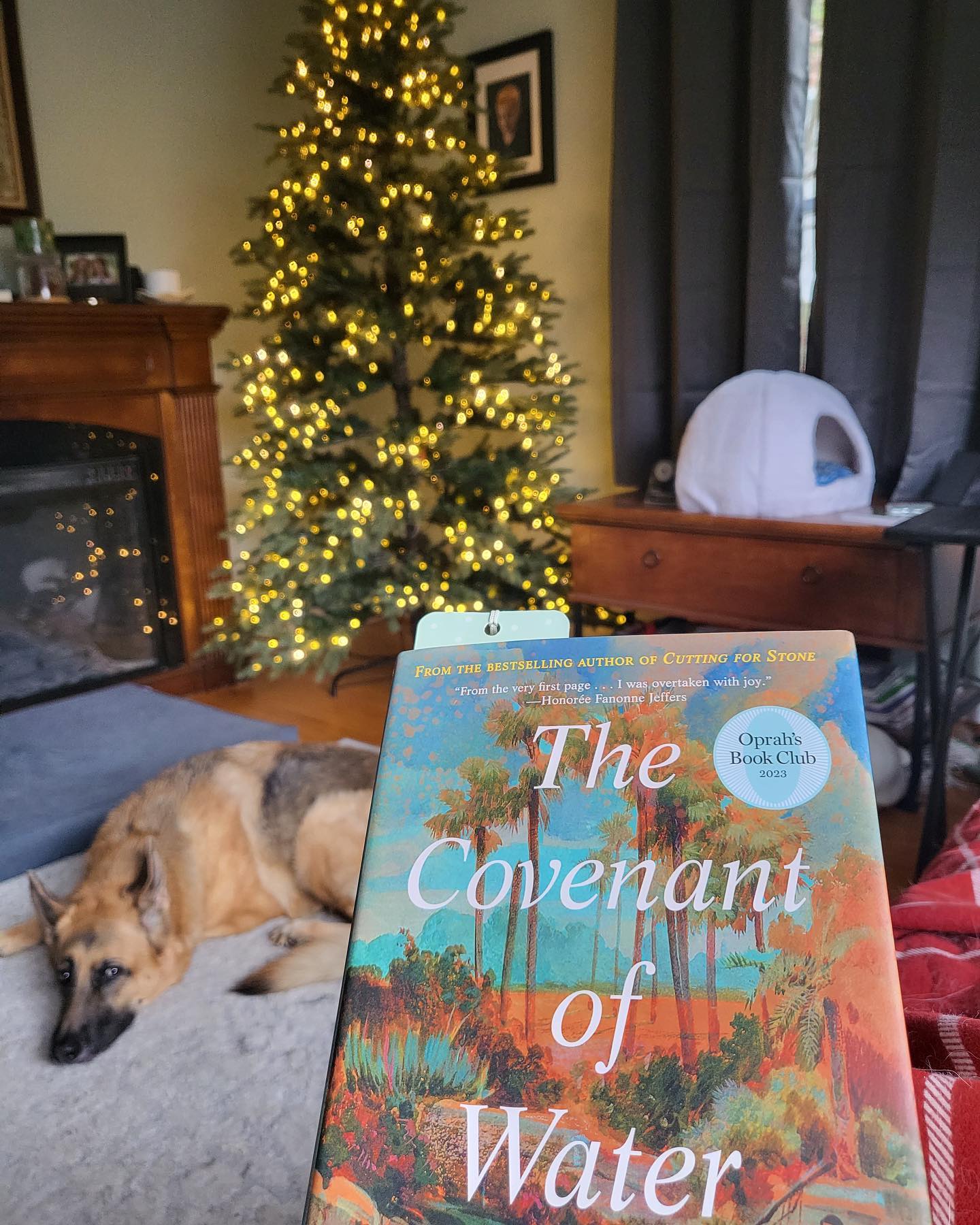
Book Review: THE COVENANT OF WATER by Abraham Verghese

THE COVENANT OF WATER by Abraham Verghese is literary historical fiction. It is a long book that is in no hurry to get where it’s going, but if you just sit back and relax, there’s much beauty to enjoy along the way. If you require your books to be plot-driven and action packed, look elsewhere. If you prefer your reads constructed around realistic characters and their loves, griefs, sacrifices and ambitions, then treat yourself to the family saga told through evocative writing here.

The story follows three generations of a family in India over the course of the twentieth century. The crux is that there seems to be an inherited condition in the family, and there is hope that someday someone will figure out what it is and how to treat it. Alternate sections of the book tell of a Scottish surgeon who joined the Indian Medical Service; his story and that of the afflicted family eventually come together, but not in the ways you might expect.

Verghese expertly summons forth a strong sense of place and time, and readers find themselves inserted into daily life for Saint Thomas Christians in the part of India that eventually became Kerala. Sociopolitical issues, such as India’s caste system, are addressed in a adroit manner.

Some readers are turned off by the book’s many graphic surgical scenes, though I personally found them of great interest–which is no surprise, since my husband has had to repeatedly ask me to stop sharing stories from my job at the hospital with him. Different strokes for different folks!
Bookshop

Bookstagram

Goodreads

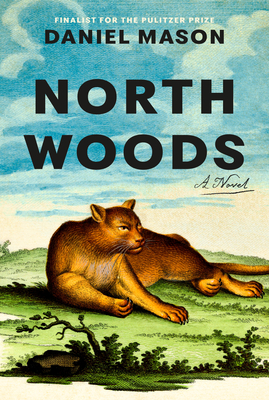
Book Review: NORTH WOODS by Daniel Mason

Sometimes, overwhelmed, she retreats into the forests of the past. She has come to think of them as her private Archive, herself an Archivist, and she has found that the only way to understand the world as something other than a tale of loss is to see it as a tale of change.

The gorgeous, lyrical prose of North Woods by Daniel Mason transports readers to a parcel of land and shows them the changes it undergoes over the course of centuries. A love poem for nature, it teaches of the land’s native flora and fauna, as well as how various outside seeds, spores, insects, and microorganisms make their way there and work changes upon it. Each vignette tells of the succession of people who find their way onto this land, live out their messy lives there, and leave their own indelible marks.

Interspersed with fictional primary accounts such as letters, songs, and speeches, we get peeks into the lives of several generations of people. There are the lovers who flee their Puritan Massachusetts colony to make a life for themselves in the woods, the woman and her child taken captive by native peoples, the escaped slave making her way north to Canada. There is the ex-soldier apple orchardist and his twin daughters, and the landscape painter harboring an illicit love in his breast (“Nature doing her best to draw me into her cloak of melancholy, but I have the memory of my friend”). The robber baron with dreams of a hunting lodge, the vulnerable woman who accidentally invites danger to her home, and the schizophrenic whose hallucinations might be more than they seem (“Diabolical tools, a ruptured earth, words which froze in winter; were it a poem, not a disease, she might find it fascinating”). The amateur historian looking to dig up the past. And then there is the wildlife that makes the place its home in between the people. Sprinkled amongst the stories are love, lust, murder, art, and more.

This literary novel is not for readers looking for fast-paced plot driven stories. I had to take my time reading each line, allowing myself to fully absorb the beauty of it all. And I loved every minute of it!

Bookshop

Goodreads

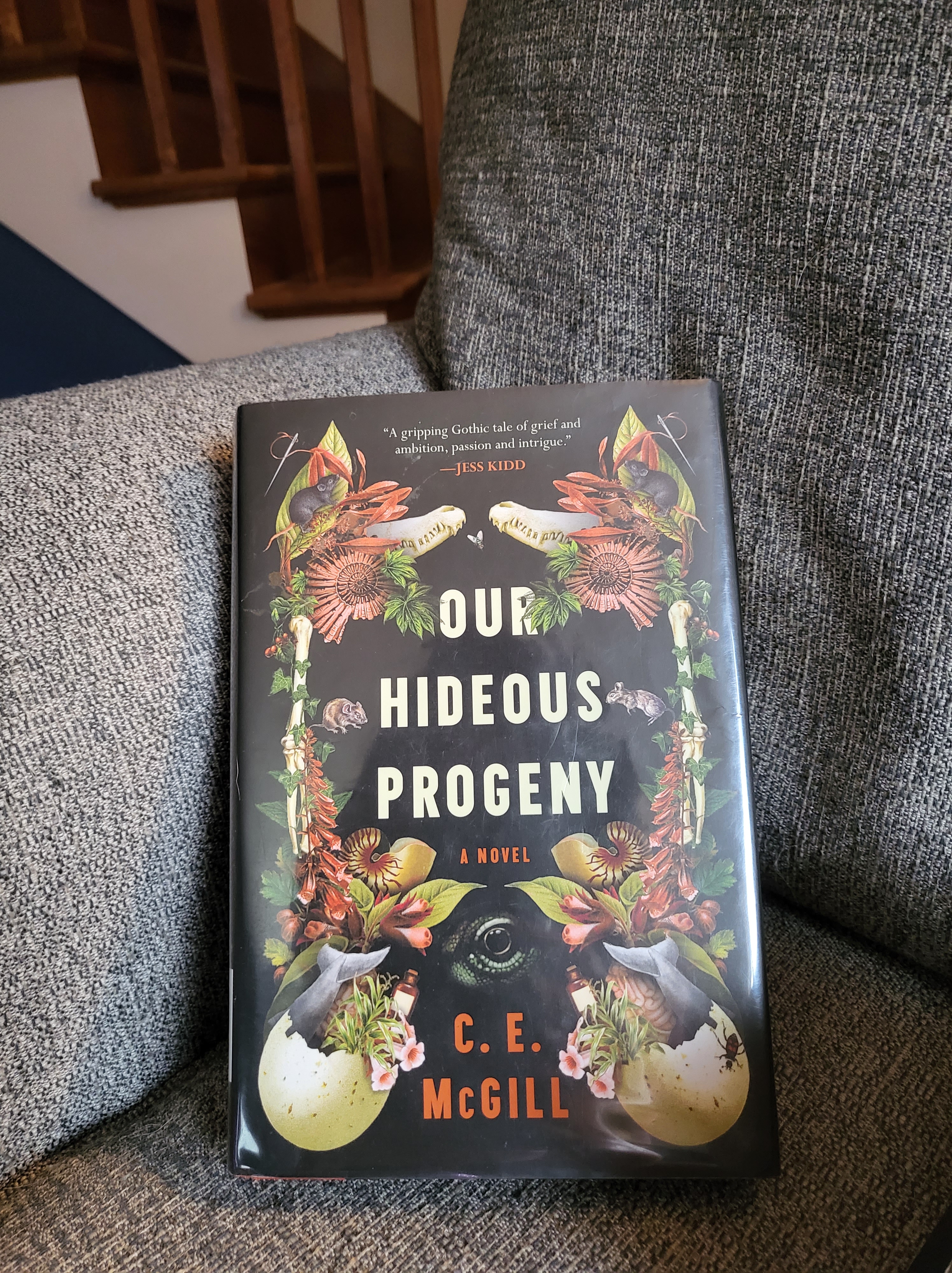
Book Review: OUR HIDEOUS PROGENY by C. E. McGill

Likely capping off my spooky season reading, this is OUR HIDEOUS PROGENY by C. E. McGill.

But I have never been a sensible soul. I have only ever, always, been angry.

In the mid-nineteenth century, Mary and her husband are scientists with particular interests in fossils and prehistoric creatures. As a woman (and a bastard), Mary has to work twice as hard to even attempt to be acknowledged in the field. Through poor decisions on her husband’s part, they find themselves at risk of losing the respect of the scientific community, as well as in great financial debt.

That is when Mary finds the notes of her great uncle, Victor Frankenstein.

“One cannot afford principles, if one is trying not to drown.”

According to the author’s note, they first pitched this story idea to their academic advisor as, “Frankenstein, but, like, with dinosaurs?” And I enjoyed it very much! It’s Gothic, concerns itself with academics in Britain’s scientific community in the Victorian era, deals with grief as well as caring over credibility, and is full of feminist rage. Although she is married to a man, Mary also develops romantic attachments to women. And, oh, how I adored that Creature! My only complaint would be that the pacing seemed a bit off, with things dragging a bit in the middle. Overall, I loved it!

It will not have been for nothing, I wanted to cry, no matter what happens-don’t you see? Don’t you see? Because it is already worth something. It is worth something, even in the dark. Even if no one else ever loves it but me.

Bookshop

Bookstagram

Goodreads

Book Review: HOMECOMING by Kate Morton

“Homecoming” by Kate Morton is literary fiction featuring dual timelines, with a touch of mystery and a dash of family saga.

“Home is where the heart is, and the heart can be a dark and damaged place.”

In 1959, a family in Australia is found dead under suspicious circumstances, the youngest child missing. In 2018 a woman is just learning about this family history that her grandmother wanted to keep secret from her. Not everything was answered satisfactorily back then, but can she put all the pieces together now?

“There was no clear corollary between the two, and yet the first and firmest human addiction is to narrative. People seek always to identify cause and effect and then arrive at meaning…”

The overall story was pretty good (the mystery, the family tensions, the relationships), but honestly the choice to present much of the earlier timeline as a true crime book being read by characters within the story made for some boring reading. It wasn’t until around page 400 that things became more engaging.

“There was a truth observed by all good preachers, leaders, and salesmen: tell a good story, tell it in simple language, tell it often. That’s how beliefs and memories were formed. It was how people defined themselves, in a reliance upon the stories about themselves that they were told by others.”

Decent story, good prose, presentation was a swing and a miss (for this reader, at least)

Bookshop.org

Bookstagram

Goodreads