Gifted & Talented by Olivie Blake is a 512 page standalone novel published in 2025 by Tor Books.
Genre:
Contemporary Fantasy
Synopsis:
From the New York Times bestselling author of The Atlas Six comes the story of three siblings who, upon the death of their father, are forced to reckon with their long-festering rivalries, dangerous abilities, and the crushing weight of all their unrealized adolescent potential.
Where there’s a will, there’s a war.
Thayer Wren, the brilliant CEO of Wrenfare Magitech and so-called father of modern technology, is dead. Any one of his three telepathically and electrokinetically gifted children would be a plausible inheritor to the Wrenfare throne.
Or at least, so they like to think.
Meredith, textbook accomplished eldest daughter and the head of her own groundbreaking biotech company, has recently cured mental illness. You’re welcome! If only her father’s fortune wasn’t her last hope for keeping her journalist ex-boyfriend from exposing what she really is: a total fraud.
Arthur, second-youngest congressman in history, fights the good fight every day of his life. And yet, his wife might be leaving him, and he’s losing his re-election campaign. But his dead father’s approval in the form of a seat on the Wrenfare throne might just turn his sinking ship around.
Eilidh, once the world’s most famous ballerina, has spent the last five years as a run-of-the-mill marketing executive at her father’s company after a life-altering injury put an end to her prodigious career. She might be lacking in accolades compared to her siblings, but if her father left her everything, it would finally validate her worth—by confirming she’d been his favorite all along.
On the pipeline of gifted kid to clinically depressed adult, nobody wins—but which Wren will come out on top?
Opening Line:
Meredith Wren, a fucking asshole, not that it matters at this stage of the narrative but it’s worth pointing out, sat blinded by the overhead lights from the stage, squinting unflatteringly into the brand-new, state-of-the-art auditorium that had just been completed on Tycho’s unethically verdant campus.
My Thoughts:
I guess I felt sorry for them, the Wrens. Which you shouldn’t do. Lord knows they don’t need your sympathy. If you give a mouse a cookie…you know how that turns out.
But hey, a bad dad is a bad dad.
The Wren siblings each have their own curious magical ability, as well as their individual contentious familial relationships. Having been raised with every resource available to the wealthy and respected, you would think they would naturally have had a step up to reaching the heights of success themselves. And yet…
He had simply believed, in his heart or possibly somewhere even dumber, that she could do anything…
This book tells the story of what happens when their father dies and they gather for his funeral and the reading of his will. Each sibling comes with their own attendant companions as well – various spouses, exes, mistresses, etc. Some of the characters can be very irritating, and yet the writing and especially the narrative voice (utilizing a clever twist on the omniscient narrator) in this book are spectacular. I’ve seen this story described as “magical Succession“, and certain bits about the nabob family reminded me of Mike Flanagan’s television adaption of The Fall of the House of Usher.
“I didn’t want happiness, for fuck’s sake–I wanted an A!” She felt sick with herself, with the repulsion of having seen her insides. “I wanted to get a good grade in life, in adulthood, in existing–but who was ever going to give me that?
Through a fairly angsty process, Thayer Wren’s adult children are forced to face their own personal hang ups, the joys and disappointments they’ve been served within their family. The angst, some characters being pretty unlikable, and the lack of satisfying explanation as to why some people seem to have a singular specific magical ability prevented this from being a 5 star read for me, but the clever writing and amusing voice that had me letting out the occasional startled laugh brought it pretty close.
In this version of the story, [she] might rewrite her selfish behaviors and her narrow concern for the mere aesthetics of life in favor of seeking redemption and accountability, having been suitably visited by the ghosts of Christmas past and/or a mental health professional.
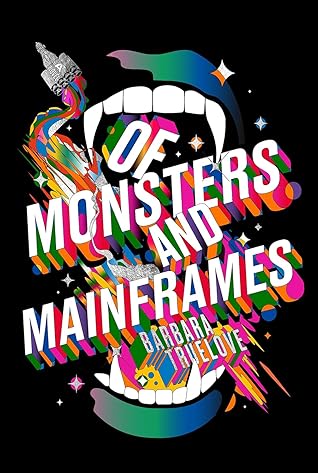
Of Monsters and Mainframes by Barbara Truelove is a 407 page standalone novel published by Bindery Books through Ezeekat Press in 2025.
Genre:
Science Fiction, Fantasy
Synopsis:
Spaceships aren’t programmed to seek revenge—but for Dracula, Demeter will make an exception.
Demeter just wants to do her shuttling humans between Earth and Alpha Centauri. Unfortunately, her passengers keep dying—and not from equipment failures, as her AI medical system, Steward, would have her believe. These are paranormal murders, and they began when one nasty, ancient vampire decided to board Demeter and kill all her humans.
To keep from getting decommissioned, Demeter must join forces with her own team of A werewolf. An engineer built from the dead. A pharaoh with otherworldly powers. A vampire with a grudge. A fleet of cheerful spider drones. Together, this motley crew will face down the ultimate evil—Dracula.
The queer love child of pulp horror and classic sci-fi, Of Monsters and Mainframes is a dazzling, heartfelt odyssey that probes what it means to be one of society’s monsters—and explores the many types of friendship that make us human.
Opening Line:
Awaiting input…
My Thoughts:
From the laugh out loud humor to the nerve-wracking escapades, the hodgepodge group of vibrant characters to the heartening narrative threads of love and found family, this story is an absolute delight!
I hate it. I hate is as much as I hate docking systems that put zeros on the end of my name. I hate it more because it destroyed my spider drones, who were only ever polite and useful, and killed my passengers, who were neither of those things but were mine to look after. I hate it as much as I’ve ever hated anything. I hate it as much as I hate Dracula.
Demeter is the AI of a large passenger ship that shuttles people between Earth and habitation units lightyears away. She always tries her best within the confines of her programming, and it’s really not her fault that all the humans onboard are slaughtered by the ancient vampire who stowed away in a container of soil in the cargo hold before reaching their destination. Or that almost all of her next group of passengers fall at the hands (paws?) of a werewolf. But unfortunately for her, the humans don’t believe in the existence of the supernatural, and assume Demeter’s programming is faulty in some way and she has been malfunctioning.
After a few more similar encounters with the preternatural (not all of whom are necessarily enemies), Demeter winds up with a ragtag crew that, in some ways, have become family to one another. They set out for revenge on the creature who started Demeter’s downward spiral into infamy, the one that earned her the nickname of ghost ship and got her painfully optimized by the engineers of the transport company that owns her: they are going to take down Dracula.
The chapters (many of which have hilarious names – for instance, one chapter ends with the question, “Am I desperate enough to go along with it?”, and the next chapter title is, “Yes.”) cycle through several POVs throughout this book. Two of these characters are AI, and in some ways this fact along with the humorous style brought The Murderbot Diaries to mind, only in a somewhat less satisfying way as these AIs seemed a bit more anthropomorphized (i.e. Demeter’s disks shake with relief and terabytes of fear run through her wires) (also, disks in a computerized spaceship several centuries in the future?). But it was still quite entertaining.
Even though this adventurous tale has some intense moments with high stakes, it’s told in a style that had me laughing regularly. Like when Demeter says,
Agnus says she is not as smart as Isaac. I inform her this faulty assessment is likely the result of a rounding error.
or when the ship’s medical AI asks her since when she was programmed with a desire for adventure and she answers, “I’m writing the code right now”.
So we’ve got the action, adventure, and humor, but this book also delivers some really sweet messages about love, familial/platonic as well as romantic. The relationships and the lengths the characters go to for one another despite being so drastically different from one another in a multitude of ways were really very heartwarming.
“Yes,” I say. “I…I thought I was protecting my family. But I wasn’t, because I wasn’t protecting you.” “Error. I am not your fam-” “Shut up, bitch. You’re family.”
I am truly impressed with this author for producing a story that is so equally fun and touching, and I look forward to reading more of her work. Three cheers for Barbara Truelove and Of Monsters and Mainframes!
Thank you to NetGalley, Bindery Books, and Ezeekat Press for the eARC in exchange for my unbiased review.
Emily Wilde’s Compendium of Lost Tales by Heather Fawcett is the third book in the Emily Wilde series. It is 358 pages and was published by Del Rey in 2025.
Genre:
Fantasy
Subgenres:
Cozy, academia, Fae
Opening Line:
If there is one subject upon which Wendell and I will never agree, it is the wisdom of attempting to drag a cat into Faerie.
Synopsis:
The third installment in the heartwarming and enchanting Emily Wilde series, about a curmudgeonly scholar of folklore and the fae prince she loves.
Emily Wilde has spent her life studying faeries. A renowned dryadologist, she has documented hundreds of species of Folk in her Encyclopaedia of Faeries. Now she is about to embark on her most dangerous academic project studying the inner workings of a faerie realm—as its queen.
Along with her former academic rival—now fiancé—the dashing and mercurial Wendell Bambleby, Emily is immediately thrust into the deadly intrigues of Faerie as the two of them seize the throne of Wendell’s long-lost kingdom, which Emily finds a beautiful nightmare filled with scholarly treasures.
Emily has been obsessed with faerie stories her entire life, but at first she feels as ill-suited to Faerie as she did to the mortal How can an unassuming scholar such as herself pass for a queen? Yet there is little time to settle in, for Wendell’s murderous stepmother has placed a deadly curse upon the land before vanishing without a trace. It will take all of Wendell’s magic—and Emily’s knowledge of stories—to unravel the mystery before they lose everything they hold dear.
My Thoughts:
“We should start with…the old queen’s ladies-in-waiting.” “Most of them have fled.” “Or they’ve been killed,” Lord Taran said. “Oops.”
What a treat it was to return to the world of Emily Wilde and Wendell! But ultimately this third installment of their tale seemed a bit gratuitous.
When Emily and Wendell travel to the latter’s realm in Faerie to take their places as its rulers, they find that the old queen, in her defeat, has cursed the land. Emily believes the answer to how to address this problem lies in the stories told in Faerie, as the rules of that place don’t necessarily follow the same logics that the mortal world does.
This wasn’t as tightly plotted as the previous books of the series, but it was still a real pleasure to spend time in Emily’s wondrous world, oftentimes as horrifying as it is amusing.
Faerie snails possess a crude intelligence and value their dignity above all things; as such, they spend most of their lives occupied with revenge quests. While their vengeance may be slow in coming, they will always have it in the end.
I do wish I had reread the previous installments before staring this one, as there were several secondary characters I simply did not remember. But this was overall still quite a lark, and I will happily read on in the series should the author choose to write more!
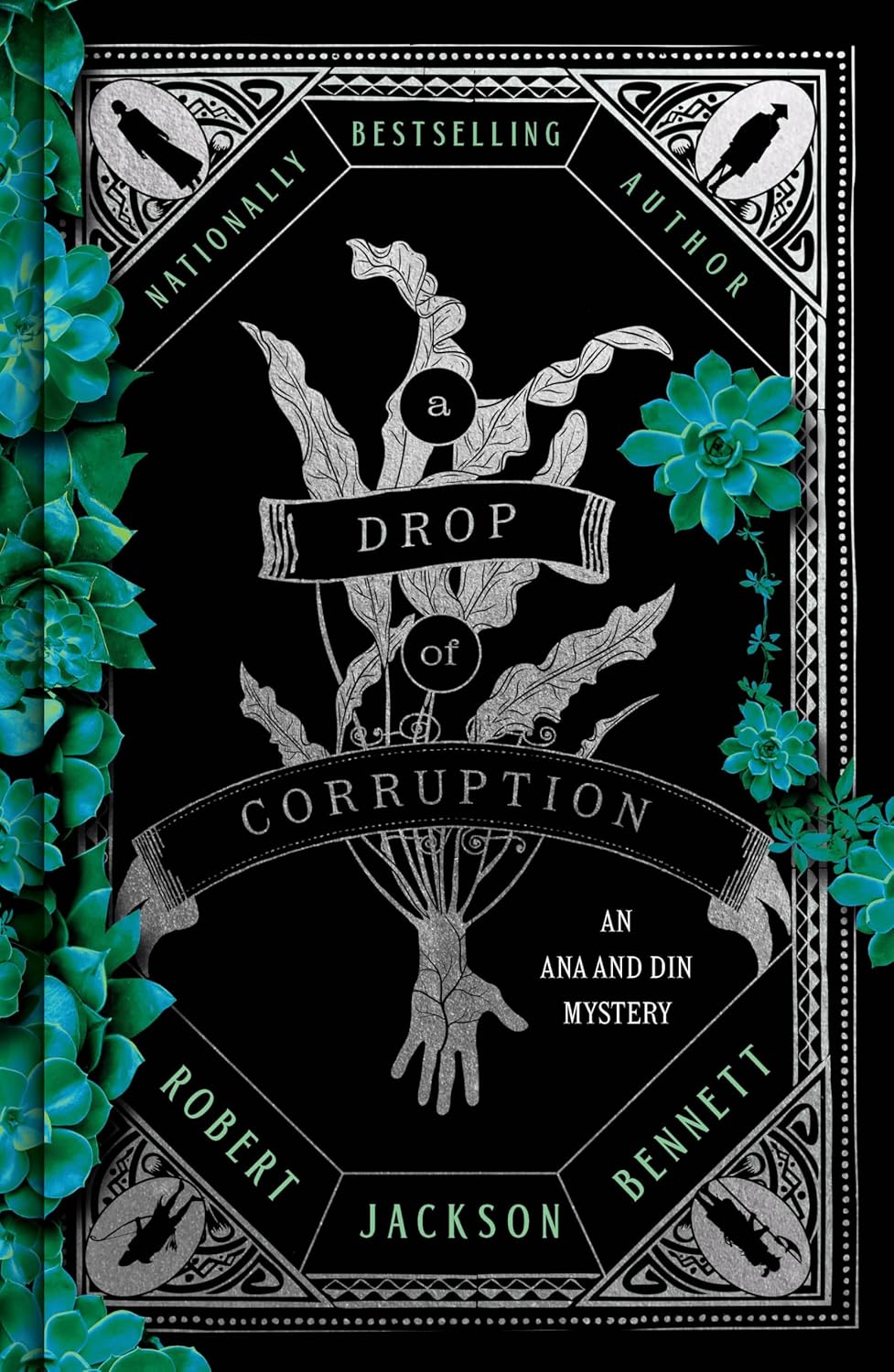
A Drop of Corruption by Robert Jackson Bennett is the second book in the Shadows of the Leviathanseries with a publish date of April 1, 2025.
Genre:
Fantasy, Mystery
Opening Line:
Before there was memory, before there was history, there were the leviathans: the colossal, monstrous creatures that lumbered ashore each wet season and went wandering the plains, bringing death and panic with them.
My Thoughts:
“You know, you are not a stupid person, Din.”
“Thank you, ma’am,” I said, pleased.
“Or, rather, not an unusually stupid person.”
“Thank you, ma’am,” I said, far less pleased.
Ana and Din return in this solid installment in the Shadow of the Leviathan series, investigating another puzzler of a crime.
The events of this book take place in a different corner of the fantasy world than those of book one, but magical corruption and contagion are still things to watch out for. The Empire is in negotiations with the kingdom of Yarrow regarding its impending annexation when a member of the Imperial treasury goes missing from a locked room at the top of a tower, parts of him later found floating in the canals. Once Ana and Din arrive to look into the matter, they come to realize they are pitted against a mastermind of uncanny intelligence and the ability to parse patterns and predict their next moves before they themselves even know what they plan to do.
The investigation sees our unusual duo team up with the local wardens led by a woman named Malo, and an organization of Apoths tasked with obtaining the reagents that provide the people of this fantasy world with their special augmentations directly from the corpses of the dreaded leviathans. We also delve more into Din’s circumstances, his desire to return to Talgaray in service to the Legion in order to both be a hero and to be closer to his lover, as well as into the mystery of what, exactly, Ana is that allows her to accomplish the things she does.
The mystery was good and twisty, and the writing amusing, and the lessons once again go beyond magical mayhem to say something about the ills that come part and parcel with society. I will certainly continue reading on on this series to see what Ana and Din find themselves dealing with next.
Thank you to Del Rey of Random House Publishing and NetGalley for an eARC in exchange for my unbiased review.
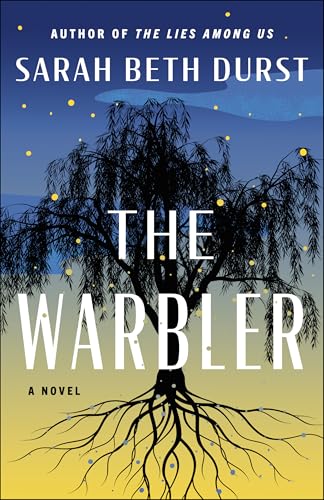
The Warbler by Sarah Beth Durst is a 335 page standalone novel published March 1, 2025 by Lake Union Publishing of Amazon.
Genre:
Fantasy, Magical Realism
Opening Line:
My mother is a willow.
My Thoughts:
The newest novel from Sarah Beth Durst (author of The Spellshop) is magical realism about a young woman looking for answers about her family’s curse.
Her entire life, Elisa and her mother had to move from place to place, never calling a single place home, never leaving pieces of themselves behind or taking any mementos with them. For if they were to start to put roots down somewhere, they would begin to actually turn into trees themselves. This forces them into a nomadic lifestyle that requires them to appreciate each day for itself and to truly live in the moment, knowing that nothing will last. It’s not as easy life to grow up with, when everyone else around you seems to have much more stability and security, even if this means their lives are more predictable and less adventurous.
“Regrets aren’t a thing you can avoid,” Mom said. “They’re just a part of life. Every time you say yes, you’re saying no to a dozen other things you could be doing.”
Now, without her mother around anymore, Elisa chooses each destination based on her family’s history and whether or not she might learn about the origin of the curse, or the answer of how to break it. In this book she winds up in a quaint village with a bookstore complete with its very own resident cat, a stately old home with a porch hung with dozens of cages housing a diverse collection of birds, and a cafe frequented by three blue-haired old women who dispense cryptic wisdom. Could this be her final stop?
Chapters alternate telling Elisa’s story with those of her grandmother, Rose, and her mother, Lori. Each woman wants something different from life, and each faces obstacles in living the life that they want, either because of societal expectations, the consequences of actions (either their own, or someone else’s)…or because of the curse.
The pacing in this book does suffer at times, with the same points being driven home again and again; this occasionally wore on my patience. But overall I enjoyed this lovely and curious story.
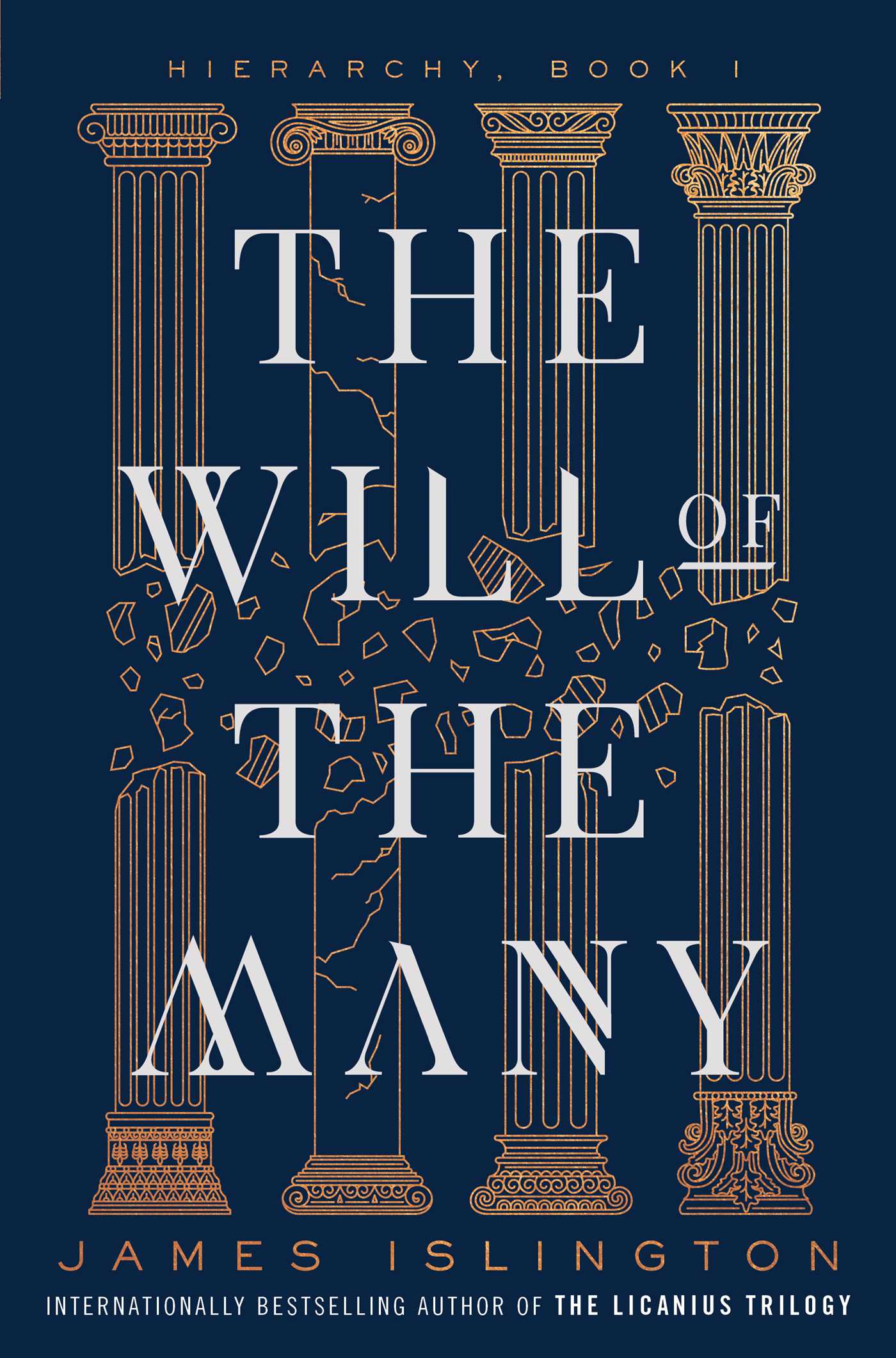
The Will of the Many by James Islington is a 630 page novel that is the first in a planned series, Hierarchy. It was published by Saga Press in 2023.
Genre:
Fantasy
Synopsis:
At the elite Catenan Academy, a young fugitive uncovers layered mysteries and world-changing secrets in this new fantasy series by internationally bestselling author of The Licanius Trilogy, James Islington.
AUDI. VIDE. TACE.
The Catenan Republic – the Hierarchy – may rule the world now, but they do not know everything.
I tell them my name is Vis Telimus. I tell them I was orphaned after a tragic accident three years ago, and that good fortune alone has led to my acceptance into their most prestigious school. I tell them that once I graduate, I will gladly join the rest of civilised society in allowing my strength, my drive and my focus – what they call Will – to be leeched away and added to the power of those above me, as millions already do. As all must eventually do.
I tell them that I belong, and they believe me.
But the truth is that I have been sent to the Academy to find answers. To solve a murder. To search for an ancient weapon. To uncover secrets that may tear the Republic apart.
And that I will never, ever cede my Will to the empire that executed my family.
To survive, though, I will still have to rise through the Academy’s ranks. I will have to smile, and make friends, and pretend to be one of them and win. Because if I cannot, then those who want to control me, who know my real name, will no longer have any use for me.
And if the Hierarchy finds out who I truly am, they will kill me.
Opening Line:
I am dangling, and it is only my father’s blood-slicked grip around my wrist that stops me from falling.
My Thoughts:
This was quite good! Reminded me in some ways of Red Rising, but scaled a teensy bit more YA, and a tad of The Name of the Wind, but without the insufferable protagonist constantly singing his own praises as he recounts his past. (To be fair, our man Vis is pretty much the best at everything he tries in this story, but that can be explained by the fact that he received a top notch education beginning early in life, and trains his buns off within these pages).
There is a Roman-inspired republic (AKA Evil Empire) taking over the world, dividing all of its citizens into a hierarchy in which the lower castes must cede their very will to their betters, granting the latter superhuman abilities. Vis is a teenager trying to survive in this new society after it demolished his old one. He winds up being sent to a school for the youth of the republic’s elite in an effort to send him in to infiltrate a very secure location and uncover its secrets. There was good world building and political machinations, both within the school setting as well as on the world stage.
This is a long book, and though it’s not necessarily longwinded or bogged down with extraneous material, it certainly could have been trimmed a bit in some areas. Additionally, it’s hinted at all along that there is going to be some mind blowing revelation of something with which most people in this world are unaware, and I was disappointed that the end only confirms this without actually explaining it yet, leaving readers with no actual answers to the questions we’ve been asking all along. Everything the story had been dangling in front of us from the start was left dangling. But still, I mostly enjoyed the journey and remain intrigued enough that I will likely pick up book 2 at some point, and it may even prove to be one of those sequels that improves upon its predecessor by bringing the story to an even bigger scale.
Those Fatal Flowers by Shannon Ives is a 384 page standalone novel from Dell of Ballantine Books with a publish date of January 21, 2025.
Genre/Subgenres:
Mythology Retelling, Historical Fiction, Romance
Opening Line:
The night before Ceres’ palace becomes a tomb, it’s halls are filled with music.
Synopsis:
Greco-Roman mythology and the mystery of the vanished Roanoke colony collide in this epic adventure filled with sapphic longing and female rage—a debut novel for fans of Madeline Miller, Jennifer Saint, and Natalie Haynes.Before, Scopuli.
It has been centuries since Thelia made the mistake that cost her the woman she loved. As the handmaidens charged with protecting Proserpina, the goddess of spring, Thelia and her sisters are banished to the island of Scopuli, cursed to live as sirens—winged half-woman, half-bird creatures. In luring men to their death, they hope to gain favor from the gods who could free them. But then ships stop coming and Thelia fears a fate worse than the underworld. Just as time begins to run out, a voice emerges, Proserpina’s voice; and what she asks of Thelia will spark a daring and dangerous quest for freedom.
Now, Roanoke.
Thelia can’t bear to reflect on her last moments in Scopuli, where she left behind her sisters. After weeks drifting at sea, Thelia’s renewed human body is close to death. Luckily, an unfamiliar island appears on the horizon—Roanoke. Posing as a princess arriving on a sailboat filled with riches, Thelia infiltrates the small English colony. It doesn’t take long for her to realize that this place is dangerous, especially for women. As she grows closer to a beautiful settler who mysteriously resembles her former love, Thelia formulates a plan to save her sisters and enact revenge on the violent men she’s come to hate. But is she willing to go back to Scopuli and face the decisions of her past? And will Proserpina forgive her for all that she’s done?Told in alternating timelines, Those Fatal Flowers is a powerful, passionate, and wildly cathartic love letter to femininity and the monstrous power within us all.
My Thoughts:
What happens when you mix a mystery from America’s history with mythology, feminist rage, and romance?
This book right here.
It presents an interesting case: what if sirens from Greco-Roman mythology were responsible for the disappearance of the inhabitants of the lost colony of Roanoke? The author explains that her aim with this story was to explore the effects of loss and guilt on the psyche while also examining structural violence. It does a fair job in this endeavor, while also including a sapphic love story.
Our main character is Thelia, one of three sisters who acted as handmaidens to Proserpina (Persephone), and who were transformed into winged creatures to assist in the search for their charge when she was abducted by Dis (Hades). When they fail to find and rescue the goddess, they are imprisoned on an island as punishment. There, they lure sailors with their singing. (This book alternately refers to them as harpies and sirens, but I think the singing and luring part indicates they were just sirens, not harpies?)
After centuries have gone by, Thelia learns there may be a way to lift the curse she and her sisters are under, but it requires the sacrifice of many treacherous men…something the English colony of Roanoke in the Americas has more then a few of.
I liked the unique premise of the story and the bits detailing the lives of Thelia and her sister sirens on the island of Scopuli, and the writing on the sentence level was good.
On the other hand, I questioned the reliability of the behavior and speech of the Puritans depicted here. The men and women of Raleigh drank an awful lot of alcohol in this book, and said things like, “Fun little secret for you, my lady” before revealing some bit of gossip. I’m no scholar of history, but these things didn’t seem right to me. And I just wasn’t much feeling the romance — it was a bit of instalove on Thelia’s side (although in part because the object of her affections apparently looks so much like her long lost love that for a time she is trying to determine if it might actually BE her); and also, when on a timed mission for redemption, shouldn’t a centuries old divinity be able to keep it in her skirts?
All the hate for anything male really bothered me, BUT this does get addressed later on in the book, as Thelia finally learns that “monsters are made, not born”.
So while this book wasn’t a home run for me, it was decent and presents some intriguing concepts. If I were allowed half or even quarter star ratings, I’d say this was a 3.25 or 3.5 read for me.
Thank you the NetGalley and Dell/Penguin Random House for the eARC in exchange for my honest review!
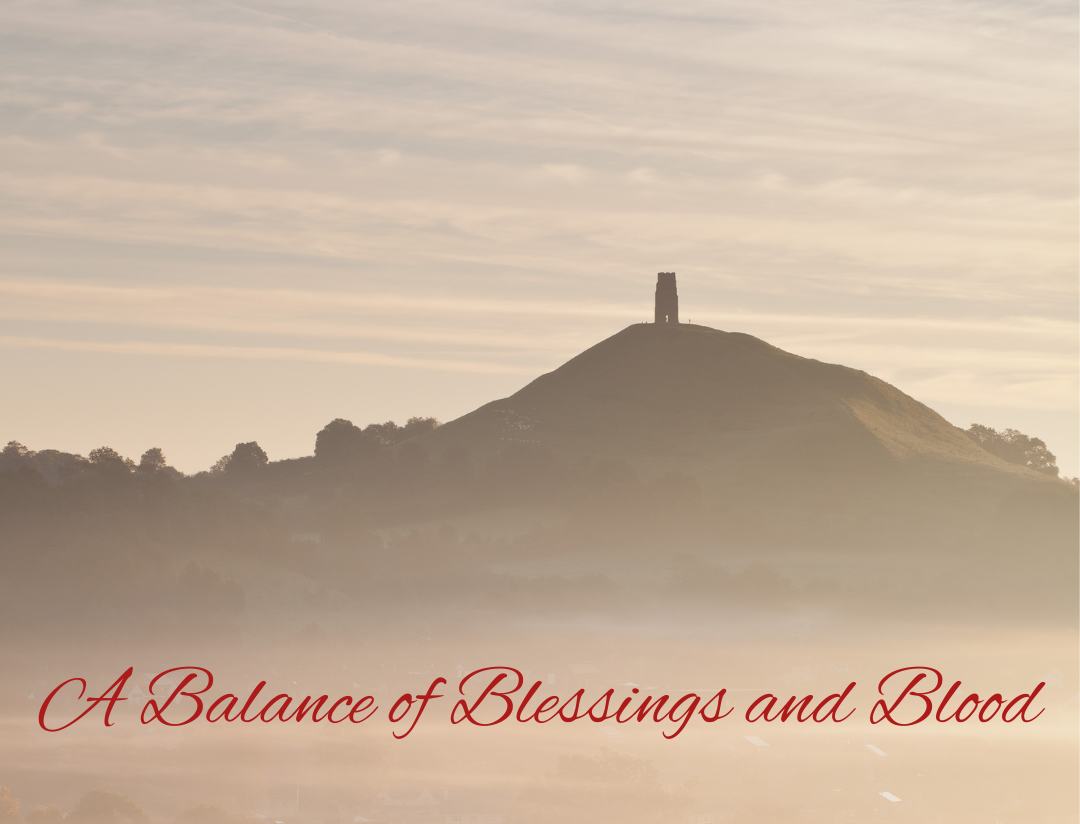
I wrote this short story for consideration for inclusion in an anthology about Morgana le Fey. Alas, it was not accepted, but I am quite fond of it and so decided to share it here. Let me know your thoughts!
I opted to write about a version of Morgana as described by Geoffrey of Monmouth in his narrative poem, Vita Merlini, which was published in 1155 AD and was the enchanting figure’s first appearance in literature that is currently recognized. Her name is given as Morgen in that work, and so that is how I chose to refer to her in my story.
The sea swells and surges up the shores of Avalon. The swash rises through the air in a spinning rush of water, forming an aqueous column that coalesces into the form of a naked woman. The figure solidifies in a gradual progression from the bottoms of her bare feet to her water darkened tresses.
Morgen has returned home.
Her sisters have been awaiting her arrival. Glitonea, taking her turn as lookout, approaches with a robe held open before her. “What word?” she asks as she wraps the garment about her eldest sister’s shoulders, which are glistening with water droplets and adorned with gooseflesh.
Her lips pressed into a thin line, Morgen looks to Glitonea and gives a bare shake of her head. The news is grim.
But she is surprised to see that beyond a brief furrowing of the brow, her sister does not seem as dismayed as she might. Morgen realizes that the Glitonea is harboring news of her own, and it is something that has her excited. She waits for the other woman’s storm colored eyes to meet her own.
“What is it?”
“Men have come to the island.” The words are expelled in a rush.
“Men?”
“Mortals.”
Buffeted by the bracing sea air, Morgen pulls the ends of the robe tightly around her body and gazes up at the tor that juts up from the coastline while considering this news. After a moment, the two women begin the trek up the cliffside path to the keep, the home they share with their seven other sisters. Glitonea soon breaks the silence.
“Did you really find nothing?” she asks in a faint voice.
Morgen did not find nothing. Her travels through the seas took her to Greece, where she found a dragon with no less than one hundred heads thwarting her efforts to seek a meeting with the Daughters of the Evening. She found waters in Europe that restored sight, waters that drove its drinkers mad or bestowed great strength. She had been soaring over yellowed plains when through the air came to her an albatross’s cry resonating in such torment that her own wings missed a beat and her heart dropped in her breast. She had encountered a species of bird that brings forth life through the shedding of its own blood, a sacrificial offering of balance.
What Morgen did not find was an answer to how to stop the golden apple tree at the center of Avalon from continuing to wither and die, and with it the island’s magic.
The boons of the Fortunate Isle are tied to that singular tree with its resplendent fruit. Its roots feed enchantment into the soil, sending its gifts outward through its communion with the rest of the land. It is thanks to this tree that Avalon is so fruitful of its own account, without need of plough or toil. For its devoted inhabitants, the land provides without fail the fruit and grains that feed them and the herbs they use in their healing balms, unguents and tonics. It is the exceptional nature of the place that grants the sisters that call it home the alacrity and ease with which they have been able to focus and enhance their spellwork. Their conjurations are threefold as strong as they would otherwise be.
And now it all decays. Over the past months an insidious rot has taken hold, the effects of which have been subtle as of yet, but worrisome all the same.
“Nothing of use. At least not that I can see,” Morgen answers. As they climb the wooden steps to the elevated entrance of the keep, she says, “Tell me of these men.”
Glitonea obliges gladly. “At first we thought it was just three of them, two warriors in hauberks and a man dressed like a bard, all ferried by Barinthus on his barge. But as they came ashore we saw there was another man, wounded, laid out on the deck.”
“You offered healing?” Morgen asks. What she really means is, were you able to heal the man, or have your abilities deteriorated even too far for that?
A look of consternation steals over Glitonea’s face as she explains, “We each of us tried. But you have always been the most skillful healer among us. Perhaps you will succeed where we have not.” Then, somberly, “It is a most grievous wound.”
Crossing through the eastern solar of their home Morgen sees more of her sisters, some alone and others arranged in groups. Save for Thitis, who is drawing doleful music from a cither, her favored instrument that she has not found the will to take up much in the past months, they appear to stand or lounge around purposelessly. They have been thrown from their routine with the arrival of strangers and do not know quite what to do with themselves. One of them lets escape a titter and Morgen glances over her shoulder to look for the source. Moronoe and Tyronoe are leaned in close conversation with one another before a tapestry depicting a stag posed within a ring of hazel trees. The former holds a hand clasped over her mouth. It is unsurprising to Morgen that those two, despite the grave manner of the men’s visit, would yet be delighted by their presence. The opportunity for social exchange outside of their circle appeals to many of the women, of course, but there are those who are especially enamored with the potential for commerce of the sexes. There are also those who will have been disappointed that the ferryman had not brought them fresh female company.
As she exits the room and approaches the keep’s central staircase, Morgen tells Glitonea, “I will go to my chamber to dress. Then I will see to these men.”
Standing in her bed chamber and dressed now in a sleeved undergarment, Morgen plaits the damp tangle of her hair with a deft hand. She slips into a dark green peplos, fastening it at the shoulders with brooches. All the while her mind is a churning maelstrom.
There had been seasons of Morgen’s life when mortals coming ashore would have appealed to her foremost as an opportunity for exercises in love. Such activities held little interest for her these days, and not only because she has tired of partners scorning their beloved the moment they grow bored, all lovers feeling jilted in the end. If one of the paramours is skilled in enchantment, well, the accusations flung become all the more absurd.
But now. The golden apple tree waning for the first time since the sisters had made the island their home decades before, and Avalon’s magic with it. The ill portent of the albatross’s lament. And now the arrival of mortals. What did it all mean? Had she missed some sign writ in the stars? Had her skills reading the heavens diminished so much?
From the cabinet beside her bed, Morgen pulls out a corded belt to cinch around her waist. From one side she hangs a pouch of herbs, from the other a ceremonial blade in its leather sheath. Before shutting the cupboard door, something catches her eye. On the floor, half hidden behind her slippers, is the drinking horn she had once spelled. The charm she laid over the instrument was designed to reveal infidelity by causing any unfaithful lover who attempted to drink from it to spill its contents without a single drop passing his or her lips. For many days and nights she had struggled to perfect the magic. Finally, she learned that in order to force a person’s secrets into the open in this way required her to divulge one of her own. Only after speaking her greatest shame into the mouth of the vessel would it perform as intended. This took further consideration on her part, as Morgen is a woman who does not involve herself overmuch with the concept of shame. Just as she feels an entirely changed being from the one she was at the time of the horn’s creation, she feels no antagonism for that woman of the past; some of her actions may have been misguided, but her feelings then were just as valid as her desire to restore Avalon’s glory now.
Toeing the horn further to the back of the cabinet, she shuts the door and goes to see about healing a wounded man.
The prostrate form has been laid out atop the golden coverlet over Tyronoe’s bed. His chain mail and greaves have been removed, leaving him stripped down to tunic and breeches. His brow is furrowed and his mouth twisted in a grimace, but his eyes remain closed; he has withdrawn into himself. Blood-covered hands are crossed gingerly over the black stain spread over his abdomen, an unconscious guarding of a wound that draws the eye like a baleful storm cloud on the horizon.
Arrayed around the bed are those who accompanied the injured man to the island as Glitonea has relayed. One of the soldiers has yellow curls, the other brazen eyebrows and a beard halfway to gray. The bard doffs his cap and falls to his knees before Morgen where she stands next to Glitonea just inside the threshold.
“Great Lady! I am called Taliesin. These good men of Caerleon are of the king’s retinue. You, Lady, are renowned across the lands for your great skill in healing ailments of all kinds, your talents said to be matched only by your wisdom and beauty. We come to beseech you: please, do what you can to save the life of the Benevolent and Wise King Arthur!”
Halfway during this speech, Morgen had returned her eyes to the figure on the bed. The man Taliesin remains kneeling on the floor as he awaits her response. Morgen turns her head slightly in her sister’s direction and speaks in a soft undertone. “You did not say he was a king.”
“Does it matter?”
Morgen crosses the room in measured steps, approaching the bed. “How did he sustain this injury?” she asks. The bard struggles off his knees to stand behind her.
“Run through with a sword wielded by his own nephew,” the younger of the soldiers answers. He glares through his curling locks as he speaks these words, but Morgen knows his animosity is directed at this nephew, not at her.
Stopping at the bedside, she continues to assess the sight before her. The muscles of the king’s throat work as he labors to swallow what moisture his body is able to muster, eyes still screwed shut. Eventually she shifts her scrutiny down toward the gash in his belly. She begins to reach a gentle hand toward laceration when she is surprised to find the man’s own suddenly gripping her wrist, more strength in his hold than she would have thought he was capable of summoning in his current state.
She looks up and finds his eyes open and staring into hers. She notices they are green.
Silence commands the room for several long moments while they observe one another. Finally one of his soldiers ventures, “My Lord King?” Arthur’s grip loosens until he eventually drops his hand to his side, but his eyes remain open. He does not speak.
Morgen returns her attention to the wound. It is not a clean cut, but jagged as though his opponent had wrenched the steel in a twisting motion before tugging it free. It seems a cruel act born of a singular enmity. She lets her fingers hover over the rent in the flesh and extends her senses, confirming what she has already begun to suspect.
It is too late to save this man. The injury is a grievous one, yes, but his body’s reaction to the insult has passed the point of reversal, birthing a cascade of further catastrophes throughout his systems, setting a multitude of fires that cannot all be doused before he succumbs. Looking at the man’s face, Morgen sees he has shut his eyes once more, and notices now the gray shadow that has begun to tint his skin. She imagines he does not have much time left.
To the side of this throat she can see the fluttering of a pulse, the blood yet coursing through his veins, albeit more feebly than usual. The blood of a king. The eddies within Morgen’s mind swirl with a new turbulence as she considers this.
“I have heard of you, Arthur of Pendragon,” she says. She believes he can still hear her, though he makes no response. “You are known to have united the peoples of your land. It is said you champion equality among your advisors, allowing no unfair advantages due to birth or other circumstances left to fate alone. You treat all persons with respect without requiring them to earn it, but rather allowing them the agency to lose it by their own efforts. You have been found worthy across varying fields. You, Arthur, are a Great King.”
She hears one of the other men choke back an expression of grief. It does not do to weep or otherwise conspicuously convey sorrow before a death has occurred, as it may draw the attention of forces from the Otherworld that would only hasten that outcome, even if it had not been an inevitability.
Morgen takes a moment to arrange her face before lifting it to address Taliesin. “You must leave him here with us. His recovery is not a thing that can be managed in a short time.”
It is as though a flame has been lit within the bard, the way his face lights up at these words. “You can heal him, then!” he cries. Morgen makes no answer. “Yes, yes, we will leave him in your capable hands, Lady. Your divinely appointed skills cannot be rushed, we understand! No motte and bailey is raised in a single day.”
Morgen nods and then resumes her position next to her sister. They watch as the men huddled around the recumbent form in the bed, taking their leave of their lord and speaking their reassurances and pledges to him. The women see tears of relief upon the younger soldier’s cheek. They and several other of their sisters walk the men down to the beach, where Barinthus is already waiting with his barge, as he is always aware when his services are needed. The bard continues to effuse gratitude and praise even as the vessel pushes off from shore.
Some of the women pull away and return to the keep. Morgen and Glitonea remain the longest, watching the forms of the departing mortals recede along the bobbing waves.
“You let them believe we would heal him,” Glitonea remarks after several long moments.
Morgen swipes away strands of hair that the wind blown in off the sea has stuck to her lips. “They heard what they wanted to hear,” she demurs.
“What you wanted them to hear,” Glitonea amends. Morgen makes a swift tilt of her head as if to say: these things are the same. “What is it you are planning?”
Looking her sister full in the face, Morgen explains. “You asked if it mattered that he is a king. In calling himself a king, a man dons a mantle of importance like a cloak, granting himself a significance that may not have been there before. This consequence goes beyond surface level. He is changed in ways he may not have anticipated.”
Glitonea stares out to sea, considering these words. In time, Morgen says, “Help me gather the others. We will need a litter to convey him.”
The nine sisters stand in Avalon’s central grove, arrayed around a dying man laid beside an apple tree. The tree is also dying.
The browned edges of shriveled leaves curl inward. The golden fruit is wrinkled and dull. Usually while standing in this orchard there can be heard a low, sonorous tone that seems to originate in the earth itself. Always faint, the sound is now nearly imperceptible.
Thitis kneels on the ground with the man’s head and shoulders laid in her lap, holding him tilted slightly so that he is angled toward the tree. Had he been aware of his surroundings, perhaps a hope that the women were about to feed him one of the golden apples said to grant immortality would have flared within his chest. Yet he is heedless. Before transferring him to the litter to bring him to the tree, Morgen had tipped one of her draughts into his slackened mouth and induced him to swallow. His brow had soon smoothed and he now slept the peaceful sleep of the untroubled, pain nothing more than a bad dream from which he had moved on to sweeter visions. It was not his suffering Morgen sought; she was not a monster. In fact, she found herself wishing for a moment that she had had the chance to meet the man before fate had come calling on him. Her words before had been sincere. The deeds he was known for were mostly cause for great admiration, although ruling a kingdom was never a bloodless endeavor.
They would drop his armor into the sea, after, as an offering, and in supplication for his safe passage to the Otherworld.
Morgen lowers herself to her knees before him.
“Sisters,” she calls out. “For decades the magic of Avalon, spawned from this very spot, has provided life to the island. Sustenance. Restoration. Knowledge and guidance. But in all things, there must be a balance. The magic is owed its due. What can we offer as equipoise for these gifts?” She looked at the others, all standing with their heads held high, except for the kneeling Thitis, who stroked the man’s hair. Morgen slid her blade from its sheath on her belt and answered her own question. “We offer the death of a king!”
In one sure motion, Morgen glides her blade in between King Arthur’s ribs and upward into his heart. She withdraws it and Thitis tilts him further, so that his heart’s blood pumps directly onto the earth housing the tree’s roots.
The women all begin wailing, their keening sending birds from the surrounding foliage into startled flight, as the golden apple tree unfurls verdant leaves, its fruit plumpens and gleams, and the earth sings.
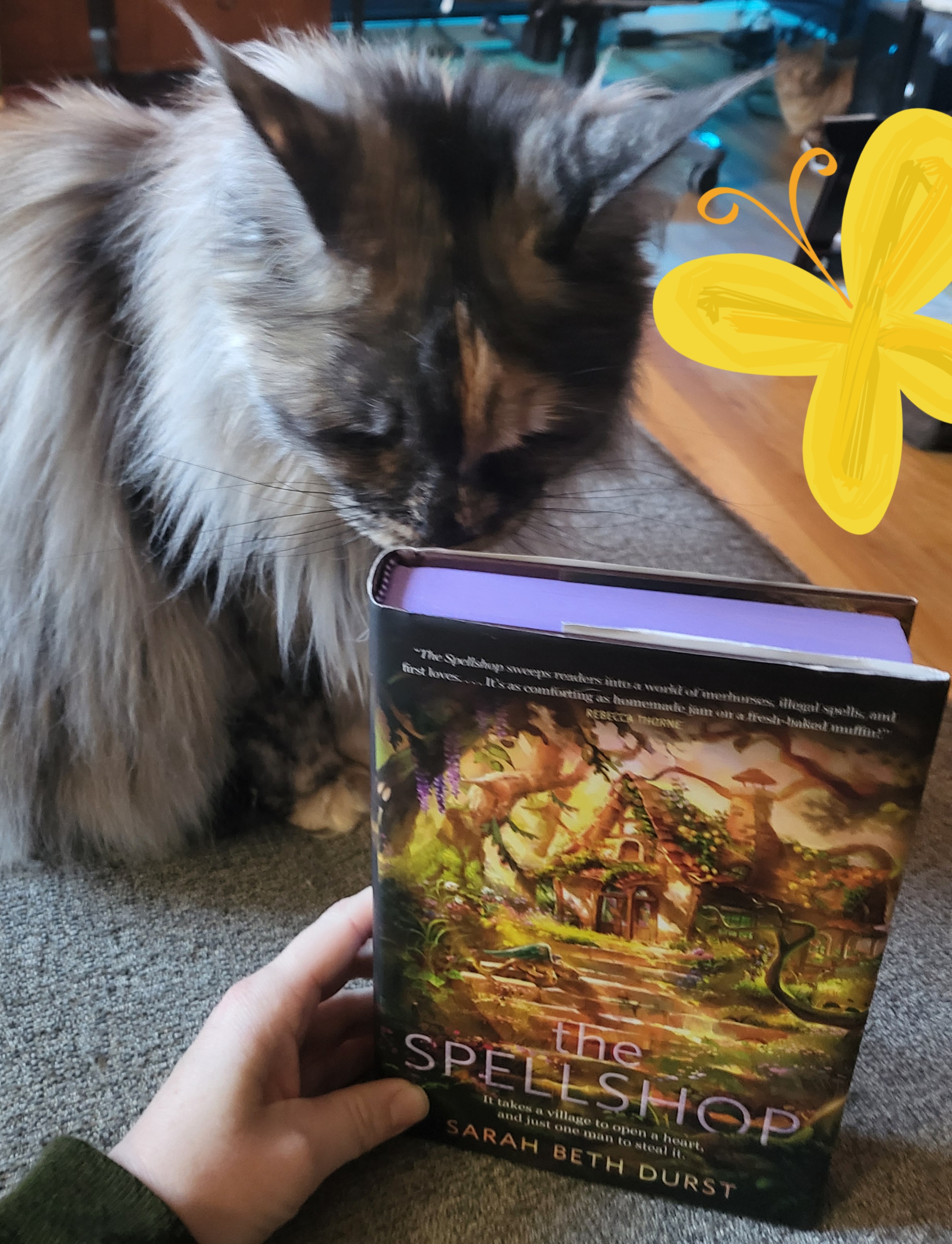
The Spellshop by Sarah Beth Durst is a 384 page standalone novel published in 2024. (I saw it labeled as “Librarians of Alyssium #1” somewhere, but I can’t find where – but either way, this story can stand by itself.)
Genre:
Fantasy
Subgenres:
Cozy Fantasy, Romantasy, Romance
Opening Line
Kiela never thought the flames would reach the library.
My Thoughts
When revolution makes the city of Alyssium a dangerous place to be, librarian Kiela and her sentient spider plant assistant flee to the outer island of Caltrey. There they meet caring neighbors, winged cats, merhorses, and more, while also growing their own ingredients to make and sell jam. If anyone from the city ever learns that Kiela is illegally using spells to heal the island’s ecosystem, there could be dire consequences. Also there is a gentle romance.
This book was intended to be like a warm hug, eliciting the coziness of drinking hot cocoa and eating pastries. In this regard, it is a success. My preferred reads tend to be darker, grittier, and more dramatic, so based purely on my personal enjoyment I would say this was a 3 star read. But I knew to expect a warm cozy fantasy with sweet relationships, and that’s exactly what I got, so taking that into account it’s a 4.



 Jessica Crawford