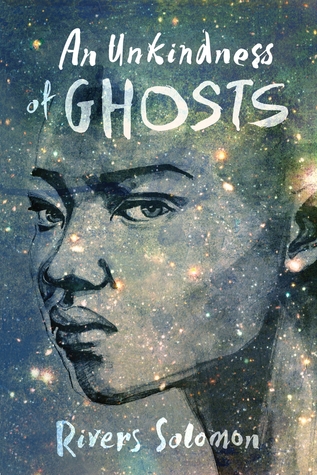
Book Review: AN UNKINDNESS OF GHOSTS by Rivers Solomon


Odd-mannered, obsessive, withdrawn, Aster has little to offer folks in the way of rebuttal when they call her ogre and freak. She’s used to the names; she only wishes there was more truth to them. If she were truly a monster, as they accuse, she’d be powerful enough to tear down the walls around her until nothing remained of her world, save for stories told around the cookfire.

Aster lives in the low-deck slums of the HSS Matilda, a space vessel organized much like the antebellum South. For generations, the Matilda has ferried the last of humanity to a mythical Promised Land. On its way, the ship’s leaders have imposed harsh moral restrictions and deep indignities on dark-skinned sharecroppers like Aster, who they consider to be less than human.

When the autopsy of Matilda‘s sovereign reveals a surprising link between his death and her mother’s suicide some quarter-century before, Aster retraces her mother’s footsteps. Embroiled in a grudge with a brutal overseer and sowing the seeds of civil war, Aster learns there may be a way off the ship if she’s willing to fight for it.


“All that was left were the taunts, and the crack of Scar’s knee, and the past swooping in, an unkindness of ghosts. Her old life had possessed her, strengthening her, but like everything else, used her up and then was done.”

Well I thought this book was pretty great!

The setting is one thing that didn’t work all that well for me, as I never could grasp the details of the spaceship Matilda – its size and layout, the population aboard, how it sustained…well, everything. It runs on autopilot and (almost) no one is paying attention to its trajectory. We also never know how exactly it came to be that a society capable of launching a generation ship into space and sustaining its population for centuries had also managed to backtrack to the point of organizing society in a way just like that of the antebellum South.

But I was able to look past that and very much enjoyed the story set within those parameters. Aster, a black intersex autistic alchematician, is such a great character. Taking everything at face value, her authenticity is a delight. Her relationship with the Surgeon/the Hands of the Heavens/the queer ascetic bastard child of the former Sovereign and one of the black lowdeckers, is nothing short of wonderful. The plot of this story revolves around Aster following the clues left behind by the mother who died shortly after birthing her, the mechanic who may have found a way to leave Matilda behind and make it to a better world.

“A scientist, Aster had learned something Giselle had not: decoding the past was like decoding the physical world. The best that could be hoped for was a working model. A reasonable approximation. That was to say, no matter what Aster learned of Lune, there was no piecing together the full mystery of her life. There was no hearing her laugh or feeling her embrace. A ghost was not a person.”

This book was troubling to read at times, as it deals with abuses of nearly every kind. I actually choked up when Aster broke down, saying, ‘”Nobody is allowed to touch me. Nobody’s allowed to call me names. I’m alive,” she sobbed out. “I’m alive.”‘ This in reference to her recent line of thinking about every living thing being owed the same basic respect.

“People like this guard tried so hard to make Aster feel lesser, but some days, like today, it didn’t work, because she saw clearly how superior she was.”

If you can suspend disbelief about the details of the setting, and you can stomach the non-gratuitous but plentiful scenes of violence and implied sexual assault, I recommend taking this journey with Aster. You might be surprised at where you wind up.

Book Review: IRON GOLD by Pierce Brown

Iron Gold

A decade ago, Darrow was the hero of the revolution he believed would break the chains of the Society. But the Rising has shattered everything: Instead of peace and freedom, it has brought endless war. Now he must risk everything he has fought for on one last desperate mission. Darrow still believes he can save everyone, but can he save himself?

And throughout the worlds, other destinies entwine with Darrow’s to change his fate forever:

A young Red girl flees tragedy in her refugee camp and achieves for herself a new life she could never have imagined.

An ex-soldier broken by grief is forced to steal the most valuable thing in the galaxy—or pay with his life.

And Lysander au Lune, the heir in exile to the sovereign, wanders the stars with his mentor, Cassius, haunted by the loss of the world that Darrow transformed, and dreaming of what will rise from its ashes.

Red Rising was the story of the end of one universe, and Iron Gold is the story of the creation of a new one. Witness the beginning of a stunning new saga of tragedy and triumph from masterly New York Times bestselling author Pierce Brown.

A thrilling and action-packed book that sets us up for a new branch of Red Rising story to tell.

Brown does a good job at the multiple-narrator thing, the POV switching with each chapter. We follow along with Darrow, Lysander au Lune (grandson of the Sovereign whose regime was toppled in the revolution), Lyria of Lagalos (a Red released from the mines when the Society crumbled at Mustang and Darrow’s feet), and Ephraim ti Horn (a Gray thief who was once engaged to marry a character familiar to readers of Morning Star). We see more of those we’ve come to know in the previous three books, such as Sevro, Victra, Sefi, Cassius, and the wonderful character of Romulus au Raa.

They planted us in stones, watered us with pain, and now marvel how we have thorns.

I’ve seen the writing in this book compared to that of George R.R. Martin in ASOIAF, but I take one exception to that – our heroes fall on hard times here, and yes, it sets us up for the new trilogy, but what Martin does differently that works so well is to throw the protagonists a bone every once in a while as well. Sure, he usually lifts them up just so they can crash down all the harder, but here we didn’t even get those instances to feel good about the way things were going for once. The more to invest you in reading on in the series, I suppose, but I think Martin’s method is more effective.

Still, Brown knows how to spin an exciting tale. In addition to his storytelling, he has a beautiful way with words.

Love is the stars, and its light carries on long after death.

If you were a fan of the original Red Rising trilogy, I fail to see how you could be disappointed with Iron Gold.

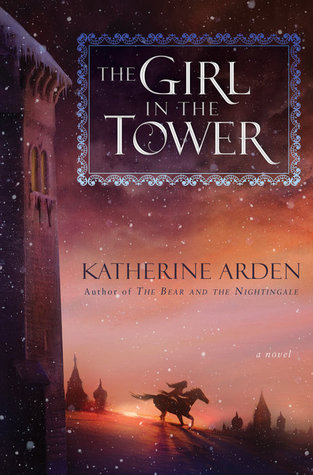
Book Review: THE GIRL IN THE TOWER by Katherine Arden

The Girl in the Tower.jpg

The magical adventure begun in The Bear and the Nightingale continues as brave Vasya, now a young woman, is forced to choose between marriage or life in a convent and instead flees her home—but soon finds herself called upon to help defend the city of Moscow when it comes under siege.

Orphaned and cast out as a witch by her village, Vasya’s options are few: resign herself to life in a convent, or allow her older sister to make her a match with a Moscovite prince. Both doom her to life in a tower, cut off from the vast world she longs to explore. So instead she chooses adventure, disguising herself as a boy and riding her horse into the woods. When a battle with some bandits who have been terrorizing the countryside earns her the admiration of the Grand Prince of Moscow, she must carefully guard the secret of her gender to remain in his good graces—even as she realizes his kingdom is under threat from mysterious forces only she will be able to stop.

The Girl in the Tower 02

When I read the first book in the Winternight trilogy, I found it to be a good dark fantasy story based on fun and interesting bits of Russian folklore. It was exciting, it was spooky at times. Vasya was a great heroine who was easy to root for.

Book 2, in comparison, was a bit of a letdown for me.

The setting and atmosphere in this book were just as great as they were in its predecessor. The members of Russian folklore continue to make enchanting appearances across the snowy landscape and politics of a medieval Russian winter. We have spirits both helpful and mischievous, mystical horses, warnings imparted by vengeful ghosts, and a sorcerer who has found a way to cheat Death.

The Girl in the Tower 03

On the other hand, the biggest disappointment here was the character of Vasya. Her development in this installment is more of a regression. She tries to experience a freedom not readily available to women in her time, but winds up almost dying several times in the attempt, and being saved time and again by the male potential love interest. Why can she not save herself just once, after being such a strong character with a great sense of agency in book 1?

Speaking of love, I found the romance aspects in this story lukewarm at best. An unconventional, clever country girl labeled a witch and a frost-demon? I could ship that so hard! But their encounters here are rather lacking in any sort of exciting tension. As this is Young Adult historical fiction I certainly wasn’t expecting smut, but the romance is missing much of a spark at all.

There was still enough for me to enjoy in this book that I plan on reading the next in the trilogy, but I will keep my fingers crossed that Vasya’s character arc improves, and the romance heats up (I’m hoping that’s not too much to ask of the winter king!)


Book Review: JADE CITY by Fonda Lee

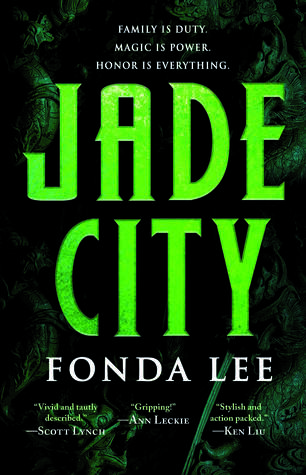
jade city


Magical jade—mined, traded, stolen, and killed for—is the lifeblood of the island of Kekon. For centuries, honorable Green Bone warriors like the Kaul family have used it to enhance their abilities and defend the island from foreign invasion.

Now the war is over and a new generation of Kauls vies for control of Kekon’s bustling capital city. They care about nothing but protecting their own, cornering the jade market, and defending the districts under their protection. Ancient tradition has little place in this rapidly changing nation.

When a powerful new drug emerges that lets anyone—even foreigners—wield jade, the simmering tension between the Kauls and the rival Ayt family erupts into open violence. The outcome of this clan war will determine the fate of all Green Bones—from their grandest patriarch to the lowliest motorcycle runner on the streets—and of Kekon itself.

Jade City begins an epic tale of family, honor, and those who live and die by the ancient laws of jade and blood.


Color me impressed with my first encounter with Fonda Lee’s writing!

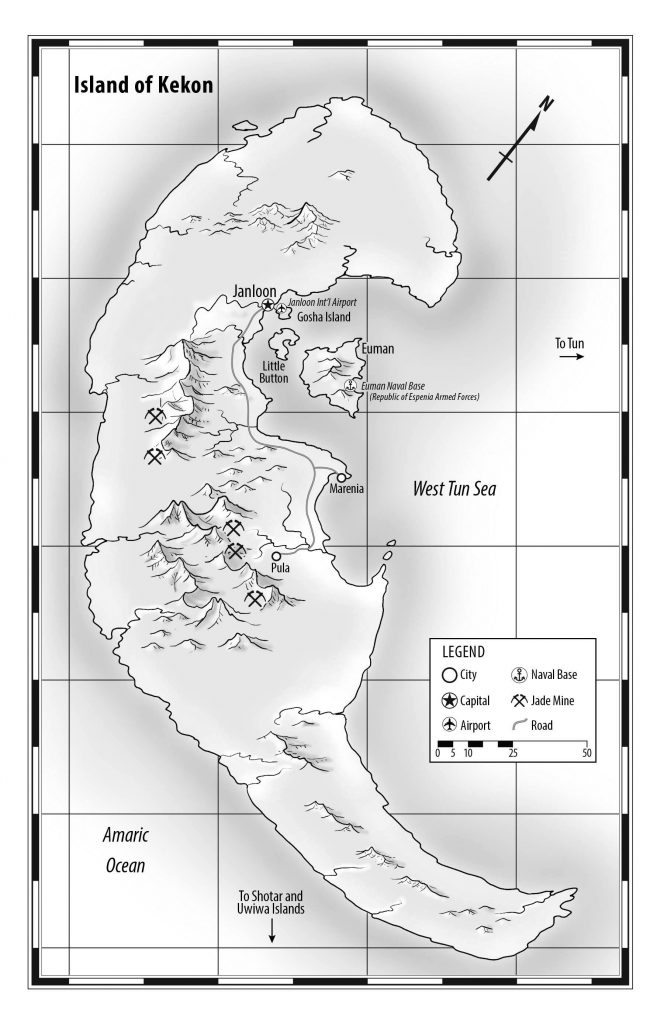
In Jade City, Lee does an incredible job creating a world that is wholly believable. She manages to flesh out the geography, culture, politics, commerce, international relations and religion of Kekon and its surrounds, without ever resorting to infodumping.

Jade City 02

Then she adds a dash of magic. In this world, jade can be used to amplify a person’s energy, focusing it into superhuman powers. Green Bone warriors train in martial arts with a twist, incorporating feats of Lightness, Strength, Deflection, Channeling and Perception. The result looked in my mind a bit like the fighting seen in such films as Crouching Tiger, Hidden Dragon.

Against this lush backdrop Lee has painted for us is what is essentially a gangster family saga, with lots of East Asian influence. The Clan of No Peak is led by the Kaul family, while the Mountain Clan answers to a ruthless woman named Ayt Mada. Each group takes tribute from areas of the city of Janloon that it considers its own territory, in exchange for protection and endorsement. Each controls a significant portion of the nation’s most valuable commodity of jade. The characters on all sides of the conflict are pretty great, which is not to say they’re all good people.

Jade City 03

The most compelling relationships for me were the ones among the Kaul siblings. Lan, Hilo and Shae are as different as can be, but family still holds an implacable bond to the Kekonese, no matter how one might try to escape it.

“Screw you, Hilo,” she snapped. “I can kill my ex-boyfriends myself.”

If forced to come up with something I didn’t appreciate about this book, the only thing I can think of is my confusion over the apparent lack of cell phones. By all appearances Janloon is a modern place, with luxury vehicles and airports – but every time they use a phone, they need to first locate a landline, even when contacting one another with new developments can literally be a matter of life and death. This is as far as can be from a big deal for me, but it did pull me from the story long enough to stop and wonder.

Jade City is an adult fantasy novel with a bit of sex and a fair share of violence. It is the first installment of a planned trilogy, and tells of what amounts to the opening salvo in a larger war to come. I look forward to finding out what happens next with the clans of Kekon.

“All he knew now was that remorse had a natural limit. After a certain amount of time, it finished eating a person hollow and had to alchemize into anger that could be turned outward lest it consume its host entirely.”

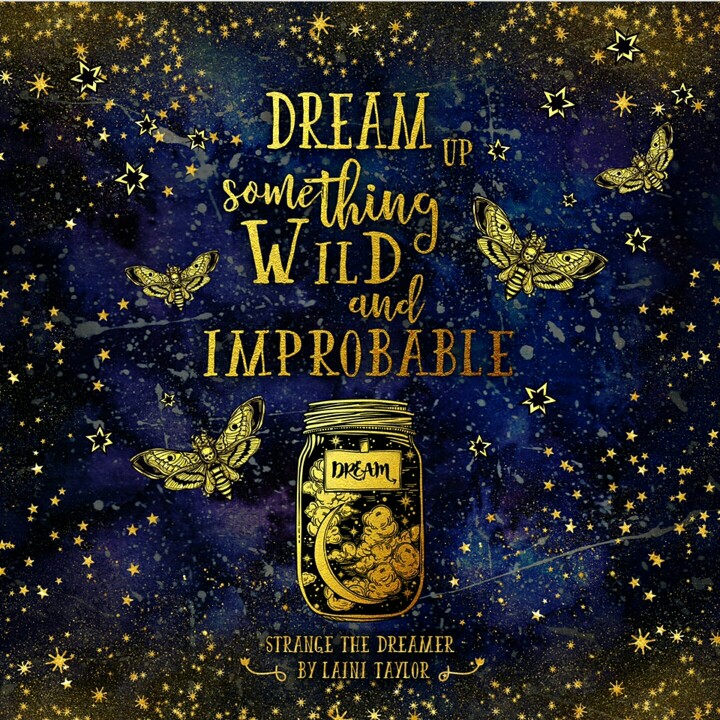
Book Review: STRANGE THE DREAMER by Laini Taylor

From the author of the Daughter of Smoke & Bone trilogy comes the first in a new duology.

The dream chooses the dreamer, not the other way around—and Lazlo Strange, war orphan and junior librarian, has always feared that his dream chose poorly. Since he was five years old he’s been obsessed with the mythic lost city of Weep, but it would take someone bolder than he to cross half the world in search of it. Then a stunning opportunity presents itself, in the person of a hero called the Godslayer and a band of legendary warriors, and he has to seize his chance or lose his dream forever.

What happened in Weep two hundred years ago to cut it off from the rest of the world? What exactly did the Godslayer slay that went by the name of god? And what is the mysterious problem he now seeks help in solving?

The answers await in Weep, but so do more mysteries—including the blue-skinned goddess who appears in Lazlo’s dreams. How did he dream her before he knew she existed? And if all the gods are dead, why does she seem so real?

Welcome to Weep.

What a fun and magical ride this was!

We have librarians and warriors, gifts both dark and magical, gods both terrible and beautiful, and, of course, dreams. Wrapped inside this fascinating story, within swaths of lovely imagery, is a message about discrimination and forgiveness.

I thought Taylor did an amazing job at world-building, with Zosma and Weep and everything in between. I found Lazlo (junior librarian, orphaned and raised by an austere order of monks) to be an extremely likable and relatable protagonist, and his chapters were just as interesting as those of Sarai, the Godspawn girl trapped in a floating citadel.

There is a romance in these pages, but as a YA book, it manages to be just steamy enough without crossing into mature content.

Normally I really despise it when I read a book thinking it’s going to be a standalone novel, just to find out at the end that it’s not. This is the case here, but for some reason, it didn’t really bother me. Maybe because our characters have found ways to deal with this book’s main conflict, with plenty of story left to tell featuring the new conflict introduced with the cliffhanger ending. Rather than being annoyed, I am satisfied with this book and very much look forward to reading it’s sequel!

Book Review: HISTORY OF WOLVES by Emily Fridlund


Linda’s childhood could be described at best as nontraditional, at worst as isolating and lonely. In her fifteenth year she meets little Paul Gardner and his parents, and everything changes.

The reader knows from the very start that something tragic is going to happen, without knowing exactly what. What unfolds is a moving tale that “confronts the life-and-death consequences of the things people do—and fail to do—for the people they love”.

In the beginning I did find myself wondering, What is the point of this part of the story? Or that one? (i.e. Mr. Grierson, Lily). But the purpose of each thread is revealed by the second half, which then goes on to wring your heart out for the remainder of the book. Overall I found it to be an ensnaring piece of literary fiction about searching for your place in the world, about guilt, about “the difference between what you want to believe and what you do,” “between what you think and what you end up doing.”

“I’ve found that some people who’ve done something bad will just go ahead and condemn everyone else around them to avoid feeling shitty themselves. As if that even works. Other types of people, and I’m not saying you’re this, necessarily, but I’m just putting it out there, will defend people like me on principle because when their turns come around, they want that so badly for themselves.”

A well-written story that is tragic but irrefutably powerful.


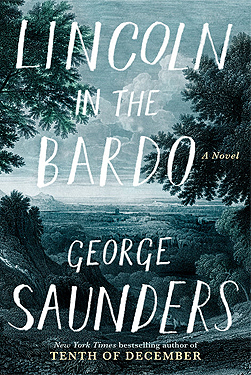
Book Review: LINCOLN IN THE BARDO by George Saunders

lincolninthebardo

“He came out of nothingness, took form, was loved, was always bound to return to nothingness.

Only I did not think it would be so soon.

Or that he would precede us.

Two passing temporarinesses developed feelings for one another.

Two puffs of smoke became mutually fond.

I mistook him for a solidity, and now must pay.”

This book was truly something amazing! Not your average read, but rather something to be experienced.

Be warned: the format of this book definitely took some getting used to. A multitude of narrators pitch in to tell the story, often for just one line at a time before switching to the next character. Interspersed within this structure are lines from Abraham Lincoln biographies and actual correspondence by his contemporaries. At the beginning I did ask myself, “Can I get past the unusual style?” The answer was very quickly revealed to be a yes, and I am so glad for it!

At the core of the story: when President Lincoln’s son Willie dies of typhoid fever he finds himself in the bardo, a place where according to Tibetan tradition we go after dying but before moving on to the next life. The colorful cast of characters young Willie encounters here all have their own reasons for not wanting to let go of the lives they knew (revenge, unfulfilled desires, etc). Many of them deny the truth of their condition even to themselves, instead choosing to believe that what they are experiencing is akin to an illness. The distasteful things they leave each night to rise up and move about are simply their “sick-forms”, left in isolation in “sick boxes” as a form of treatment. These characters offer up much absurdity and hilarity in equal measure.

willie-lincoln
William Wallace Lincoln
oak hill
Oak Hill Cemetery, the book’s setting – I don’t know why these captions won’t show up aligned in the center…

Histories report that the elder Lincoln went for a prolonged visit in the dead of night to the cemetery where his son was temporarily interred in a borrowed tomb. This story takes place over the course of that night. Though the way the story is told is so very amusing at times, it contains many moments that can be sad or touching, but also hopeful moments.

“All over now. He is either in joy or nothingness.

(So why grieve?

The worst of it, for him, is over.)

Because I loved him so and am in the habit of loving him and that love must take the form of fussing and worrying and doing.

Only there is nothing left to do.”

Besides what he felt over the loss of his child, this book also takes a look at what Lincoln may have thought about the war his country was embroiled in while he was at its helm, and those who blamed him for the deaths of so many American soldiers on both sides. There is no shortage of good lines on the subject of grief here. A few I appreciated:

“Everything nonsense now. Those mourners came up. Hands extended. Sons intact. Wearing on their faces enforced sadness-masks to hide any sign of their happiness, which-which went on. They could not hide how alive they yet were with it, with the happiness at the potential of their still-living sons. Until lately I was one of them. Strolling whistling through the slaughterhouse, averting my eyes from the carnage, able to laugh and dream and hope because it had not yet happened to me.

To us.

Trap. Horrible trap. At one’s birth it is sprung. Some last day must arrive. When you will need to get out of this body. Bad enough. Then we a bring baby here. The terms of the trap are compounded. That baby must also depart. All pleasures should be tainted by that knowledge. But hopeful dear us, we forget.”

And one last bit about the nation that may offer a bit of hope:

“Across the sea fat kings watched and were gleeful, that something begun so well had now gone off the rails (as down South similar kings watched) and if it went off the rails, so went the whole kit, forever, and if someone ever thought to start it up again, it would be said (and said truly): The rabble cannot manage itself.

Well, the rabble could. The rabble would.”


The icing on the cake: it turns out this author teaches at Syracuse University. I hail from Syracuse myself, and the hospital I work at is basically across the street from the University. I stop at the local Starbucks every morning on my way in to work, and now I wonder if maybe I’ll cross paths with him there someday 🙂


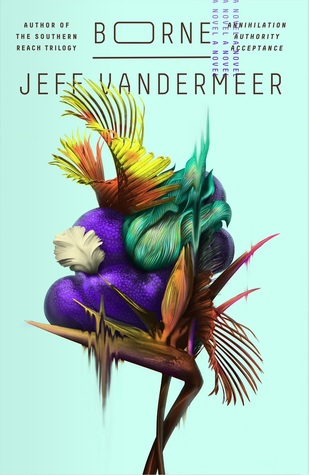
Book Review: BORNE by Jeff Vandermeer


Borne
“Am I a person?” Borne asked me.

“Yes, you are a person,” I told him. “But like a person, you can be a weapon, too.”

This was a wild dystopian speculative fiction story that asks some important questions and is quite touching at times. The land has been laid to waste by drought, conflict, and loosed biotech from the now-defunct Company. Rachel and Wick team up to take a stab at survival in this newly arranged city, and a real sense of tension is conveyed. Wick tries to maintain a hold on their territory through the dealing of information as well as his own psychoactive biotech, while Rachel scavenges for salvage off of which they can live. It’s during one of her outings that she finds something rather extraordinary.

This book left me bit confused as to the details of some of the science fiction elements. The who, what and why of the Company was never made clear, nor were specifics of some of the biotech it turned out. I think this was mostly a conscious choice by the author, but it did leave me a bit unsatisfied. Near the end I realized that the character of Mord had once been human, and it seemed like that fact had been revealed much earlier but I had somehow managed to either miss it or else forget it completely. The fact that the giant and vicious flying bear used to be human, and a former coworker of Wick’s at that, seems like a point that should be too significant to be missed/forgotten.

The story does many things right, though, and the best part by far was Borne himself – sweet and innocent and endlessly amusing.

“Those are three dead skeletons on the wall, Borne.”

“Yes, Rachel. I took them from the crossroads. I thought they would look nice in here.”

And yes, I maintain a belief in Borne’s inherent innocence. (And as it says in the book’s blurb, “in a world so broken that innocence is a precious thing.”) Borne simply does what he was designed to do, but because Rachel raises him with a human’s sensibilities, he feels great guilt and shame about his own nature. Which gives me all the feels!

“We all just want to be people, and none of us knows what that really means.”

And I sincerely hope to be able to subscribe to a book box someday(when I’m not so broke), because it turns out Quarterly’s most recent fiction Literary Box was curated by Vandermeer and included some of his own drawings of just what Borne looks like in some of his many forms. How fun is that?!


If you like science fiction of the speculative and dystopian variety, amusing plant/animal/salvage/biotech thingies, and The Feels, then give this one a read!

We’re All Mad Here

Wow, almost 10 months since my last post, huh? Not to mention over 2 years since publishing a book.

To be unsparingly honest, life has been a bit rocky for me over these past many months.

I’ve been dealing with depression and anxiety since I was 22 years old, and although it was fairly-well controlled for a decade or so, that insidious SOB has been giving me a run for my money lately. It seems to me this struggle has become something of an epidemic in our world, and I feel as though research into the problem has just got to turn up some more answers soon, along with better treatment options. Regardless, hands-down the most important thing you can do in a situation like this is to acknowledge that there is hope, even if your brain chemistry is trying to send you  signals that say otherwise. Do not give up-when you feel able to reach out for help, do it!

That being said, one of the indicators by which I can measure my mood is how often I’ve felt the urge to write. When the depression is in check, let me at that keyboard, baby! Since I’ve been in a downswing for a while now, I have no pages to show for it. With a little help I’m working at getting the situation in hand, however, and hope to feel the bite from the writing bug again in the near(ish) future.

In the meantime, my appetite for reading has survived intact-perhaps even grown, as sometimes sitting up in bed to read is as much as one feels capable of accomplishing on a dark day. With nothing of my own to share with you at the moment, I can at least talk about the work of others that I’ve been enjoying.

Suffice it to say I am well ahead of my goal for this year’s Goodreads 2016 Reading Challenge. Though it may sound silly, I was kind of bummed when last year’s Goodreads Choice Awards rolled around and I had only read 2 of the many nominated books. I aimed to avoid that problem this year, and have focused on reading mostly 2016 releases. I will be voting in several categories this time around, not to worry!


NONFICTION

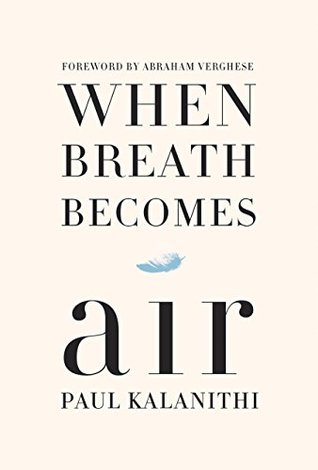
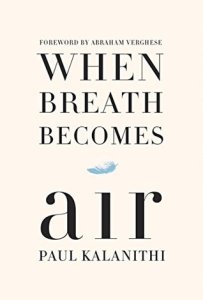
I’m actually just about to start reading nonfiction book titled This is Your Brain on Parasites: How Tiny Creatures Manipulate Our Behavior and Shape Society by Kathleen McAuliffe, but since I can’t comment on that one yet, my favorite nonfiction read so far this year is without a doubt Paul Kalanithi’s When Breath Becomes Air.
2016 Nonfiction

As the blurb says, this book examines the question of what makes life worth living, even in the face of death. Dr. Paul Kalanithi wrote it in between his diagnosis of terminal lung cancer at 36 years of age and his death less than 2 years later. It’s a moving story about an individual, but also eloquently addresses a matter of undeniable importance to us all.

Kalanithi spends the first half of the book describing his path to becoming a neurosurgeon and neuroscientist, as well as what drove him to start on such a trajectory. There are plenty of interesting anecdotes here that shine some light on what it’s like to be a med student and then a neurosurgery resident. Mixed in with those are Kalanithi’s feelings about how literature, another of his loves, reflects that which we feel makes life meaningful, while science helps explain the physiology behind it all. He seeks the crossroads where the brain and the mind, life and death, all intersect.

The second half of the book tells us about how Kalanithi dealt with learning of his diagnosis. Having met patients at similar points in their lives and helping them traverse the unnerving landscape, he is surprised to discover that it’s still completely unrecognizable to him once it has become personal. What do you do with yourself after receiving that kind of news?

Having also obtained an M.A. in English Literature, Kalanithi has a talent with words as well as with surgical tools. His book is well written, as engaging as it is touching. Some of my favorite parts are as follows:

“I began to realize that coming in such close contact with my mortality had changed both nothing and everything. Before my cancer was diagnosed, I knew that someday I would die, but I didn’t know when. After the diagnosis, I knew that someday I would die, but I didn’t know when. But now I knew it acutely. The problem wasn’t really a scientific one. The fact of death is unsettling. Yet there is no other way to live.”

“That morning I made a decision: I would push myself to return to the OR. Why? Because I could. Because that’s who I was. Because I would have to learn to live in a different way, seeing death as an imposing itinerant visitor but knowing that even if I’m dying, until I actually die, I am still living.”

“The tricky part of illness is that, as you go through it, your values are constantly changing. You try to figure out what matters to you, and then you keep figuring it out…Death may be a one-time event, but living with terminal illness is a process.”

“Grand illnesses are supposed to be life-clarifying. Instead, I knew I was going to die-but I’d known that before. My state of knowledge was the same, but my ability to make lunch plans had been shot to hell. The way forward would seem obvious, if only I know how many months or years I had left. Tell me three months, I’d spend time with my family. Tell me one year, I’d write a book. Give me ten years, I’d get back to treating disease. The truth that you live one day at a time didn’t help: What was I supposed to do with that day?”

And then, before his wife’s moving epilogue written after Kalanithi’s death in March of 2015, the last of his own words in this book are a message to his baby daughter, a plea:

“There is perhaps only one thing to say to this infant, who is all future, overlapping briefly with me, whose life, barring the improbable, is all but past.

The message is simple:

When you come to one of the many moments in life where you must give an account of yourself, provide a ledger of what you have been, and done, and meant to the world, do not, I pray, discount that you filled a dying man’s days with a sated joy, a joy unknown to me in all my prior years, a joy that does not hunger for more and more but rests, satisfied. In this time, right now, that is an enormous thing.”


FICTION

Dark Fantasy/Urban

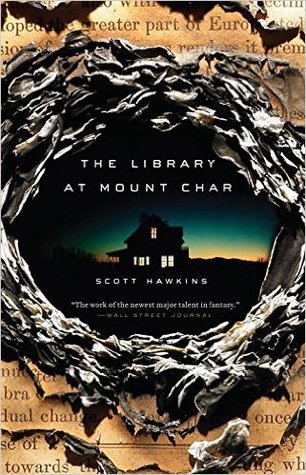
One of my other favorite reads of the year so far was The Library at Mount Char, a sort of dark fantasy/cosmic horror story, and the debut novel by author Scott Hawkins.

the-library-at-mount-char

This book is pretty mind-blowing. In many ways it’s unique, but it did slip me up every now and again-I would think I was reading one kind of story, and then things would twist just a bit and I found myself reading something different that I had previously thought. A few of these differing elements I didn’t love. But the vast majority of it was amazing!

Carolyn grew up as a regular American, but when she was about 8 years old the neighborhood suffered a cataclysmic event and she and the other kids from around the block were orphaned. But not to worry, Father will adopt them all and bring them home to live in his library, where he will raise them as he himself was raised. The merits of this are debatable.

Father can do pretty much anything-stop time, call down lightning, resurrect the dead. The children become his apprentices, each assigned to one of the twelve catalogues of Father’s secret knowledge. No one is allowed to study outside of their catalogue. One wonders if this is perhaps because that might make them as powerful as him, and therefore a potential threat…?

As the children grow up learning and mastering their own crafts, the training at times can be cruel beyond your wildest imagination. Not even your thoughts are private in Father’s world, and so objecting to his methods even in your mind can bring about unspeakable punishment. And so if Carolyn wants to do anything to change her circumstances, she must makes plans without consciously thinking about her desire for retribution.

But time is different in the Library, and Carolyn has been planning for a long time.

There is fantasy here, and horror, but also a brand of black comedy. Children get roasted alive inside a bronze grill shaped like a bull. But even death is not an escape, because Jennifer’s catalogue is healing and she will always be tasked with resurrecting you. Margaret’s catalogue is death, and you can only imagine what her training entails. Carolyn learns thousands of languages, including those of the animal kingdom, and Rachel’s ghost children can tell her about all possible futures.

David’s catalogue is war and murder. When visiting our world, he is told to pick out some “American” (normal human) clothes to blend in. Having an imperfect understanding of this, he chooses to wear a purple tutu, because it most closely resembles the loincloth he is accustomed to wearing. Reading the scene where he breaks into a jail and slaughters almost everyone inside while wearing his Israeli flak jacket and a tutu is as hilarious as it is grisly.

Another moment that had me laughing out loud: two lions have made a pledge to the librarians to keep Steve (a normal American) safe, but one sustains grievous wounds while protecting him. On the phone, Steve asks Carolyn if the suppositories for treating blood loss that she gave him would work on a lion. After she tells him yes, there is silence on the phone for a moment. She asks if he’s still there, and his response is along the lines of, “Yeah, I’m just thinking I’m not quite at the point where I’m ready to stick anything up a lion’s ass.”

One of the things that didn’t impress me much was the attempts at humor that didn’t quite hit home. Like the rapport between Erwin and the president. I felt like I was watching two versions of the Fonz giving each other thumbs up and saying, “Ayyyy!” and it just didn’t seem to fit with the tone of the story at that time (a tone which, admittedly, switches between one of cosmic horror and one of humor from time to time-it just didn’t work here). As a side note, though, Erwin is a great character!

There are deeper messages here, too, like just what qualities we might want in the individual who “controls reality.” How can you foster power while avoiding corruption? Is there a way to maintain what makes us human while still being honed into the kind of being who can make the choices necessary to keep the world turning?

A wild and fantastical ride, The Library at Mount Char not quite like anything else I’ve read. I was left with some questions regarding plot issues, but overall I found this to be a really enjoyable read.

Science Fiction/Fantasy

Morningstar by Pierce Brown is an amazing example of how to finish out a trilogy! (If you’ve not read the first two books in this series, you may want to avoid this review, although it’s fairly spoiler-free.)

morningstar

I admit, I did spend some few portions of this installment just plodding along to get through it, but by the end I was seriously impressed with how Brown managed to wrap things up so satisfactorily. I don’t know that the conclusion of any thread of this story could have been handled any better.

Revolution may be a necessary thing, but it can often be an ugly thing. Darrow realizes that he has to make some sacrifices if he wants any chance of winning the war against the hierarchy maintained by Gold society. The bonds he’s forged with other characters over the course of the books is a carrying force as he maneuvers through the battle for his people’s freedom.

There were two characters Darrow had had a…let’s say “falling out” with in the previous books, and at least one of them I very much wished to see a reconciliation with here. Brown did not disappoint. Darrow’s relationship with one of these is mended in a most splendid manner. But you can’t win all the time, even when you’re the protagonist of a trilogy, and so the other friendship is not to be salvaged, but even that was handled in a satisfying manner. That particular story line did not have a happy ending, but a fair and poignant one.

And then there’s Mustang, who has managed to become more and more epic as the series progressed.

Overall, a gratifying conclusion to the Red Rising story. Bravo!

New Adult Fantasy

As long as I’m discussing later books in a series, I’d like to mention A Court of Mist and Fury by Sarah J. Maas (again, if you haven’t read its predecessor, A Court of Thorns and Roses, you may wish to skip this part-this one is definitely spoiler territory). I thought the first book was “just” alright for the most part, until it took us Under the Mountain, when things started getting really good! And I’ll classify this one as “new adult fantasy” because I have a YA fantasy book in mind as well, and also because the hotness factor of the romance in this installment was a big part of what I enjoyed about it.

a-court-of-mist-and-fury

Much like with the first book in this series I was underwhelmed for a good chunk of the beginning of ACoMaF, but then partway through things got pretty darn good and I was hooked.

Some of the rules of Maas’s fantasy world here can be kind of silly, but I didn’t find that too difficult to overlook. My main gripe with this installment pertains to Tamlin, High Lord of the Spring Court, Feyre’s great love in the previous book.

Maas puts a lot of effort into giving a reasonable and acceptable explanation as to why it’s okay for Feyre to fall right out of love with Tamlin, and then soon after fall head over heels for someone else. And yeah, it is a reasonable explanation, and it certainly happens in real life, but it just really didn’t sit well with me here seeing as the ENTIRE POINT of the first book is this fated love between Feyre and Tamlin, how their love for one another broke a decades-old curse, and how they prove wrong those who argue that humans have inconstant hearts…so, yeah.

In order to make it more acceptable to readers that Feyre falls out of love with Tamlin, in these pages he is a completely different person than he was in the first book. Yes, both he and Feyre were suffering some PTSD after what happened Under the Mountain, but the total 180 in Tamlin’s character was just not believable.

That being said, once the little nuisance of her grand fated love affair with Tamlin is handily dealt with, we are treated to one heck of a fun and thrilling romance between Feyre and Rhys. Here is the swooning the first book was missing! As annoying as it was that the relationship with Tamlin we read about in the first book was just summarily negated, the romance in this book is SO MUCH BETTER!

Feyre’s character in book 2 is feminism made incarnate. She insists on being the master of her own destiny, will settle for nothing less than an equal partnership in her love life, and she kicks ass to boot.

I kind of agree with another reviewer that in this book Rhys proved to actually be a bit too perfect; in book 1 he seems a conflicted character, an antihero who plays both sides for reasons of his own. Here, it turns out his hidden agenda has to do with the fact that he is the ultimately self-sacrificing hero to end them all. This makes him somehwhat less compelling than originally thought. But that’s alright, he’s still pretty amazing.

And, oh, the sexy times in A Court of Mist and Fury-suffice it to say I’m still fanning myself over here!

Maas introduces plenty of fun and exciting adventures for our heroes in this installment. The Weaver was captivating and perfectly creepy, the defense of the hidden city of Velaris was pretty epic, and the final outcome of the confrontation with the king of Hybern and his various associates promises a lot more great story to tell in book 3.

I’ll definitely be reading on in this series, and am looking forward to more of Rhys and Feyre in their new relationship. As we wait for book 3’s release I’ll be keeping my fingers crossed that Maas will find a way to redeem Tamlin as well as Lucien, having them BOTH realize the mistakes they made despite good intentions. And now there will be a new dynamic with Elain and Nesta, and the members of the Night Court-May 2017 can’t come soon enough!

Young Adult Fantasy

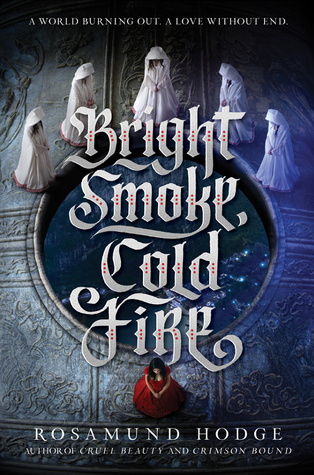
Now for YA fantasy. I REALLY enjoyed Cruel Beauty  by Rosamund Hodge. Her second novel, Crimson Bound, was less of a winner for me. Her new release, Bright Smoke, Cold Fire, lies somewhere in between. There are some really great story elements here, but you’ll see in my review why I’m a bit conflicted.
bright-smoke-cold-fire

This is something of a Romeo and Juliet retelling, but really Hodge just pulls bit and pieces from the familiar to masterfully weave her own mythos. The fact that a Romeo and a Juliet from two different houses fall in love with each other is such a small part of this story, and it happens before the reader even joins in.

The world in these pages is anything but dull: evocative, intricate, captivating-but, yes, a bit convoluted. I admit to having some trouble for a time following which of the 3 main families held which beliefs and why. There is great depth to Hodge’s world-building here, but things do get a tad confused in the telling.

But the essence of it all was quite wonderful: a white fog dubbed the Ruining has killed everyone in the world except for those who ran to the island of Viyara, where they were able to hide within the protective dome of magic they managed to throw up at the last minute. The price of maintaining that protection, however, must be paid in blood.

Or is that a lie? If so, who benefits from it? Can Death truly be bargained with? Is necromancy the answer to stopping the Ruining, or is it what caused it to begin with?

We have a whole troupe of main characters to lead us through the search for answers: Runajo has joined the Sisterhood of Thorn in an effort to prove to herself that she can pay any price to try to save her world. As an infant, the Juliet had spellwork laid upon her that renders her the sword her family wields against those who would offer them harm – except that a certain Romeo has managed to see that, duty or no, she is still a person and not just a weapon. Paris wants nothing more than to make his family proud, but spends these pages learning painfully that to some, justice is no more than a pretty word.

Romance takes a backseat as the relationships examined most closely in this book are the complicated ones forged between Runajo and Juliet, as well as Paris and Romeo.

Other familiar names include Tybalt and the King of Cats. Add a dash (or more) of the living dead, and you’ve got yourself a recipe for one exciting tale!

BUT THEN IT JUST STOPPED.

Sure, on the goodreads page it says “Untitled, #1” after Bright Smoke, Cold Fire (which I find kind of strange to begin with, it remaining “untitled” even after this book has been published), but I took that to mean that perhaps it was the first story in a series all based in the same universe, or some such. I did not realize it meant that this book has no real ending – no resolution whatsoever, it leaves off right when you expect things to come to a head. In a panicked state, I flew to the computer to search the author’s personal website and heaved a sigh of relief to see it described there as “part one of a duology”. But nowhere on the book itself does it say this – no “part one” or “first in a series”, not even a “to be continued”. Which is just plain cruel.

I’m really questioning the publisher’s move to not indicate anywhere on or in the book itself that this is a part one, not a complete story. That just seems odd. Finding myself at the end of the book like that without any answers or satisfaction whatsoever and no indication that there would be a sequel was quite off-putting. I’m still kind of upset about it. But still, I was enjoying this story quite a bit and so will definitely be checking out the next book, whenever that gets released. I guess there’s nothing for it but to wait.

Le sigh.


I’m noticing a serious lack of hard science fiction in my list, which is odd since I do love the genre. It seems all of the sci-fi I’ve read this year have been earlier releases. Of those, the one that left the biggest impression would have to be Neal Stephenson’s Seveneves, and although it won’t qualify for this year’s Choice Awards, I’ll go ahead and discuss it here. Because it’s my blog and I can do what I want with it :p

seveneves

There is a really compelling story at the bottom of Seveneves. A cosmic event allows astronomers to predict the destruction of Earth as we know it in approximately 2 years. Nations the world over pool their resources in a desperate attempt to send what and who they can up to the International Space Station, so that even though the majority of seven billion people will die, there is at least a chance that humanity’s legacy can be preserved off-planet.

We get a lot of very detailed descriptions of the missions that must be undertaken, the problems that arise and the solutions devised by some of the world’s brightest minds. We see that, even though the people elected to escape to the space station were hand-selected as those best suited to the overall mission, human nature can defy the best-laid plans. And then we’re shown how 5,000 years later the descendants of the drastically reduced human race, who were left with the task of repopulating their species with some rather harsh environmental restrictions, have managed to get along until such a time when they can return to humanity’s original home in an attempt to “re”-terraform it.

There is a lot of hard science here, and some of it is utterly fascinating. But Seveneves’ main problem, in my opinion, is that only about 30% of it is devoted to actual storytelling, while the rest is preposterous amounts of mind-numbing info dumps regarding such topics as orbital mechanics and astrophysics.

The last third feels like a different book, which is perhaps unavoidable as 5,000 years have passed and everything has changed. It was interesting in the possibilities it presented, but I actually found that I enjoyed the first two-thirds more (which might seem odd, as the last third includes a good deal more of the storytelling.) And then the ending felt kind of abrupt, not offering much satisfaction in the way of conclusion.

So obviously I experienced mixed feelings throughout this book – overall I quite liked it, but am extremely glad to have finally finished it so I can move on to something else.


Hmm, I see there’s a lack of literary fiction as well, another genre I typically enjoy. Looking back, it seems I didn’t read much of it this year, and wasn’t all that impressed with that which I did. I suppose I’ll have to try to fit in some more of this type before the 2016 Goodreads Choice Awards officially roll around. Challenge accepted!


Lastly, because I think you’ll agree this post has gone on long enough, there’s one other 2015 release I’d like to mention because it was exactly what I needed when I needed it the most. Jenny Lawson’s Furiously Happy is marketed as “a funny book about horrible things”.

furiously-happy

Lawson acknowledges the dark moments in the lives of those with mental illness, but stresses the importance of recognizing that those moments never last forever. You will feel better again, and when you do, she urges you to make up for time lost by making sure your good days are damn good. This is what being Furiously Happy is all about.

And while receiving such sound advice, you’ll likely also find yourself laughing out loud when reading the stories in this book. I know I did on more than a few occasions. Funny stuff! Never before have I found myself this (or at all) amused by taxidermy.

I will definitely be checking out Lawson’s previous book and following her blog. Consider me a fan.


In conclusion, I can’t help but feel that me even writing this blog post is a sign that things are starting to look up. I sincerely hope to get back to writing and actually have something to show for it someday soon!