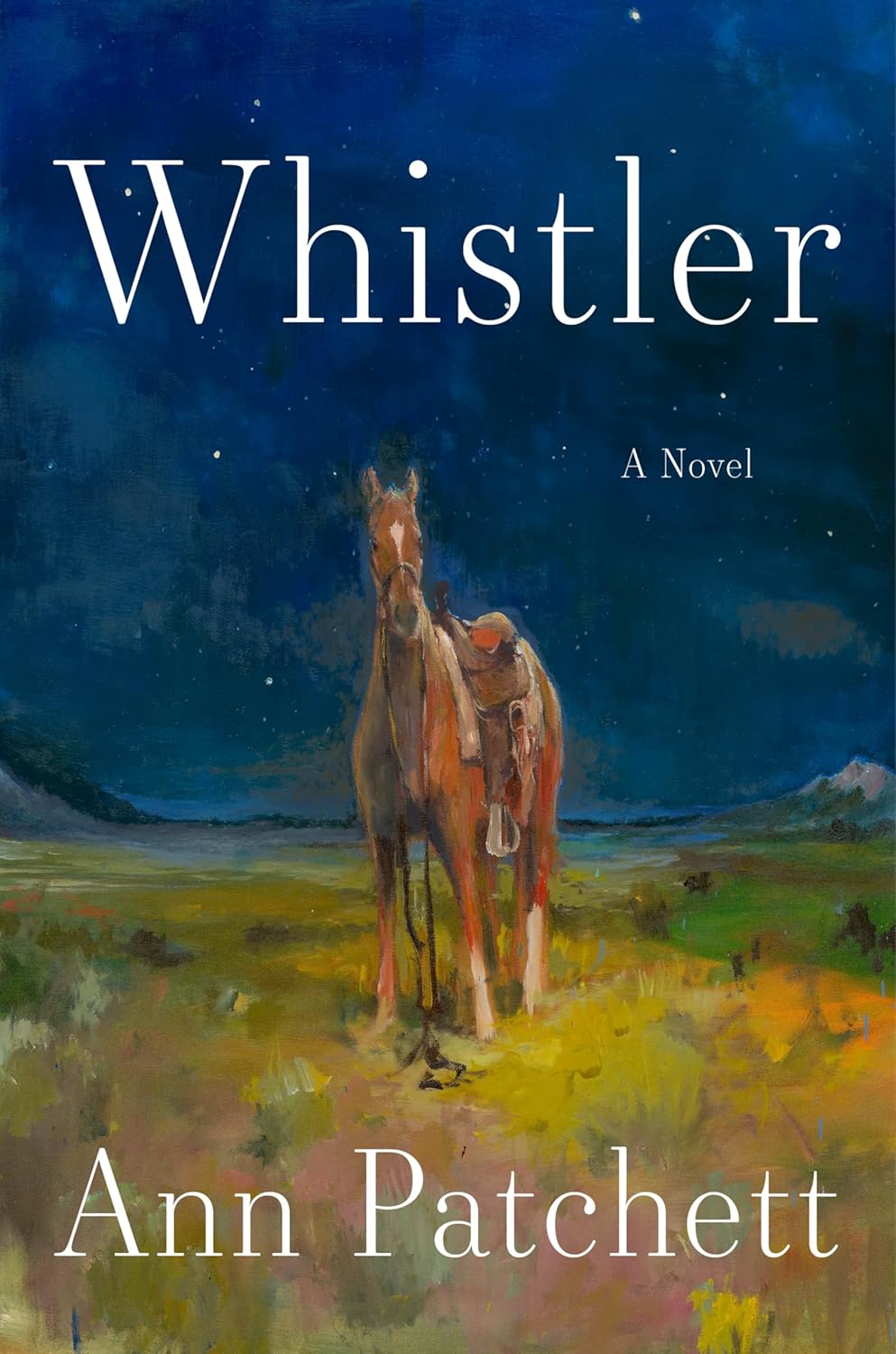
Whistler by Ann Patchett is a 296 page standalone novel published in June of 2026 by Harper.
Genre
Literary Fiction, Contemporary Fiction
Description
The acclaimed, prize-winning #1 New York Times bestselling writer returns with a moving, luminous novel that reminds us of the sweetness and impermanence of life and the power of connection to defy time.
When Daphne Fuller and her husband Jonathan visit the Metropolitan Museum of Art, they notice an older, white-haired gentleman following them. The man turns out to be Eddie Triplett, her former stepfather, who had been married to her mother for a little more than year when Daphne was nine. Now fifty-three, Daphne hasn’t seen Eddie for many years, not since the fateful event that changed the direction of both their lives. Meeting again, time falls away; while their relationship was brief, it had a profound impact on them both, and now that they are reunited, they have no intention of ever being separated again.
Whistler is a story about two adults looking back over the choices they made, and the choices that were made for them. It’s a story about bravery, memory, the often small yet consequential moments that define our lives, and the endless stream of loss that in time comes for us all. Beautiful in its simplicity, it is ultimately about how love endures, and how the feeling of being known by one other person, even for a short period of time, can change everything.
Opening Line
“Old guy,” my husband said in a low voice, his lips touching my ear. “Near the exit sign.”
My Thoughts
This is a literary novel about an adult woman reconnecting with her former stepfather. They already had a lovely relationship during his relatively brief marriage to her mother, but then they also trauma bonded just before circumstances forced them apart for the next several decades.
This is a sweet story, and I loved Eddie. I also quite liked Daphne’s sister Leda and father Buddy, but for the life of me could not understand most of the characters in this book (someone had apparently just been unfriendly, but that wasn’t how I had interpreted the scene; someone was described as witty after saying something completely mundane and unremarkable to this reader). Does the author only interact with pretentious weirdos, and so believes that’s just how everyone in the world is? Even Jonathan, who in most regards was quite lovely, was really annoying me at times – for a spell I believed the story might be heading toward a divorce for the Fullers. And don’t even get me started on Polly, Skip, or…Daphne’s mother (did we ever get her name?)
Was the story of the horse, Whistler, a metaphor for Daphne, or for Eddie, or both? I’m not sure. Regardless, I felt warm all over from the power of the positive relationships in this story. It has some great lines as well: both the profound and the humorous. I appreciated the messages about childhood, parenting, family, death, etc etc.
She would say it was because childhood never leaves us. We seal the room up and cover it in sheetrock. We dry and sand and paint, but the pocket of history remains, and sooner or later someone always winds up tapping on the wall, commenting on the way it sounds strangely hollow in there, and then the whole thing comes tumbling down.
And a bonus point for the mention of George Saunders’ Lincoln in the Bardo!
Bookshop.org
 Jessica Crawford