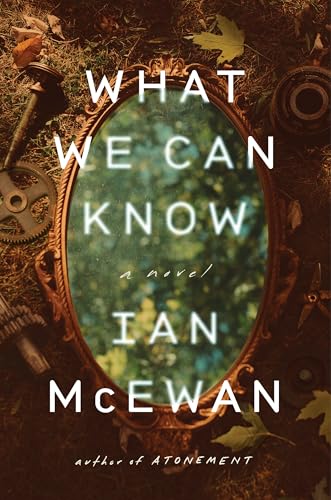
Book Review: WHAT WE CAN KNOW by Ian McEwan

What We Can Know by Ian McEwan is a 320 page novel published by Knopf in 2025.

Genre:

Literary Fiction, Speculative Fiction

Synopsis:

2014: A great poem is read aloud and never heard again. For generations, people speculate about its message, but no copy has yet been found.

2119: The lowlands of the UK have been submerged by rising seas. Those who survive are haunted by the richness of the world that has been lost.

Tom Metcalfe, an academic at the University of the South Downs, part of Britain’s remaining island archipelagos, pores over the archives of that distant era, captivated by the freedoms and possibilities of human life at its zenith. When he stumbles across a clue that may lead to the lost poem, a story is revealed of entangled loves and a crime that destroy his assumptions about people he thought he knew intimately well.

What We Can Know is a masterpiece, a fictional tour de force that reclaims the present from our sense of looming catastrophe, and imagines a future world where all is not quite lost.

Opening Line:

On 20 May 2119 I took the overnight ferry from Port Marlborough and arrived in the late afternoon at the small quay near Maentwrog-under-Sea that serves the Bodleian Snowdonia Library.

My Thoughts:

This is a story in two parts.

The part readers are presented with first takes place one hundred years in the future (which is chronologically after the second part). A university history professor is researching a “lost” poem from 2014 (I think; thereabouts, at least). The poet wrote it for his wife, recited it at a dinner party for her birthday, and then gifted her the only copy of it in writing. It was never published, but became famous by word of mouth and by dint of the air of mystery created by its absence, and the rumors created thereby. Going through all the primary records from the time period before the cataclysmic climate crisis has the historian reading all of the emails and text messages of the poet and everyone in his circle. He also reads the journals of the poet’s wife, Vivien. He believes he has come to know this woman as intimately as a close friend. But then the second part of the story is a sort of memoir of Vivien’s, and it goes to show just how limited one’s understanding of another person can really be when going only by the material evidence left in their wake.

Honestly, the first half of book was pretty rough. I was enjoying the story and the narrative conceit, but the style it was written in was a bit of a challenge to get through. It was pretty dry at times, with long blocks of text of information that had my eyes glazing over. Several times during this part of the story I found my mind had wandered and I was just skimming the words – sometimes I bothered to go back and reread what I missed, sometimes I didn’t.

But the payoff of the second half, and what it does to the first, was worth it. Seeing Vivien’s truth juxtaposed to the interpretation of an academic a century later was a nice touch.

Note: You may want to skip this one if you have a loved one with dementia! Also if you require likeable characters (the first part had these, the second did not other than the one with Alzheimers, and that is a ROUGH storyline)

Book Review: I CHEERFULLY REFUSE by Leif Enger

I Cheerfully Refuse by Leif Enger is a 336 hardcover standalone novel published April 2, 2024 by Grove Press.

Genres: Dystopian, Literary Fiction, Speculative Fiction

Opening Line:

Here at the beginning it must be said the End was on everyone’s mind.

The Synopsis: Set in a not-too-distant America, I Cheerfully Refuse is the tale of Rainy, an aspiring musician setting sail on Lake Superior in search of his departed, deeply beloved, bookselling wife. An endearing bear of an Orphean narrator, he seeks refuge in the harbors, fogs, and remote islands of the inland sea. After encountering lunatic storms and rising corpses from the warming depths, he eventually lands to find an increasingly desperate and illiterate people, a malignant billionaire ruling class, a crumbled infrastructure, and a lawless society. As his guileless nature begins to make an inadvertent rebel of him, Rainy’s private quest for the love of his life grows into something wider and wilder, sweeping up friends and foes alike in his wake.

My Thoughts:

This meditative dystopian story is brimming with gorgeous prose (and also a fair number of instances of turns of phrase I did not understand, prompting me to wonder if the author was not American–but it turns out that is not the case). In a bleak near future with collapsed infrastructure, a U.S. headed by a proudly illiterate president, and more and more people choosing to shuffle off this mortal coil in search of something better, Rainy and Lark have managed to make a happy life for themselves. When they let a young man board in their home, trouble follows right behind him. Rainy finds himself on the lam in a sailboat on a capricious Lake Superior. As he grieves for the life and love lost to him and attempts to evade those who would do him harm, he encounters numerous strange characters, along with a girl who needs him (and vice versa) more than either would like to admit.

It’s taken me all my life to learn protection is the promise you can’t make. It sounds absolute, and you mean it and believe it, but that vow is provisional and makeshift and no god ever lived who could keep it half the time.

But beyond the beautiful writing and the likable main character who was easy to root for, my overall feeling while reading this book was one of melancholy. So even though I appreciated the author’s skill with words (the main villain is described as a “relentless hellhound and necrotic Adonis”!), how glad am I that I set sail with Rainy on his journey? I’m still not sure myself. 3.75 stars

Bookshop

Goodreads

Bookstagram

Book Review: I WHO HAVE NEVER KNOWN MEN by Jacqueline Harpman

I cannot mourn for what I have not known.

This was a bleak but stimulating look at a potential dystopian future (similar to The Handmaid’s Tale, but much stranger and more disquieting).

I told myself that I’d been hypocritical and, since I had no one to lie to, I discovered that you can lie to yourself, which felt very strange

Groups of forty people (all men or all women) are caged together in bunkers all across the planet. One day an alarm sounds and all the guards run, never to be seen again. Our main character and her fellow prisoners are lucky enough to be in the cage that a guard was in the middle of unlocking when the alarm began to wail. The women don’t know where they are (is it even planet Earth?), where everyone else is, or why they were kept caged for years in the first place. They venture out into the desolate world and find ways to survive for the remainders of their lives. Since the MC is the only one who was a child when their incarceration began, she not only does not remember “normal” life before their imprisonment, she also is very aware that some day she will be the only person left alive.

I am the sterile offspring of a race about which I know nothing, not even whether it has become extinct. Perhaps, somewhere, humanity is flourishing under the stars, unaware that a daughter of its blood is ending her days in silence.

I just wish we got a little more of a hint at some answers about what actually happened to lead to things being the way they are. Beyond “it’s maybe not Earth”, the answers are completely left to the reader’s imagination.

Bookshop.org

Goodreads

Bookstagram

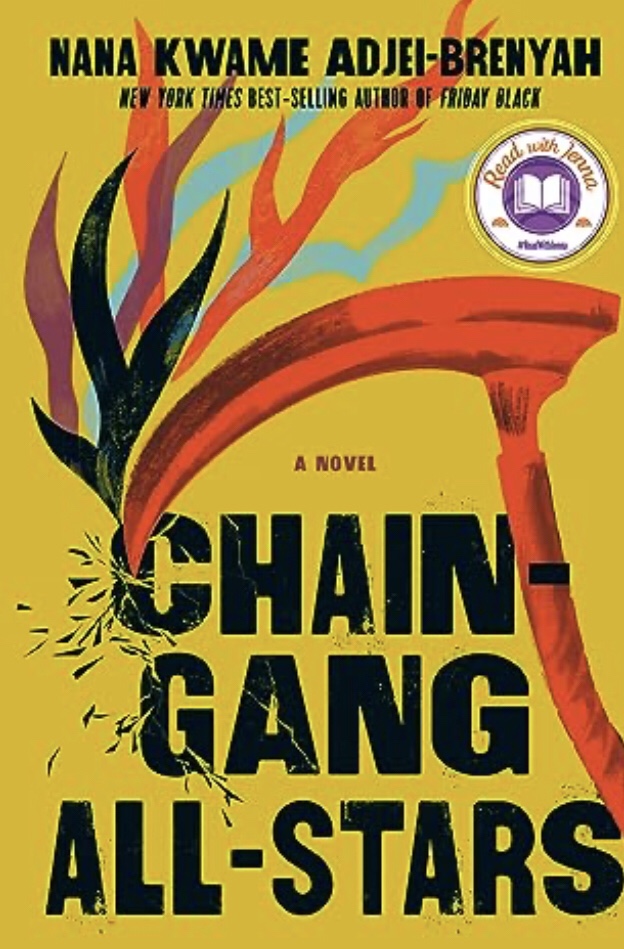
Book Review: CHAIN-GANG ALL-STARS by Nana Kwame Adjei-Brenyah

I thought of how the world can be anything and how sad it is that it’s this.

This book is an R-rated Hunger Games for the social justice-minded.

The story was so unrelentingly grim that I don’t know that I could say reading it was a pleasant experience. But damn is it well-written.

”J, I want you to fight as hard as you’ve ever fought today. Everybody that isn’t me is about to try to kill you. You understand that?” “I do,” Craft said. “Well then, let’s see if this is our last day in hell.” “It is not,” Craft said.

As great as the characters of Thurwar and Staxxx were, it was the Singer and Jungle Craft’s story I found the most compelling; Dr. Patty’s story was great, too.

I can appreciate the use of footnotes in novels. Here, some of them give real life examples of some of things about the American justice and prison systems that happen in the story, lest you think they were too absurd to be based in truth.

I admit, I did not understand what happened in the last paragraph, which was frustrating, but I immediately turned to the internet and found the explanations there satisfactory.

This is a really powerful story, and one I don’t think I’ll soon forget.

He thanked God for showing him his life had not been for nothing. He did not know what it was for, but he knew it was not for nothing.

Bookshop

Bookstagram

Goodreads

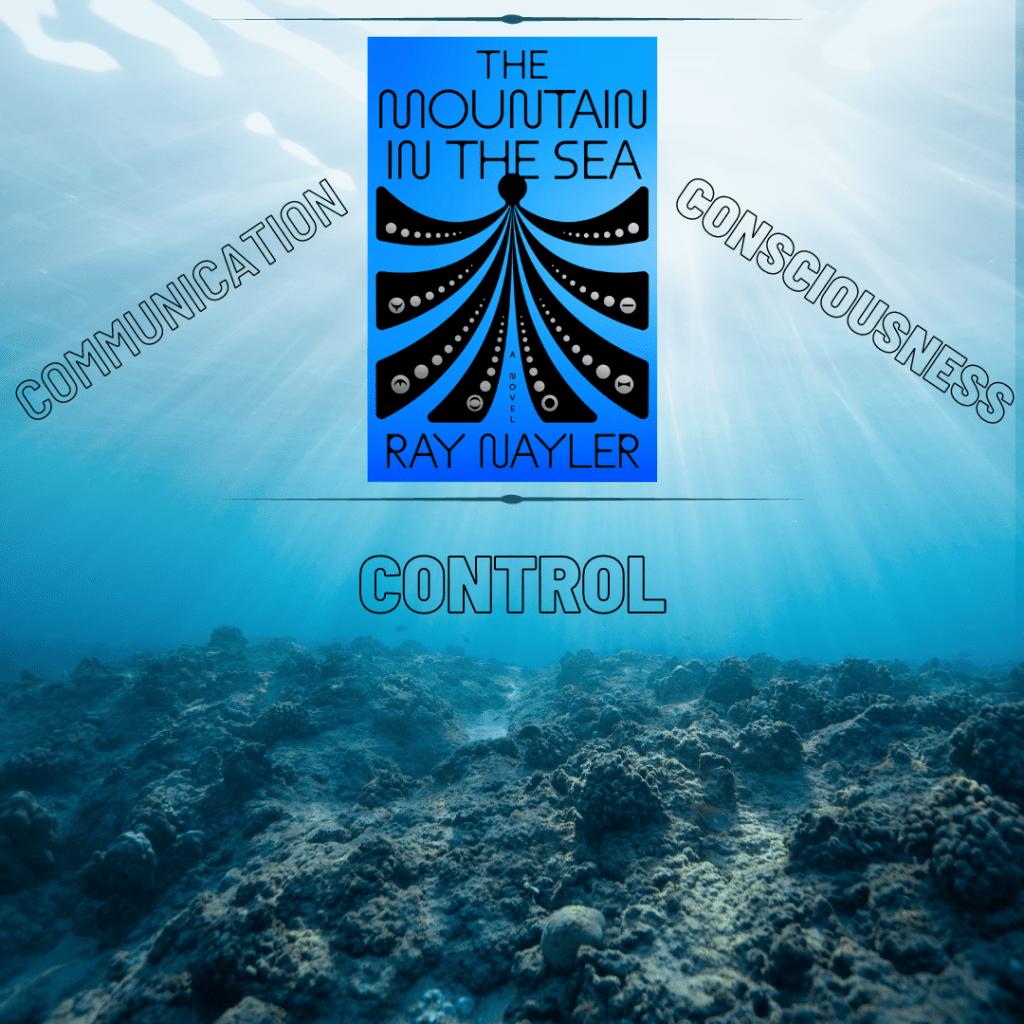
Book Review: THE MOUNTAIN IN THE SEA by Ray Nayler

🐙 Come for the octopuses, stay for the story about communion, consciousness, and control!

The Mountain in the Sea is science fiction set in a near future when many industries are fully automated with AI. The Con Dao archipelago of Vietnam is a wildlife sanctuary for many species, including octopuses so intelligent they just might rivals humans. A tech corporation with a vested interest in seeing what can be learned from these animals has sent in researchers and sealed the area off, protecting it by deadly means if necessary.

The characters that this book primarily follows are:

Ha Nguyen, a marine biologist who struggles with the indifference people feel for the things that don’t personally affect them, and who learns the importance of connection, making oneself understood, and striving to understand others even if it doesn’t mean always agreeing with each other.

Rustem, a Tartar hacking genius who may have gotten involved in something bigger than he realized.

Eiko, a young Japanese man enslaved on an automated fishing rig.

Other characters include a badass mercenary security specialist from a nunnery, a scientist seeking mastery of creating consciousness in an attempt to fend off her own loneliness, and an android whose very existence puts them at risk from those who feel threatened by the idea of a nonhuman mind. Some of the verbal exchanges between the android and the security agent were a joy, very funny!

The octopuses feature a lot less in this book than I thought they would – I mean, a good portion of it is ABOUT the octopuses, but they actually only show up in a handful of scenes. It’s more about the people studying them, and how the world both exist in has been shaped by conscious ingenuity and all the good and bad it creates.

Bookshop.org

Bookstagram

Goodreads