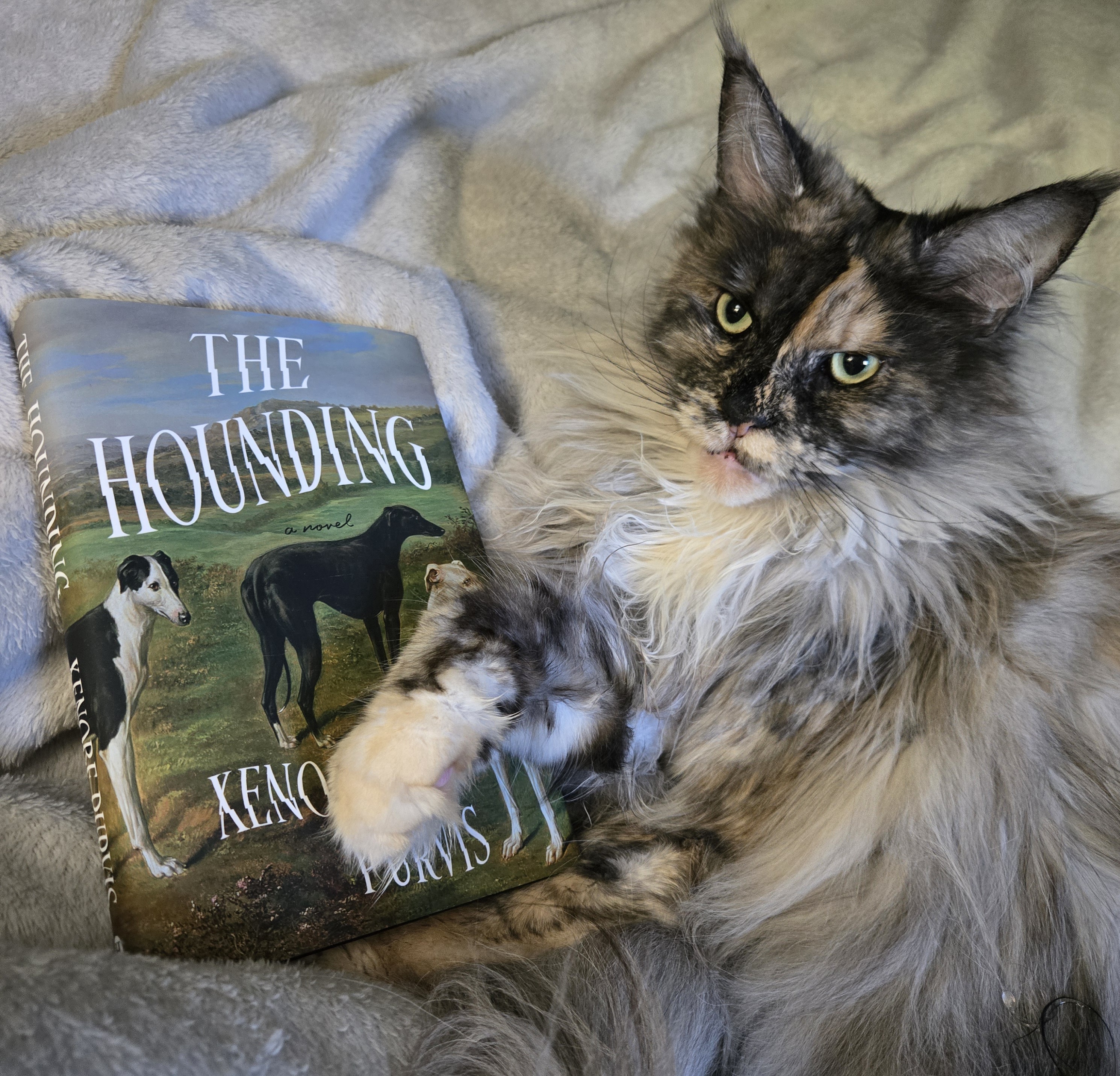
Book Review: THE HOUNDING by Xenobe Purvis

The Hounding by Xenobe Purvis is a 240 page debut novel published in 2025 by Henry Holt and Co.

Genre:

Literary Fiction, Historical Fiction

The Blurb

Even before the rumors about the Mansfield girls begin, Little Nettlebed is a village steeped in the uncanny, from strange creatures that wash up on the riverbed to portentous ravens gathering on the roofs of people about to die. But when the villagers start to hear barking, and one claims to see the Mansfield sisters transform before his very eyes, the allegations spark fascination and fear like nothing has before.

The truth is that though the inhabitants of Little Nettlebed have never much liked the Mansfield girls—a little odd, think some; a little high on themselves, perhaps—they’ve always had plenty to say about them. As the rotating perspectives of five villagers quickly make clear, now is no exception. Even if local belief in witchcraft is waning, an aversion to difference is as widespread as ever, and these conflicting narratives all point to the same ultimate conclusion: something isn’t right in Little Nettlebed, and the sisters will be the ones to pay for it.

As relevant today as any time before, The Hounding celebrates the wild breaks from convention we’re all sometimes pulled toward, and wonders if, in a world like this one, it isn’t safer to be a dog than an unusual young girl.

Opening Line:

The girls, the infernal heat, the fresh-dead body.

My Thoughts:

“Wherever we go, however we behave, there’ll always be something to drive us inside. That’s where people want us to be.”

The Crucible meets The Virgin Suicides in this haunting debut about five sisters in a small village in eighteenth-century England whose neighbors are convinced they’re turning into dogs. — For once I think the comp offered by the publisher is an apt one and not just marketing nonsense.

The atmosphere in this book is set perfectly, with the people of Little Nettlebed set on edge by the hot baking sun and the drought negatively impacting livelihoods. The five Mansfield sisters are unconventional, and a delusionally arrogant neighbor becomes obsessed with putting them in their place. Mob mentality takes over the villagers, even affecting those who try their hardest to resist.

I think the themes of this story are explored wonderfully. I also think the characterization is well done, it’s just that the manner of storytelling doesn’t allow the reader to delve too deeply into any single character. Third person POVs shift among five different villagers throughout the book, and we get a good sense of each of them. But the story revolves around their interactions with and feelings about the Mansfield sisters, whose own POVs we do not get directly. I thought this was the perfect way to tell their story.

He searched within his soul and saw a terrible truth: that he’d rather they were dogs than damaged girls…He’d rather they were free than confined…

I included this book in my spooky season reading not because it’s horror (it’s not) or brings autumn feels to life on the page (nope), but for the witch hunt vibes, and in this it did not disappoint!

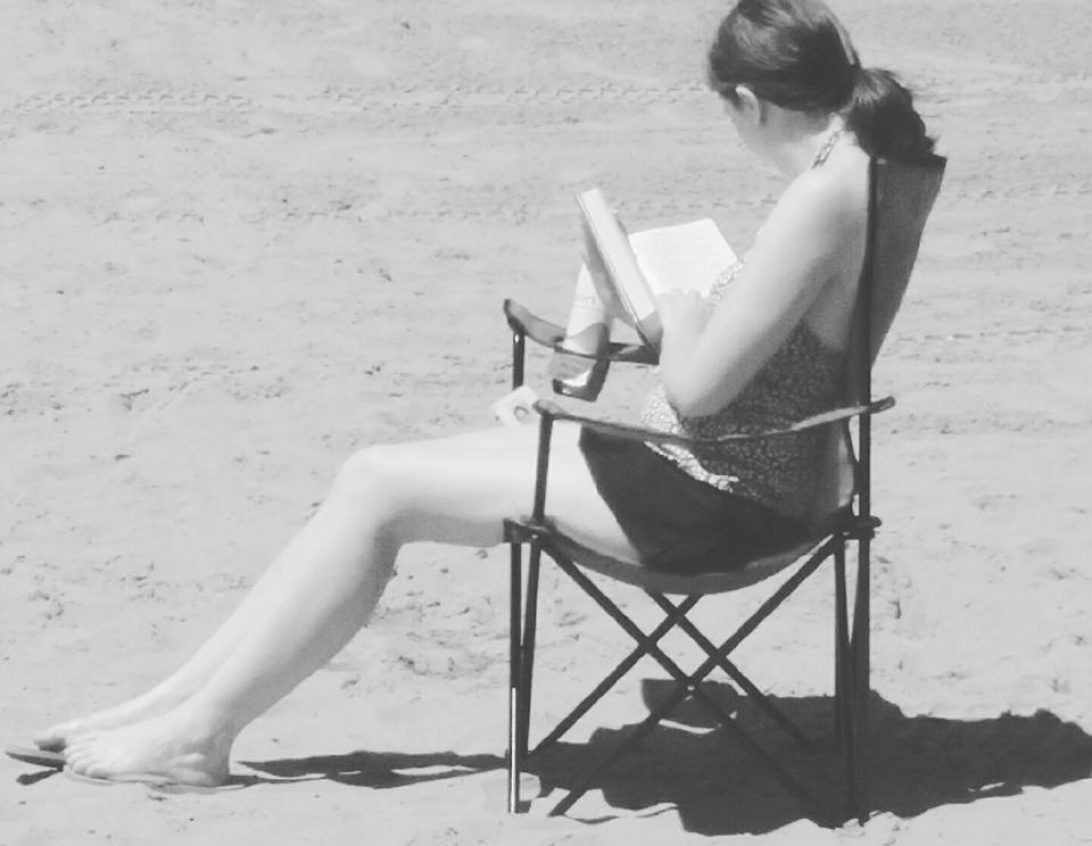
Disclaimer: Maine Coon cat Freya does not approve of any hounding whatsoever

Goodreads

Bookstagram

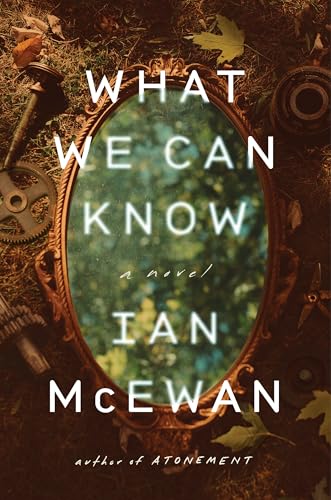
Book Review: WHAT WE CAN KNOW by Ian McEwan

What We Can Know by Ian McEwan is a 320 page novel published by Knopf in 2025.

Genre:

Literary Fiction, Speculative Fiction

Synopsis:

2014: A great poem is read aloud and never heard again. For generations, people speculate about its message, but no copy has yet been found.

2119: The lowlands of the UK have been submerged by rising seas. Those who survive are haunted by the richness of the world that has been lost.

Tom Metcalfe, an academic at the University of the South Downs, part of Britain’s remaining island archipelagos, pores over the archives of that distant era, captivated by the freedoms and possibilities of human life at its zenith. When he stumbles across a clue that may lead to the lost poem, a story is revealed of entangled loves and a crime that destroy his assumptions about people he thought he knew intimately well.

What We Can Know is a masterpiece, a fictional tour de force that reclaims the present from our sense of looming catastrophe, and imagines a future world where all is not quite lost.

Opening Line:

On 20 May 2119 I took the overnight ferry from Port Marlborough and arrived in the late afternoon at the small quay near Maentwrog-under-Sea that serves the Bodleian Snowdonia Library.

My Thoughts:

This is a story in two parts.

The part readers are presented with first takes place one hundred years in the future (which is chronologically after the second part). A university history professor is researching a “lost” poem from 2014 (I think; thereabouts, at least). The poet wrote it for his wife, recited it at a dinner party for her birthday, and then gifted her the only copy of it in writing. It was never published, but became famous by word of mouth and by dint of the air of mystery created by its absence, and the rumors created thereby. Going through all the primary records from the time period before the cataclysmic climate crisis has the historian reading all of the emails and text messages of the poet and everyone in his circle. He also reads the journals of the poet’s wife, Vivien. He believes he has come to know this woman as intimately as a close friend. But then the second part of the story is a sort of memoir of Vivien’s, and it goes to show just how limited one’s understanding of another person can really be when going only by the material evidence left in their wake.

Honestly, the first half of book was pretty rough. I was enjoying the story and the narrative conceit, but the style it was written in was a bit of a challenge to get through. It was pretty dry at times, with long blocks of text of information that had my eyes glazing over. Several times during this part of the story I found my mind had wandered and I was just skimming the words – sometimes I bothered to go back and reread what I missed, sometimes I didn’t.

But the payoff of the second half, and what it does to the first, was worth it. Seeing Vivien’s truth juxtaposed to the interpretation of an academic a century later was a nice touch.

Note: You may want to skip this one if you have a loved one with dementia! Also if you require likeable characters (the first part had these, the second did not other than the one with Alzheimers, and that is a ROUGH storyline)

Book Review: THE MARTHA’S VINEYARD BEACH AND BOOK CLUB by Martha Hall Kelly

The Martha’s Vineyard Beach and Book Club by Martha Hall Kelly is a 336 page standalone novel published in 2025 by Ballantine Books.

Genre:

Historical Fiction

Synopsis:

2016: Thirty-four-year-old Mari Starwood is still grieving after her mother’s death as she travels to the storied island of Martha’s Vineyard, off the coast of Massachusetts. She’s come all the way from California with nothing but a name on a piece of paper: Elizabeth Devereaux, the famous but reclusive Vineyard painter. When Mari makes it to Mrs. Devereaux’s stunning waterfront farm under the guise of taking a painting class with her, Mrs. Devereaux begins to tell her the story of the Smith sisters, who once lived there. As the tale unfolds, Mari is shocked to learn that her relationship to this island runs deeper than she ever thought possible.

1942: The Smith girls—nineteen-year-old aspiring writer Cadence and sixteen-year-old war-obsessed Briar—are faced with the impossible task of holding their failing family farm together during World War II as the U.S. Army arrives on Martha’s Vineyard. When Briar spots German U-boats lurking off the island’s shores, and Cadence falls into an unlikely romance with a sworn enemy, their quiet lives are officially upended. In an attempt at normalcy, Cadence and her best friend, Bess, start a book club, which grows both in members and influence as they connect with a fabulous New York publisher who could make all of Cadence’s dreams come true. But all that is put at risk by a mysterious man who washes ashore—and whispers of a spy in their midst. Who in their tight-knit island community can they trust? Could this little book club change the course of the war . . . before it’s too late?

My Thoughts:

Not a perfect fit for me, but there were things I enjoyed about this book, including the strong sense of place whisking me away to the beaches and cottages of 1940s Martha’s Vineyard. The historical fiction aspects were nice, including the ways WWII changed day to day life for civilians. The love for literature was great, as of course an author expects when they know their audience is going to be, well, readers!

A few things that niggled at me included the sudden and complete 180 between the two lovebirds for no discernible reason, the painful contractions and elevated BPs and edema in a woman in the very beginning of her pregnancy, and a so-called book club that seems to meet daily and assign a new book every single week but with the members VERY rarely actually seen reading or discussing the books at book club. I quite like the cover of this book, but it honestly has very little to do with the story.

There are two timelines in this book, with the bulk of the story unfolding in 1942, and only 3 chapters happening in 2016. In the latter, a character is mourning the death of her mother but declines her provider’s suggestion of antidepressants, with the implication that it would make her just forget her lost loved one. There is a lot of love for L.A. in these sections, with some random mentions of Theresa Caputo and Tori Spelling, and the implication that any other city that doesn’t demand its women be blonde therefore has “relaxed beauty standards”. The potential love interest in this part of the story seems completely unnecessary.

There is mention of a swastika design within the bricks of a house and how this suggests it is the home of Nazis, but there are plenty of homes in the U.S. with this design built into the brick pattern as it predates the symbol’s eventual association with the Nazi party.

But taken as a WWII story about the women living on Martha’s Vineyard while the men are shipped out, during U.S. military training exercises on their shores, with a bit of intrigue and family saga as well, this book worked pretty well.

Book Review: PORT ANNA by Libby Buck

Port Anna by Libby Buck is a 352 page standalone debut novel published by Simon & Schuster in 2025.

Genre:

Contemporary Fiction, Women’s Fiction

Opening Line:

A mountain of thick, dark water gathered and rose, a froth of white curling at the peak.

My Thoughts:

What a nice little trip to Maine I just took right in the middle of winter! (To clarify, I read and reviewed this book in the winter, and shared my reviews to my blog and Bookstagram closer to its publication date.)

The author’s love for the New England state is abundantly clear in this book. Readers are transported to the coast, complete with a lighthouse, sailboats, and nineteenth century cottages with ceilings of knotted wood and roofs of silvered shingles.

Our main character Gwen left her hometown of Port Anna over twenty years ago in the wake of a personal tragedy. Now in her forties and suddenly without the job and partner she assumed would be hers forever, she returns with her tail tucked between her legs. In Port Anna Gwen spends time confronting her missteps, as well as reconnecting with old friends and making some new acquaintances (including a potential love interest and a runaway teen hiding out in the forest). She begins to build her life anew.

While mostly a contemporary fiction novel, there are dashes of magical realism sprinkled throughout the story as well, most prominently exhibited by the Misses – ghosts of the lesbian couple who built Gwen’s family cottage who still let their opinions on the matters in their home known by making the walls creak and the doors slam. There is also the legend of the woman lighthouse keeper who would dive into the sea to save drowning sailors, and what ultimately became of her.

Besides being transportative, this was a very healing story about meeting ones past mistakes head on and putting one foot in front of the other until one finds their way in the world once again. Much thanks to Simon & Schuster and NetGalley for the eARC in exchange for my unbiased review.

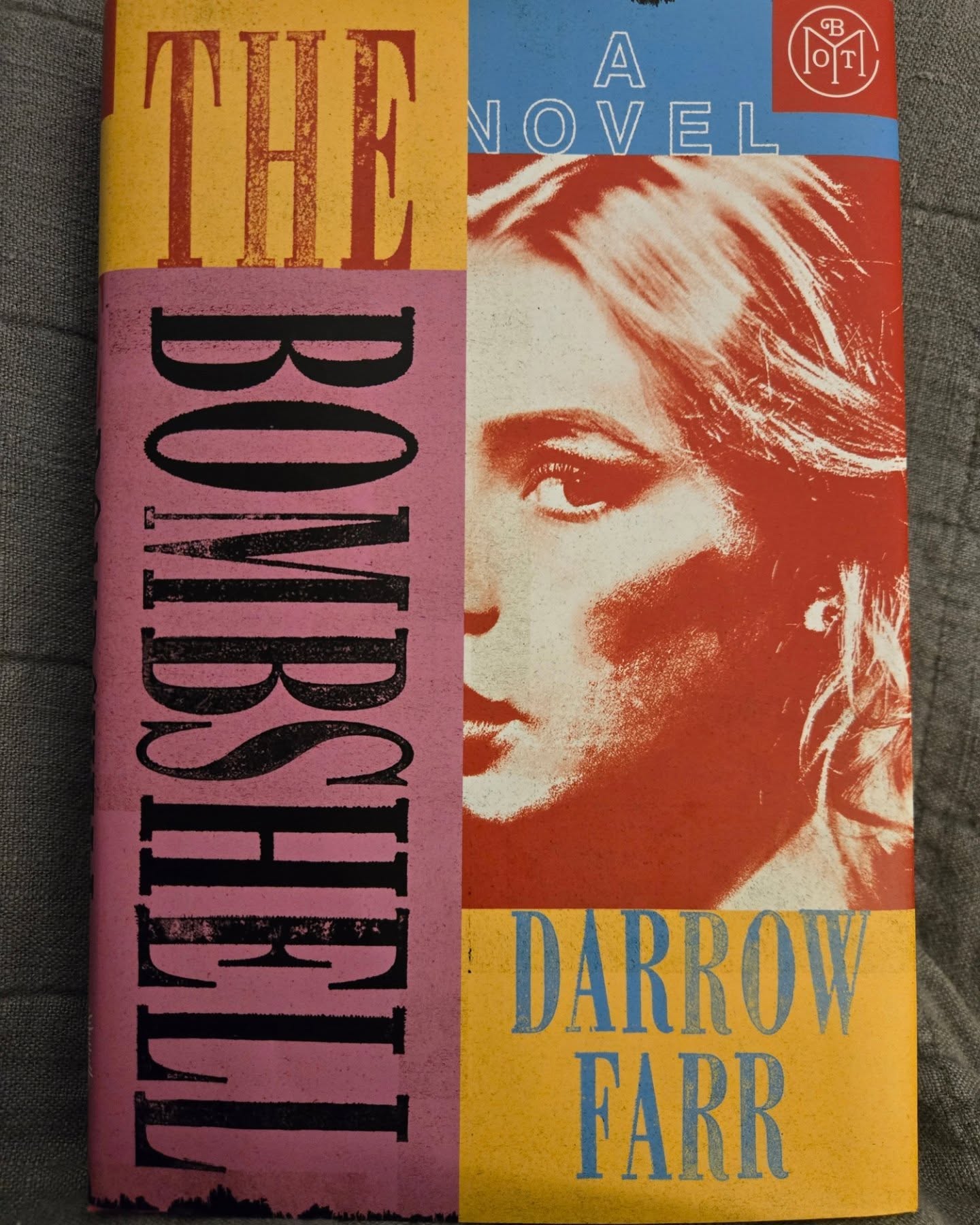
Book Review: THE BOMBSHELL by Darrow Farr

The Bombshell by Darrow Farr is a 416 page standalone novel published in 2025 by Pamela Dorman Books.

Genre:

Literary Fiction, Popular Fiction, Historical Fiction

Synopsis:

A young woman’s radicalization sparks a widespread movement and media frenzy in this explosive novel of youthful passion, political awakening and first love, by an extraordinary new talent.


Corsica, 1993. As a sun-drenched Mediterranean summer heads into full swing, beautiful and brash seventeen-year-old Severine Guimard is counting down the days until graduation, dreaming of stardom while smoking cigarettes and seducing boys in her class to pass the time. The pampered French-American daughter of a politician, Severine knows she’s destined for bigger things

That is, until one night, Severine is snatched off her bike by a militant trio fighting for Corsican independence and held for a large ransom. When the men fumble negotiating her release, the four become unlikely housemates deep in the island’s remote interior. Eager to gain the upper hand, Severine sets out to charm her captors, and soon, the handsome, intellectual leader, Bruno, the gentle university student, Tittu, and even the gruff, unflappable Petru grow to enjoy the company of their headstrong hostage.

As Severine is exposed to the group’s political philosophy, the ideas of Marx and Fanon begin to take root. With her flair for the spotlight and newfound beliefs, Severine becomes the face of a radical movement for a global TV audience. What follows is a summer of passion and terror, careening toward an inevitable, explosive conclusion, as Severine steps into the biggest role of her life.

The Bombshell is an electric novel filled with seduction and fervor as it explores the wonders and perils of youthful idealism, the combustibility of celebrity, and the sublime force of young love.

Opening Line:

In the hours before her kidnapping, Séverine Guimard claimed Antoine Carsenti’s virginity in a grotto overlooking the Mediterranean Sea.

My Thoughts:

Maybe he was a kind of oracle, and maybe they were hurtling towards a cliff’s edge on a train whose brakes she herself had dismantled.

In 1993 Severine, the daughter of the French prefect of Corsica, is abducted by a group of militant revolutionaries. When the minister of the interior refuses to negotiate with terrorists and meet their demands to release a political prisoner, the freedom fighters are left with an egotistical and brash seventeen year old girl on their hands, one who knows how to charm and manipulate people to her liking. After being given reading material about the cleansing force of violence when overthrowing oppressors to pass her time in captivity, Severine decides she wants to join the revolution. She wants to help eradicate injustice, sure – but she also really wants to be famous as the mouthpiece for the organization, and the liberation movement as a whole.

Here was Severine at the top of some mountain, speaking to a camera for five minutes, and consequently, down below, fire, blood, smoke, ash.

I was sucked into this story! Severine was a great main character – not a great person all the time, certainly, but a really fascinating and bold driving force of the story. She is not one to let decisions be made for her, and is often able to mold things into the shape of her choosing using all the wiles at her disposal. And, now, also bombs.

In that moment, she understood something else essential about Bruno: as long as she assured him of his virtuousness and correctness, he’d believe it.

I also actually wound up feeling a certain kind of way for this little found family of revolutionaries! Although I never held out much hope for their chances, when they wound up effectively being led by someone who was in it for the right and wrong reasons.

…[she] had the unsettling realization that everything she’d ever done, any choice she’d ever made, was in consideration of men. Without an audience of even one man, who was she?”

This book doesn’t end in a manner that was as big and revelatory as I had anticipated. It’s a pretty quiet finish to an otherwise explosive story, but still satisfying enough in its own way.

Book Review: A FAMILY MATTER by Claire Lynch

A Family Matter by Claire Lynch is a 240 page novel from Scribner with a publish date of June 3, 2025.

Genre:

Literary Fiction

Synopsis:

An exquisite and revelatory debut novel about the devastating consequences of one woman’s affair.

1982. Dawn is a young mother, still adjusting to life with her husband, when Hazel lights up her world like a torch in the dark. Theirs is the kind of connection that’s impossible to resist, and suddenly life is more complicated, and more joyful, than Dawn ever expected. But she has responsibilities and commitments. She has a daughter.

2022. Heron has just received news from his doctor that turns everything upside down. He’s an older man, stuck in the habits of a quiet existence. Telling Maggie, his only child—the person around whom his life has revolved—seems impossible. Heron can’t tell her about his diagnosis, just as he can’t reveal all the other secrets he’s been keeping from her for so many years.

A Family Matter is a heartbreaking and hopeful exploration of love and loss, intimacy and injustice, custody and care, and whether it is possible to heal from the wounds of the past in the changed world of today.

Opening Line:

Five and a half hours after he found out he was dying, Heron drove to his favorite supermarket.

My Thoughts:

This is an emotional story of family, love, and grief. It’s based not off a specific event, but the period of UK history (recent – 1980s) when lesbians would often lose any and all access to their children, the court claiming cutting these women out of the children’s lives would protect from immorality and save them from the shame of having a gay parent and the public ridicule it might bring.

Heron has raised Maggie by himself since she was 4 years old, and the book opens with him, now in his sixties, receiving a cancer diagnosis. Chapters rotate through 4 POVs, and a big chunk of them follow Maggie, now 43 years and dealing with many things this reader found relatable – aging parents (and in her case, having to face a parent’s mortality head on), marriage along with all of its features and bugs, raising children (including a patronizing teenager), and never feeling like there is enough time.

She is prone to thoughts like this lately, about time passing too quickly, or running out altogether. About everything slipping out of her grasp. When she told Conor she felt this way, he said it was just her age, textbook midlife crisis. Maggie had advised him, on the grounds of his own health and safety, not to offer that as an explanation again.

Another line I liked:

There ought to be more to life than washing machines and emails and remembering to put the recycling out on the right day. But life is also this. It is all of this.

Other chapters follow Dawn, Maggie’s mother, in 1982. Dawn is married and has a young daughter when she meets Hazel.

Dawn couldn’t understand it, the way Hazel made her nervous. The feeling that her mouth was full of all the things she would say if she wasn’t too embarrassed to put herself into words.

An affair is scandalous enough, but two women falling in love was even more taboo at the time. In an effort to still be able to see her daughter, Dawn suffers through indignity after indignity, like the court officials grilling her on the specifics of her sex life.

There is a lot of beautiful writing in this book, but my one complaint is that it seemed uneven in its telling. The beginning had a heavy focus on Heron and his illness, and then by the end this trail of narrative seems to kind of peter out. Maggie and Dawn have chapters throughout, but last parts of the book belong much more to the two of them. And then those just sort of end as well, without much of a climax or any sort of denouement. There were also several Britishisms that threw me a bit, but obviously that is not a fault, just something to be aware of.

I wish the parts of the story, Heron’s mortaltiy/navigating family life/what makes it all meaningful, etc etc, and Dawn’s love story along with its tragic and infuriating outcome, were brought together more cohesively. As it is, it seems kind of like two separate stories, requiring one to be dropped partway though in order to tell the other. But I really did enjoy the writing and the sentiments – Heron knowing the hardest thing about his cancer is watching his daughter watch him dying, Maggie understanding that it is important and necessary for her children to grow away from her in some respects, and Dawn’s reckoning:

Later-I mean years later-I realized the worst thing had already happened to me. When I worked that out, I was invincible.

A beautiful heartache of a story that ultimately offers hope.

My thanks to NetGalley and Scribner for the eARC in exchange for my unbiased review.

Book Review: BLACK WOODS BLUE SKY by Eowyn Ivey

Black Woods Blue Sky by Eowyn Ivey (botanical illustrations by Ruth Hulbert) is a 306 page novel published in 2025 by Random House.

Genre:

Magical Realism, Literary Fiction

Opening Line:

Birdie knew her mistakes as soon as she cracked open her eyes.

Synopsis:

An unforgettable dark fairy tale that asks, Can love save us from ourselves?

Birdie’s keeping it together; of course she is. So she’s a little hungover sometimes, and she has to bring her daughter, Emaleen, to her job waiting tables at an Alaskan roadside lodge, but she’s getting by as a single mother in a tough town. Still, Birdie can remember happier times from her youth, when she was free in the wilds of nature.

Arthur Neilsen, a soft-spoken and scarred recluse who appears in town only at the change of seasons, brings Emaleen back to safety when she gets lost in the woods. Most people avoid him, but to Birdie he represents everything she’s ever longed for. She finds herself falling for Arthur and the land he knows so well. Against the warnings of those who care about them, Birdie and Emaleen move to his isolated cabin in the mountains on the far side of the Wolverine River.

It’s just the three of them in the vast black woods, far from roads, telephones, electricity, and outside contact, but Birdie believes she has come prepared. At first, it’s idyllic, but soon Birdie discovers that Arthur is something much more mysterious and dangerous than she could have imagined, and that like the Alaska wilderness, a fairy tale can be as dark as it is beautiful.

My Thoughts:

Oh, my heart! I loved this!

This story is saturated with love for the beauty and harshness of the Alaskan wilderness. It’s about 26 year old Birdie and her 6 year old daughter Emaleen scraping by at the Wolverine Lodge, where Birdie works as a server (and sometimes parties too much). Their paths cross with that of Arthur, an odd local man who only makes occasional appearances in town, as he lives up in the mountains on the other side of the river. In Arthur, Birdie sees the kind of life she wants – one closer to nature, away from societal pressures and vices. She and her daughter move out to his rustic cabin with him. But there’s something strange about Arthur…

It wasn’t the manic, head-spinning high she’d always chased. Instead, it was like she’s been kept in small box without any holes to let in the light or air, but now she’d climbed out and could fill her lungs with the fresh mountain breeze.

I liked all of the characters, even if they frustrated me at times. They are certainly not perfect. Birdie loves her daughter fiercely, but doesn’t always prioritize the right things.

Her mom knew how to do lots of things. She knew how to find blueberries and catch fish and shoot a gun, but Emaleen was worried that she didn’t know how to keep them safe.

The “dark fairytale” part of this story I think hammers home the idea that you can’t ask anyone, man or beast, to be better than their nature – you can’t even ask it of yourself.

“Peculiar how similar they are, the stories about bears. All down through the ages…Berserkers and shape-shifters. Wild sows taking in abandoned human babies and raising them as their own. Women falling in love with boars. Girls being abducted by bears and giving birth to their children in mountain caves. Russia, Europe, North America, Japan…Again and again. Did you know, there was a whole lines of Danes who believed they were the descendants of bears?”

“Have you ever seen one skinned out before?”
“What? Oh…a bear? Yeah, years ago. A black bear. When I was a kid. Grandpa Hank shot it on the homestead.”
“You remember what it looked like?”
“Like a person.”
“Exactly. The hands, the feet, the muscles in the legs and chest, you peel back that hide and it could be your brother under it all.

It was tempting, then, to draw a direct line from us to them, to forget the unfathomable void between a man’s moral judgment and a bear’s wild mind.

I spent most of this book liking it well enough, but the last 25% or so broke my heart in the way that some of my favorites do. A beautiful story!

It was bewildering, how closely grief ran alongside joy.

(Hot take version: if you like books about the beauty of Alaska but Kristin Hannah’s writing makes your eyes roll out of your head, and you wouldn’t mind a story that features women making stupid decisions in regards to bears but couldn’t stand the characters in Julia Phillips’ Bear, try this book instead!)

Goodreads

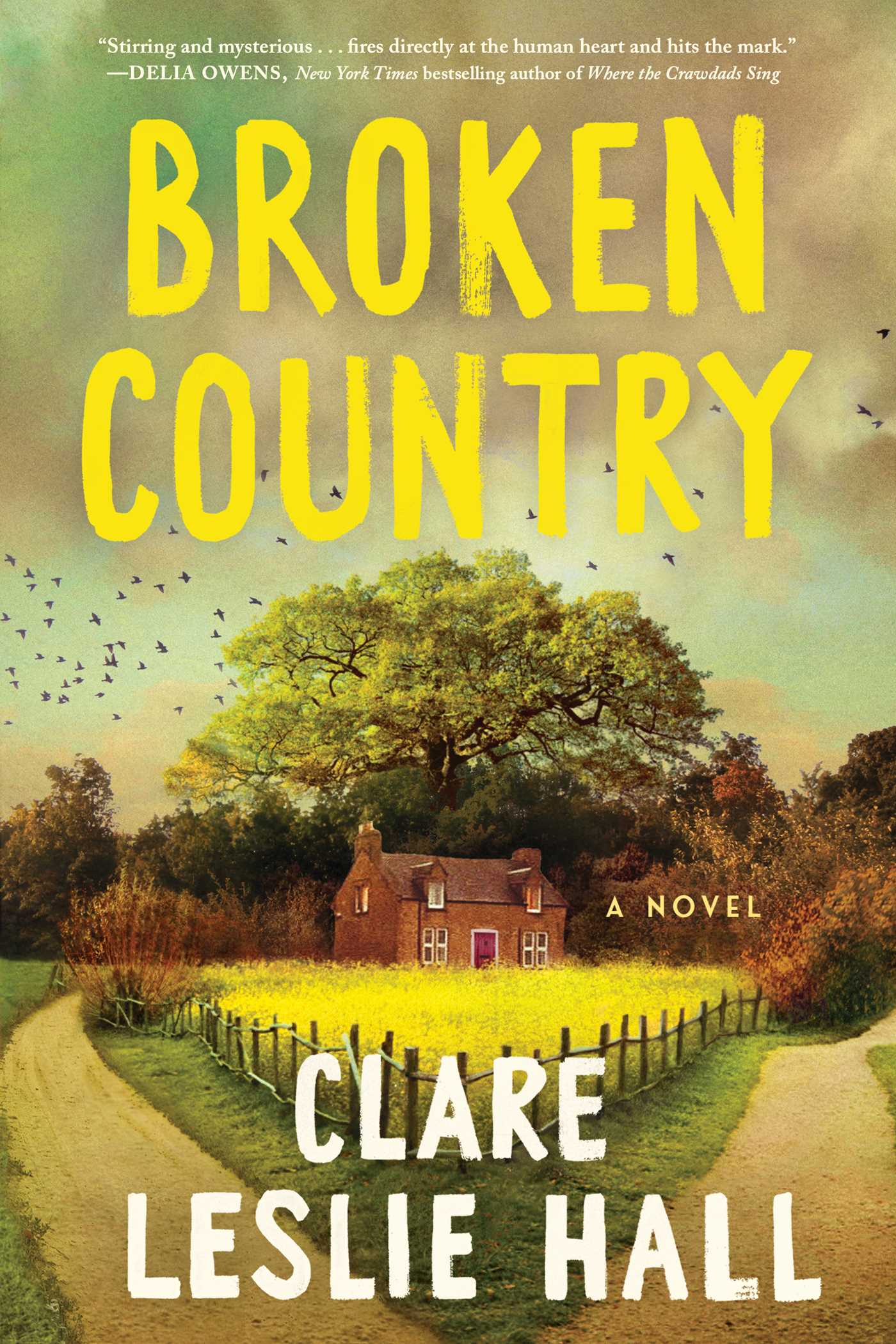
Book Review: BROKEN COUNTRY by Clare Leslie Hall

Broken Country by Clare Leslie Hall is a 320 page standalone novel published in 2025 by Simon & Schuster.

Genre:

Literary Fiction

Subgenres:

Romance, Suspense

Opening Line:

The farmer is dead, he is dead and all anyone wants to know is who killed him.

My Thoughts:

4.5 stars

This is an emotional story following Beth, a young woman in North Dorset, England. Chapters alternate between timelines, one in 1955 when teenaged Beth meets and falls in love with Gabriel Wolfe, and one in 1968 when she is married to a farmer named Frank Johnson. Interspersed are also chapters showcasing a murder trial occurring after the other timelines, although who is on trial for whose murder is not made clear until near the end.

There is a touching story here about relationships before and after the loss of a child, both broken relationships and healing ones. A love of the natural world is on display in the writing. I found the parts describing infidelity difficult to read, but everyone at least winds up addressing their wrongdoings. Beth’s complicated feelings and the looming murder we know is going to happen create a tense atmosphere set against the simple pleasures of the pastoral setting and the love for a child.

Thank you to NetGalley and Simon & Schuster for the eARC of this moving story in exchange for my unbiased review.

CW: death of a child, infidelity

Book Review: THE SAFEKEEP by Yael van der Wouden

The Safekeep by Yael van der Wouden is a 272 page standalone novel published byAvid Reader Press of Simon & Schuster in 2024, and was shortlisted for the Booker Prize 2024.

Genre:

Historical fiction, literary fiction

Synopsis:

An exhilarating, twisted tale of desire, suspicion and obsession between two women staying in the same house in the Dutch countryside during the summer of 1961-a powerful exploration of the legacy of WWII and the darker parts of our collective past.

A house is a precious thing…it is 1961 and the rural Dutch province of Overijssel is quiet. Bomb craters have been filled, buildings reconstructed, and the war is truly over. Living alone in her late mother’s country home, Isabel knows her life is as it should be—led by routing and discipline. But all is upended when her brother Louis brings his graceless new girlfriend Eva, leaving her at Isabel’s doorstep as a guest, to stay for the season. Eva is Isabel’s antithesis: she sleeps late, walks loudly through the house, and touches things she shouldn’t. In response, Isabels develops a fury-fueled obsession, and when things start disappearing around the house—a spoon, a knife, a bowl—Isabel’s suspicions begin to spiral. In the sweltering peak of summer, Isabel’s paranoia gives way to infatuation—leading to a discovery that unravels all Isabella has ever known. The was might not be well and truly over after all, and neither Eva—nor the house in which they live—are what they seem.

Mysterious, sophisticated, sensual, and infused with intrigue, atmosphere, and sex, The Safekeep is a brilliantly plotted and provocative debut novel you won’t soon forget.

Opening Line:

Isabel found a broken piece of ceramic under the roots of a dead gourd.

My Thoughts:

She had made the kitchen a lovely place. Isabel could cry at it: at how a room could be made, and left behind, and turn terrible by way of absence. How a space could miss a person. How a person could stop–

This book is literary historical fiction set in the Netherlands in 1961, with references to the years of World War II. I was digging it at first, but then wound up getting really bored by it for a while, as plot advancement stalls and we are treated to many, many pages of the main character just being angry and hateful. Things then take a turn and get quite spicy for Isabel (who seems to be portrayed as on the autism spectrum, as well as with some OCD/paranoia/anxiety stemming from the wartime).

Eva said this often: You know what I mean, and Isabel mostly never knew what she meant, not exactly. Only that Eva was frightened and that she saw people as danger. Isabel understood fear. Isabel rarely considered other people at all.

The romance aspect of the story was certainly not boring, but was portrayed in a way I found quite awkward and uncomfortable (there was a whole lot of “pushing” and “pulling” going on in the love scenes, and I understand why these terms might be used once for an affair in which the lovers don’t want to want each other, but these sentiments were a bit overused).

About two thirds of the way in, reading a non-POV character’s diary really flips things around with some magnificent revelations that blew me away. But unfortunately by the end I was bored again.

The writing on the sentence-level overall was good, certainly, but I did get tired with the stilted nature of the prose (a lot of sentences and thoughts and dialogue cut off midway without being completed).

Although I was predominantly underwhelmed by this book, the payoff from reading the diary entries alone was worth it. It will have you seething about man’s inhumanity to man, as it unveils some experiences of being a Dutch Jew in and around the time of the Holocaust.