AAPI Heritage Month Reading

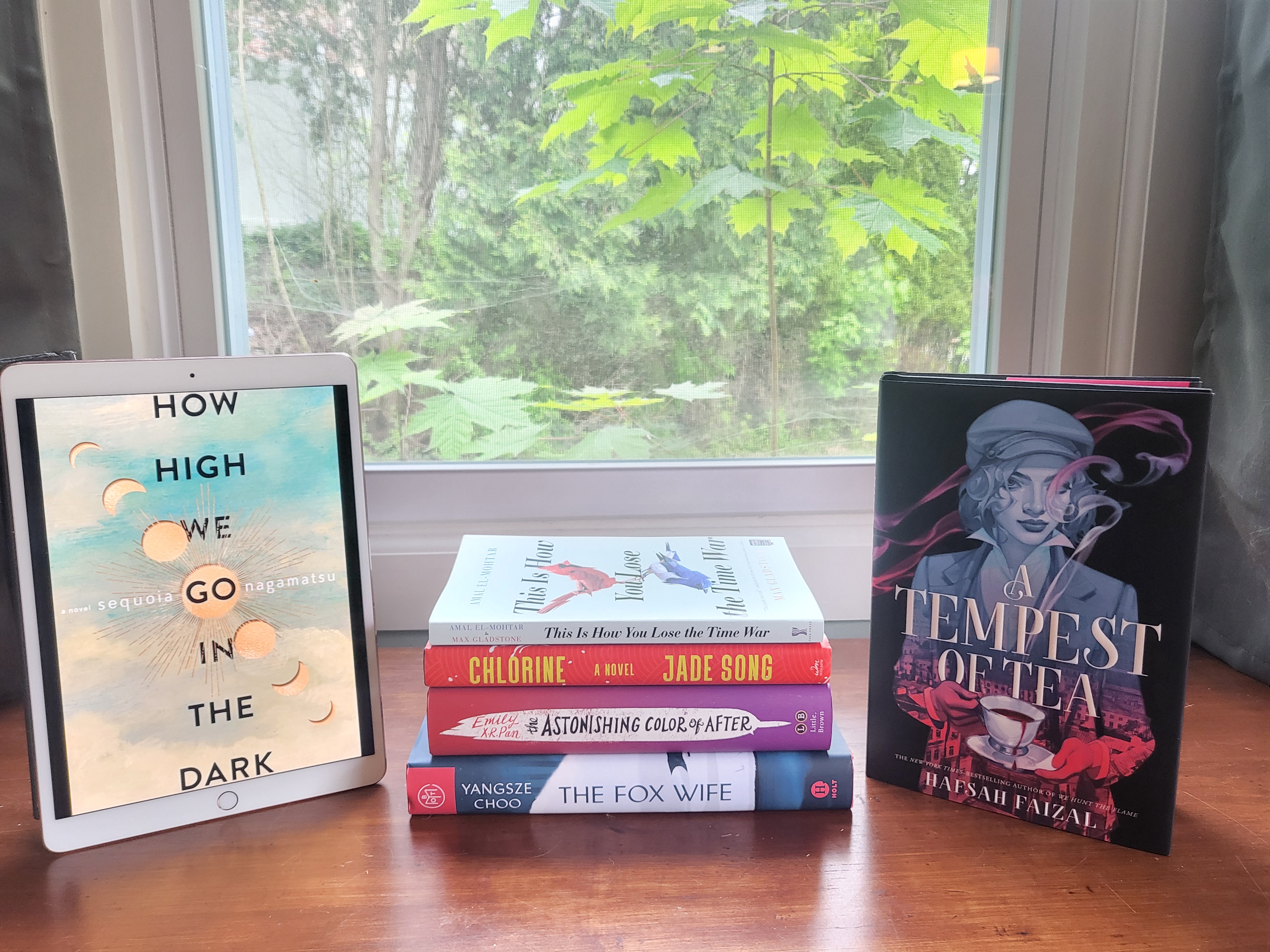
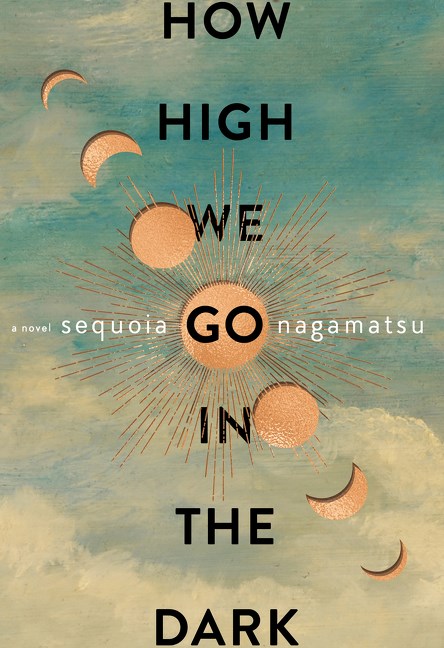
It’s AAPI Heritage Month! Here is a stack of books by Asian American and Pacific Islander authors that I’ve greatly enjoyed, plus my current listen on audio (How High We Go in the Dark by Sequoia Nagamatsu, which I am loving) and a book in my TBR I have on deck (A Tempest of Tea by Hafsah Faizal).

This is How You Lose the Time War by Amal El-Mohtar and Max Gladstone is a science fiction epistolary novella featuring time travel and a queer romance, and was published in 2019. It won Hugo, Locus, Nebula, and Goodreads Choice awards. I read and rated it before I began the habit of writing up reviews on every book I read, so I don’t have my personal thoughts on this one, but I remember being pretty blown away by it. Here is the synopsis:

Among the ashes of a dying world, an agent of the Commandant finds a letter. It reads: Burn before reading. Thus begins an unlikely correspondence between two rival agents hellbent on securing the best possible future for their warring factions. Now, what began as a taunt, a battlefield boast, grows into something more. Something epic. Something romantic. Something that could change the past and the future.

Except the discovery of their bond would mean death for each of them. There’s still a war going on, after all. And someone has to win that war.

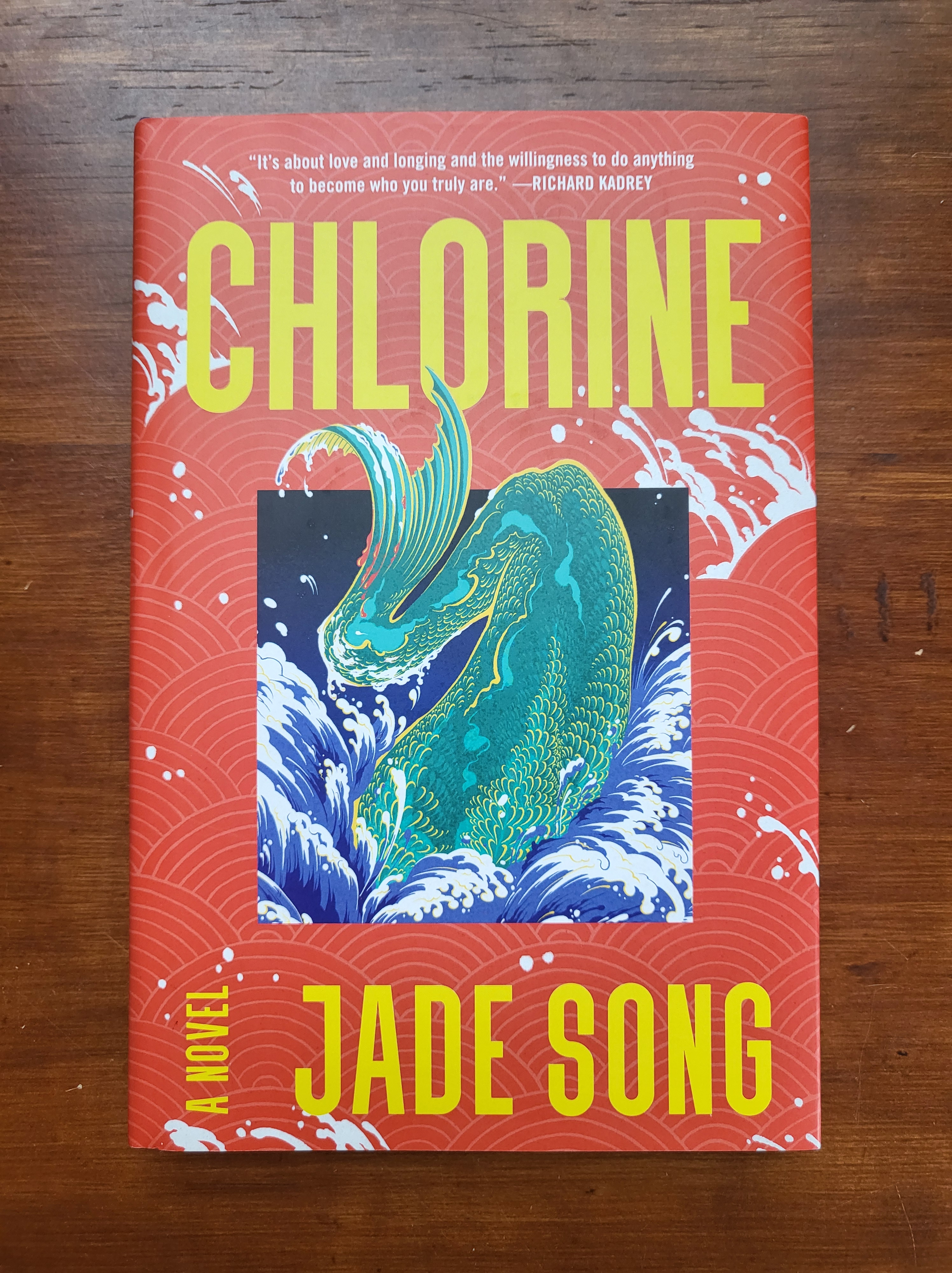
Chlorine by Jade Song is a young adult contemporary fiction novel featuring body horror a la mermaid, published in 2023. I did post my thoughts on this book here in this blog before, but here they are again:

A classic trait of girlhood – forever confusing your desires with that of an older man’s.

Wow!

This book is a little bit like if you crossed The Vegetarian with The Art of Starving. It’s Young Adult contemporary fiction (LGBTQIA+) about Ren Yu, who has loved mermaids ever since she was a little girl. She took to the water right away herself and now swims competitively on her school’s cutthroat swim team. As one of the school’s top swimmers, she has a parasitic relationship with her touchy-feely, quick-to-anger coach, Jim. She and her teammates follow very specific dietary protocols that vacillate between pasta parties and restricting to snacking on small portions of protein throughout the day. Her father leaves to return home to China, she suffers a concussion that threatens her athletic career, and her family expects her to get into an Ivy League school.

Amidst all this stress from a human life catering to human sensibilities and values, Ren Yu experiences an epiphany: she’s not actually a human after all, but has always been a mermaid herself. She is not afraid to take matters into her own hands in order to complete the transformation for her to transcend to her true form.

Star athletes had to be delusional enough to think they could withstand physics and gravity enough to fly up onto the first-place podium and shine with the sheer force of athletic ability; there was nothing more bold than a star, after all, visible with the human naked eye despite its death eons ago.

There were only a couple of things I struggled with in this book. One was the author’s descriptions of being a menstruating woman. If someone’s periods were as Ren Yu’s are described, they should definitely tell their healthcare provider (although, over the course of this book, Ren Yu does learn to not trust in the competence of any medical professionals). And the fact that it took two hours for her mother to teach her how to insert a tampon? And the blood smeared all over the bathroom stall walls and her teammates hands? The trauma of an IUD insertion? I don’t know, maybe this author has just had vastly different experiences with these things than I have, but also I think Ren Yu was supposed to have extreme experiences to assist her in coming to the realization that being a mermaid would be vastly superior to being a human woman. One other part that made me want to gag was two characters getting freaky next to the bathroom where the guy just took a dump and now everything smells like his poop and he asks the girl, “Can you guess what I had to eat?” And then they commence to grind on each other and make out (barf!)

But besides those things, I thought this was a great novel about how the mind can attempt to deal with the pressures and traumas of being an adolescent human.

TW: body dysmorphia, sexual assault

Published in 2018, The Astonishing Color of After by Emily X.R. Pan is another young adult contemporary fiction novel dealing with mental health, this time tied to the grieving process. Sadly, my Goodreads review of this one is basically saying that I forgot to write a review while the details were fresh in my mind, but I do remember that I LOVED this book. Here were my thoughts, such as I could recall at the time:

“Oh, I haven’t written a review for this yet? Well for now suffice it to say there are many haunting and lovely things in this story of a girl who loses her mother to depression, goes to Taiwan to meet her grandparents, and undergoes some fantastical experiences while under the influence of grief and insomnia.”

As mentioned above, I have yet to read A Tempest of Tea by Hafsah Faizal, but I have it in my physical TBR and plan to read it soon. For now all I can comment on is that gorgeous cover!

The Fox Wife by Yangsze Choo is historical fantasy based on Chinese folklore that just came out earlier this year. Again, I posed a review of this book on this blog previously, but in case you missed that, here it is:

An emotional and intriguing tale incorporating elements of Chinese folklore, presented as historical fiction with a side of magical realism.

Chapters alternate between two POVs. Snow’s chapters are told in first person past tense (presented as her diary entries), Bao’s in third person present. Both were equally fascinating, although I did at times take issue with being pulled from one storyline at a particularly good part to shift back to the other. But chapters were never super long, so you never have to wait long to switch back.

Snow is a fox, the kind that can take the form of a human. Once she planned on making the thousand-year journey, a morally refining spiritual pilgrimage, with her mate. But after the greed and cruelty of humans shatters their world, she sets out on a mission of vengeance instead.

Meanwhile, Bao is an older gentleman who has had the ability to hear when someone is lying ever since his childhood nanny prayed to a fox spirit for him. Using his talent, he has become a freelance investigator of sorts. When he is tasked with discovering the identity of a woman found frozen to death in an alleyway, he finds himself on a path that seems to be leading him ever-closer to the subject of a lifelong fixation of his: foxes.

I really liked the unique and fully fleshed characters in this book. The mythological elements added a very nice mysterious and enchanting touch (what is just superstition, and what is something more?). But what resonanted the most with me was the story of grief, and the changes people go through as they process it. I love how the Yangsze Choo’s novels always feature this beautiful mix of magical and moving.

This was a great book, but I think The Ghost Bride by this same author is probably my favorite of her works so far.

I am currently listening to How High We Go in the Dark by Sequoia Nagamatsu on audio. Published in 2022, it’s dystopian science fiction composed of interconnected stories about a near future that is all too believable. I am loving it, even if it is rather depressing so far! But since I haven’t finished it and written up final thoughts yet, I will just share the synopsis here:

Dr. Cliff Miyashiro arrives in the Arctic Circle to continue his recently deceased daughter’s research, only to discover a virus, newly unearthed from melting permafrost. The plague unleashed reshapes life on earth for generations. Yet even while struggling to counter this destructive force, humanity stubbornly persists in myriad moving and ever inventive ways.

Among those adjusting to this new normal are an aspiring comedian, employed by a theme park designed for terminally ill children, who falls in love with a mother trying desperately to keep her son alive; a scientist who, having failed to save his own son from the plague, gets a second chance at fatherhood when one of his test subjects-a pig-develops human speech; a man who, after recovering from his own coma, plans a block party for his neighbours who have also woken up to find that they alone have survived their families; and a widowed painter and her teenaged granddaughter who must set off on cosmic quest to locate a new home planet.

From funerary skyscrapers to hotels for the dead, How High We Go in the Dark follows a cast of intricately linked characters spanning hundreds of years as humanity endeavours to restore the delicate balance of the world. This is a story of unshakable hope that crosses literary lines to give us a world rebuilding itself through an endless capacity for love, resilience and reinvention. Wonderful and disquieting, dreamlike and all too possible.

Please feel free to share here some of your favorite AAPI authors and books!
Book Review: KING NYX by Kristen Bakis

King Nyx by Kristen Bakis is a 320 page hardcover standalone novel published February 27, 2024 by Liveright (W. W. Norton & Company).

Genres: Historical Fiction, Gothic, Mystery

Opening Line:

Last night I dreamed my husband came back.

“This woman cannot think, she feels.” So the novelist Theodore Dreiser once wrote about Anna Fort, wife of the crypto-scientist Charles Fort. It was this line that inspired author Kristen Bakis to write a story of Anna’s own, albeit a fictional one.

I had heard this book was a Gothic tale that was more about vibes than plot, and I supposed that is pretty much the case (there is certainly plot, but I do think I’d say the pacing is on the slower side). But there were a lot of other elements to this story that I was not expecting.

Anna’s husband writes about verified anomalies that science has failed to offer sufficient explanations for, and who then proposes his own rather outlandish theories. A wealthy recluse invites them to stay on his private island estate while Charles finishes writing his book. But all is not well on Prosper Island.

We learn a lot about Anna’s memories from before her marriage, at a time when she herself experienced something unexplainable and wound up having a mental break and spending time in a sanatorium. This history has her questioning when she can and cannot trust herself and her own thoughts and perceptions. She discovers that one can perform any number of mental gymnastics in order to keep one’s view of the world palatable.

Visitors to Prosper Island are made to quarantine in cabins in the woods for two weeks upon arrival, and it is here Anna and her husband meet another couple, a psychologist and his wife with an oddly antagonistic relationship, who are also guests of the eccentric Mr. Arkel. In fact, the story doesn’t actually arrive at the house itself until very near to the end, and then only briefly.

The story also includes: missing girls (pulled from the penal system and put into a school for domestic service), creepy automata (the most horrifying part of this book, IMO!), and a toy bird elevated to the status of deity. Oh, and several pet parakeets. I wasn’t expecting all of these elements, but they still wound up telling a decent Gothic mystery.

Bookshop

Goodreads

Bookstagram

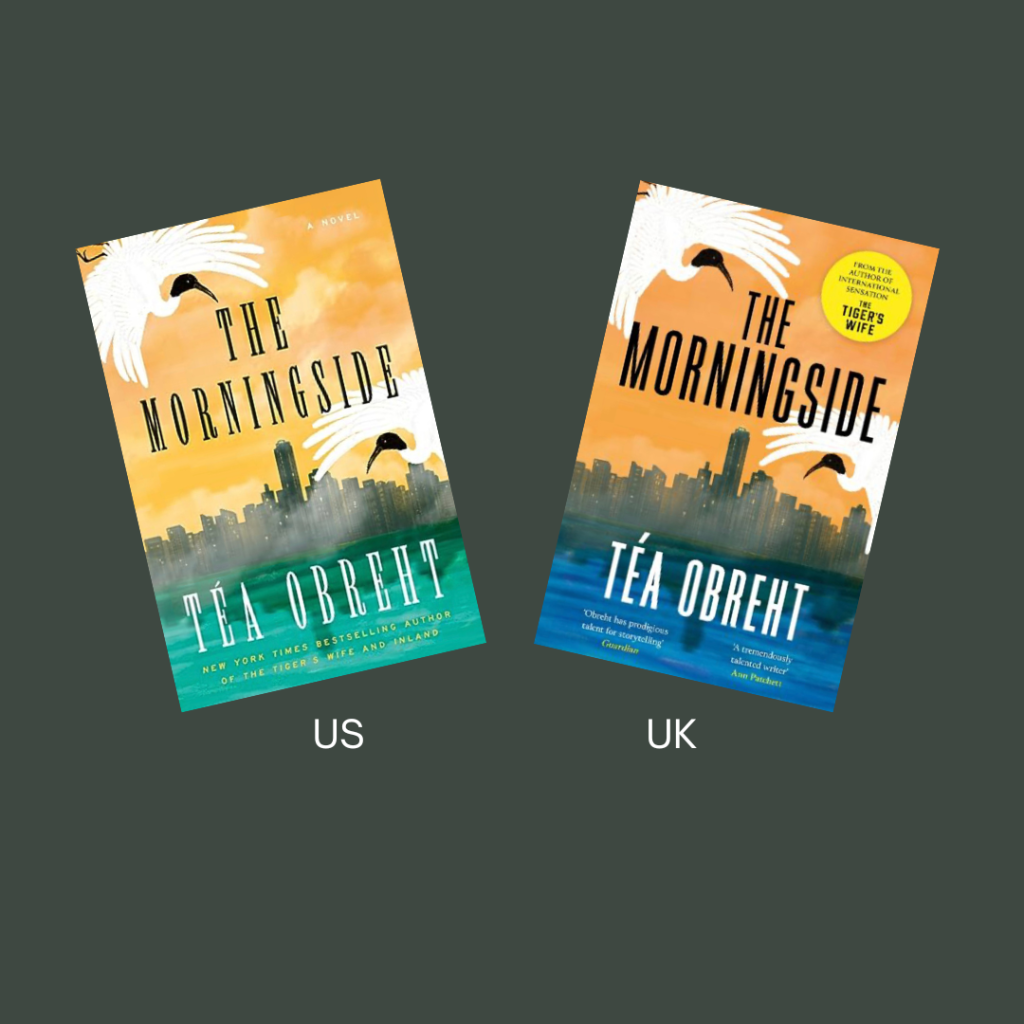
Book Review: THE MORNINGSIDE by Tea Obreht

The Morningside by Tea Obreht is a 304 page long dystopian literary fiction novel (with the door left open for a hint of magical realism) first published March 19, 2024 by Random House.

“And I realized that I’d brought you into life at a time when everyone else’s debts had come due.”

This book is narrated by Sil, twelve years old for the majority of the story. She lives in a dystopian version of the world where climate change has really done a number on us. Everyone is expected to do their part to try to help the world heal. Eating meat is illegal. What food you do get depends on what ration cards the government has allotted you this week. Sil and her mother, refugees from a war torn country, are able to move to the once illustrious Island City as part of the Repopulation Program. With the changing tides, much of the island that was once inhabited now lies underwater. Sil and her mother move into the building where Aunt Ena serves as superintendent, a tower of apartments called The Morningside.

Sil’s mother and great aunt couldn’t be more different. As for the former,

The pronouncement of intent, the hubris of self-determination–these did not fit her notion of the universe

She teaches her daughter never to tell anyone their country of origin or to speak their mother tongue outside of the home, never to try to plan for the future but only meet challenges and opportunities as they come, and to leave the past in the past.

Ena on the other hand…

This was part of Ena’s magic. Familiarities you had come to take for granted were transformed by the act of her storytelling. Her version of things became the only one. She could change the reality of something you thought you’d known all your life.

With these two models in her life, even though Ena dies not long after their arrival in Island City (leaving the job of superintendent to Sil’s mother), Sil learns to look for signs of “the world beneath the world”.

I quite liked the writing and tone of this book, but I have to say, all of the characters annoyed me at one point or another. Sil would get so upset with Mila when she in fact was the one being unreasonable. I actually quite hated her mother at times. And at the end, you’re not 100% sure what the real story was with the reclusive wealthy artist Bezi Duras, or the daughter of the warlord Rait Belen, but I gather it’s supposed to be kind of left up in the air for the reader to continue thinking about. In fact, Sil even admits that what is true is not necessarily the point, or at least not the whole of it.

It had been wonderful to stand, however briefly, in the lighted rooms of Ena’s heart and know things as she knew them. But she was dead now. And were you really part of something if you were part of it alone?

This story is sort of unsettling and courageous at the same time, and I quite liked it, even if it’s the ideas I enjoyed more than the details. 4 out of 5 stars.

Bookshop

Goodreads

Bookstagram

Opening Lines and Book Cover Battle, April 2024

Of the books I read in the month of April, only The Hunter by Tana French appears to have differing cover designs. Both are fine, but the burning tree image on the UK edition takes the dub this time around.

As for the opening lines of the books I read over the last month, have a gander at these:

Her text came in just before midnight.

The Bad Ones by Melissa Albert

There was a dead girl in my aunt’s bakery.

A Wizard’s Guide to Defensive Baking by T. Kingfisher

Though there’s an industry built on telling you otherwise, there are few real joys to middle age.

Calypso by David Sedaris

At dusk sixteen-year-old Margaret Murphy sits down at a narrow rickety desk in room 127 at Little Ida’s Motor Lodge, eleven miles east of Niagara Falls, and begins to write her confession.

Poor Deer by Clare Oshetsky

Anna kicked off the annual Pace family vacation with a lie.

Diavola by Jennifer Thorne

Trey comes over the mountain carrying a broken chair.

The Hunter by Tana French

We must, by law, keep a record of the innocents we kill.

Scythe by Neal Shusterman

“We could just push them out of windows,” says Leonie.

Cut & Thirst by Margaret Atwood

The Bad One‘s opening line itself doesn’t do much for this reader, but is followed immediately by what that text message was, which is more of a hook.

A dead person in an unexpected place is always intriguing, but the first line of A Wizard’s Guide to Defensive Baking also lets you know from the get go that the story will be equally dark, cozy, and amusing – an interesting mix!

The David Sedaris memoir likewise begins in a way that advertises the humorous nature of the book.

The opening of Poor Deer is great, setting the scene and immediately having the reader want to know more about what a sixteen year old could possibly be confessing.

Diavola starts right off divulging that it is a story about a vacation involving toxic family dynamics. The supernatural elements get introduced later, with the setting of Villa Taccola.

The first line of The Hunter, in my opinion, is very lackluster. It does nothing for me other than have me say, “Oh, Trey – I remember that character from The Searcher.”

Scythe pulls readers in from the beginning by getting them to wonder why innocents are being killed in a way that requires a record.

The opening line of Cut & Thirst also broadcasts the comical nature of the story, with someone genuinely suggesting defenestration. Now the reader wants to know who might wind up being pushed out of windows, and why.

Overall, this was a pretty good reading month for me. So far I am having success meeting my 2024 goal of reading books that are a better fit for me so that my average star rating at the end of the year will be higher. Even the books here that I didn’t love received no less than 3 stars from me. Not too shabby!

Opening Lines Q1 2024

Art by Bookish Birds, on sale display at Golden Bee Bookshop in Liverpool, NY

It has occurred to me that it might be interesting to do a little deep dive on the opening lines of books I read. At the end of the month maybe I’ll publish a post about this for books I read in April, but for now, let’s see about all of the others I have read so far this year. Here we go!

January’s books:

The lightning seeded the fog with a fire that churned like a restless embryo.

The Fall of Babel by Josiah Bancroft

I dream sometimes about a house I’ve never seen.

Starling House by Alix E. Harrow

Since I barely venture outside these days, I spend a lot of time in one of the armchairs, rereading the books.

I Who Have Never Known Men by Jacqueline Harpman

Each year when Shesheshen hibernated, she dreamed of her childhood nest.

Someone You Can Build a Nest In by John Wiswell

Alferes Antonio Sonoro was born with gold in his eyes.

The Bullet Swallower by Elizabeth Gonzalez James

I love being asked to join, so much so that I will say yes to an invitation without knowing exactly what I’ve agreed to.

Sure, I’ll Join Your Cult by Maria Bamford

The body floats downstream.

The Frozen River by Ariel Lawhon

Alright, let’s share our notes about these opening lines from the books I read in January!

I greatly enjoyed The Books of Babel, but that first line from the final book is just, like…wut? It must be especially confusing to someone not familiar with the series, as they wouldn’t already be aware of the lightning and the fog to which this line is referring.

As for Starling House, dreaming about a house you’ve never seen catches the reader’s interest right away. What’s the story there? I Who Have Never Known Men‘s opener is less of a hook, but it does make you wonder why there is only a limited number of books if the narrator is rereading “the” books.

When it comes to Someone You Can Build a Nest In, everything about this monster romance is wonderfully unique, and starting off by introducing a main character who hibernates and grew up in a nest is about as intriguing as it comes! This one takes first prize from me for the January books.

The Bullet Swallower‘s first line is okay, but really requires another line or two to explain what exactly it means. The beginning of comedian Maria Bamford’s memoir is both funny and informative about what you can expect the book to be about.

The opening line of The Frozen River, which I admittedly DNFed (although it has gotten a lot of love from many readers), comes across as kind of uninspired to me, but at least the fact that there is a body involved, one floating in a river no less, might hook you.

February’s books:

“Your future contains dry bones.”

How to Solve Your Own Murder by Kristen Perrin

On the eve of Mad Purdy’s first class at Elmswood Public Library, all the leaves on the trees turned red over night.

The Parliament by Aime Pokwatka

On Sunday, September 11, 2011, three men were murdered in a second-floor apartment on a dead-end street in Waltham, Massachussetts.

The Waltham Murders by Susan Clare Zalkind

Being a serial killer who kills serial killers is a great hobby…

Butcher & Blackbird by Brynne Weaver

Perhaps you know this story: Late one evening, a beautiful woman comes knocking on an unsuspecting scholar’s door.

The Fox Wife by Yangsze Choo

So personally I find the opener for How to Solve Your Own Murder to be kind of “meh”, but if you read on you learn that this line was part of a fortune told to a young woman who believed wholeheartedly in her foretold doom. The opening line of The Parliament is just “meh” with no further qualifiers. It gives us a setting, sure, but that’s it.

The Waltham Murders is nonfiction, and the first line is about as attention-grabbing as they come. Butcher & Blackbird starts by letting you know the premise of the book in an amusing way, setting readers up for what to expect. But I think The Fox Wife has the best opening line of any of the novels I read in the month of February.

March’s books:

In an old wardrobe a djinn sits weeping.

The Djinn Waits a Hundred Years by Shubnum Khan

A poet once wrote that the woods of Gallacia are as deep and dark as God’s sorrow, and while I am usually skeptical of poets, I feel this one may have been onto something.

What Feasts at Night by T. Kingfisher

Not a day goes by that post does not bring me at least one letter from a young person (or sometimes one not so young) who wishes to follow in my footsteps and become a dragon naturalist.

A Natural History of Dragons by Marie Brennan

“Hey, Barbara, you got a hanging man in the Three-Four precinct.”

What the Dead Know by Barbara Butcher

Barry Sutton pulls over into the fire lane at the main entrance of the Poe building, an Art Deco tower glowing white in the illumination of its exterior scones.

Recursion by Blake Crouch

In that time, I was called Brother Kellin of Cambrin, and I was an awful monk.

2024 High Caliber Awards (from the first entry, Mightier than the Pen by Kevin Harris)

The opening line of The Djinn Waits a Hundred Years is great: ooh, a djinn! Why is it weeping in a wardrobe?! The one for What Feasts at Night is also wonderful, really setting the tone; it’s also very “voicey” — this one is my favorite of the whole batch for month of March.

The first line of A Natural History of Dragons is pretty “meh”.

What the Dead Know is nonfiction about working as a death investigator in NYC, so I guess it gets straight to the point by opening with a dead body.

The opener for Recursion does absolutely nothing to grab the reader. But then we’re back in pretty great territory with Mightier than the Pen – amusing, plus now I want to hear more about what makes Kellin an awful monk.

What are your thoughts on these opening lines??

Book Review: STARLING HOUSE by Alix E. Harrow

Opal has been dreaming about Starling House for years. It turns out the house has been dreaming about her, too.

This is a modern dark fairytale with a protagonist who has no qualms about lying and stealing her way through life if it means providing a better one for her brother. After meeting the odd inhabitant of the creepy house in the neighborhood, she finds herself in a war to protect the residents of a Kentucky town that didn’t always protect her.

This tale is Gothic and mysterious. It features flawed characters, a sentient house, a hellmouth in a place called Eden, and it addresses whose narrative gets remembered and passed on in society. It reminded me a bit of Ragnar Tornquist’s Dreamfall game, in that (SPOILERS AHEAD) the dreams of a little girl in a dreamland are doing very real damage in the real world–except in the case of Nora Lee in Starling House, the harm is very intentional! (END SPOILERS)

There is a romance aspect to this story, and I got a kick out of how, unlike in most novels, the readers keeps being told how generally unattractive these two lovers are. (Of note, Opal is 26 years old, although the book and everyone in it seem to treat her much younger.) There are some footnotes in this book, which I usually find I really like in novels, but here it seemed kind of half-assed; the point winds up being because the entire account is supposed to be Opal making sure the “real” story gets told, but the book never fully committed to this device.

Bookshop

Bookstagram

Goodreads

My Top Ten Books of 2023

Here they are, my top ten reads of 2023!

My reading went into sicko mode this year and I read nearly twice as many books as usual. My average rating on Goodreads was 3.6 stars. My most read genre was fantasy, followed by literary and then historical fiction. I wound up reading less science fiction (I’ll have to fix that this year!) and more thrillers and mystery than has historically been the case.

According to Storygraph I “delved into dark and intense narratives, unraveled intricate mysteries, and embarked on exciting adventures”. I preferred emotional stories, which comes as no surprise!

My reading goal for 2024 is to have a higher average star rating (above 3.6) by trying to land on books that are more of a hit for me and my tastes.

What are your reading goals for this new year?

Books pictured: What Moves the Dead by T. Kingfisher, A House with Good Bones by T. Kingfisher, The Seventh Bride by T. Kingfisher, If We Were Villains by M. L. Rio, Our Hideous Progeny by C. E. McGill, North Woods by Daniel Mason, Trust by Hernan Diaz, Chlorine by Jade Song, Chain-Gang All-Stars by Nana Kwame Adjei-Brenyah, and Emily Wilde’s Encyclopaedia of Faeries by Heather Fawcett.

2023 Reading Bracket

Here is my final 2023 reading bracket! (Hopefully I’m not jinxing it by posting it 3 days before the end of the year–I’m in the middle of reading a book that is fine but not a favorite, here’s to hoping I don’t finish it and then read something Earth shattering in the next 72 hours!)

I reconsidered and made a change since the last time I posted this bracket, but the final outcome would have been the same either way. I think this supports what I already knew: I love me some Gothic fantasy and science fiction, but not quite as much as I love some moving literary fiction!

Books included as some of my favorite reads of the year: “What Moves the Dead” by T. Kingfisher, “Trust” by Hernan Diaz, “Nettle & Bone” by T. Kingfisher, “The Mountain in the Sea” by Ray Nayler, “A House with Good Bones” by T. Kingfisher, “Emily Wilde’s Encyclopedia of Faeries” by Heather Fawcett (I actually read an ARC of the sequel and enjoyed it even more, but decided not to count it as a 2023 favorite since it won’t be published until after the new year), “A Face Like Glass” by Frances Hardinge, “Chlorine” by Jade Song, “Chain-Gang All-Stars” by Nana Kwame Adjei-Brenyah, “If We Were Villains” by M. L. Rio, “North Woods” by Daniel Mason, and “The Seventh Bride” by T. Kingfisher.

Wow, that’s a lot of T. Kingfisher!

But the top honor goes to “North Woods” 🎉💯❤️

What was your favorite book you read this year?

The Battle of the Book Covers

I recently read Starve Acre by Andrew Michael Hurley, a book that had been on my TBR for some time. Apparently it’s being turned into a major motion picture, and the edition of the book I received when I ordered it earlier this year is the “media tie-in” version. I personally like both the original UK and US editions so much better than the one I wound up with! But this gave me an idea for a blog post, which is to say, let’s have a look at the UK and US editions of the covers of some of the books I’ve read this month.

If We Were Villains by M. L. Rio. I have to vote for the US cover here. Although, despite the fact that, as I said, I have had my eye on this book for a long time, never before did I notice the yellow lines over the middle of the 💀. Both the skull image and the font of the text appeal more to me in this version, as well as it’s cleaner, less cluttered look.

My Friend Anne Frank by Hannah Pick-Goslar (is “The Inspiring and Heartbreaking True Story of Best Friends Torn Apart and Reunited Against All Odds” the official subtitle for the US edition, but not the UK one?) Obviously both covers utilized the same original photo, but again I find the US version more eye-catching, with the image less washed out and the bolder color choice.

Pretty Girls by Karin Slaughter. Hmm, these might be a tie for me. Blue and green are my two favorite colors, and so the US version has that going for it. But the smears of blood on the UK cover really are a nice touch. A nice touch derived, as it is, from a very bad touch (be sure to look up content warnings for this book if there are certain topics you are especially sensitive to!)

Whale Fall by Elizabeth O’Conner has a publication date set for May 7, 2024, but I was able to read an ARC. Although the color (in all that empty space) of the UK edition is nice, the US is a clear winner for me again here. I just really dig the font and the fact that the text looks like it was painted by brush strokes. Additionally, it conveys a better sense of the harsh nature of the sea that is an integral part of the story.

So there you have it. Was I surprised that this was almost a clean sweep for the US? Yes! Is this a fluke for my October reading only? I don’t know—maybe I’ll do this again for my November reads, and we’ll see!

By the by, here are the original cover editions that got me on this kick.

Here is a final graphic showing all of the books I fit into the month. All were ⭐️ ⭐️ ⭐️ or above for me, not a stinker in the bunch!