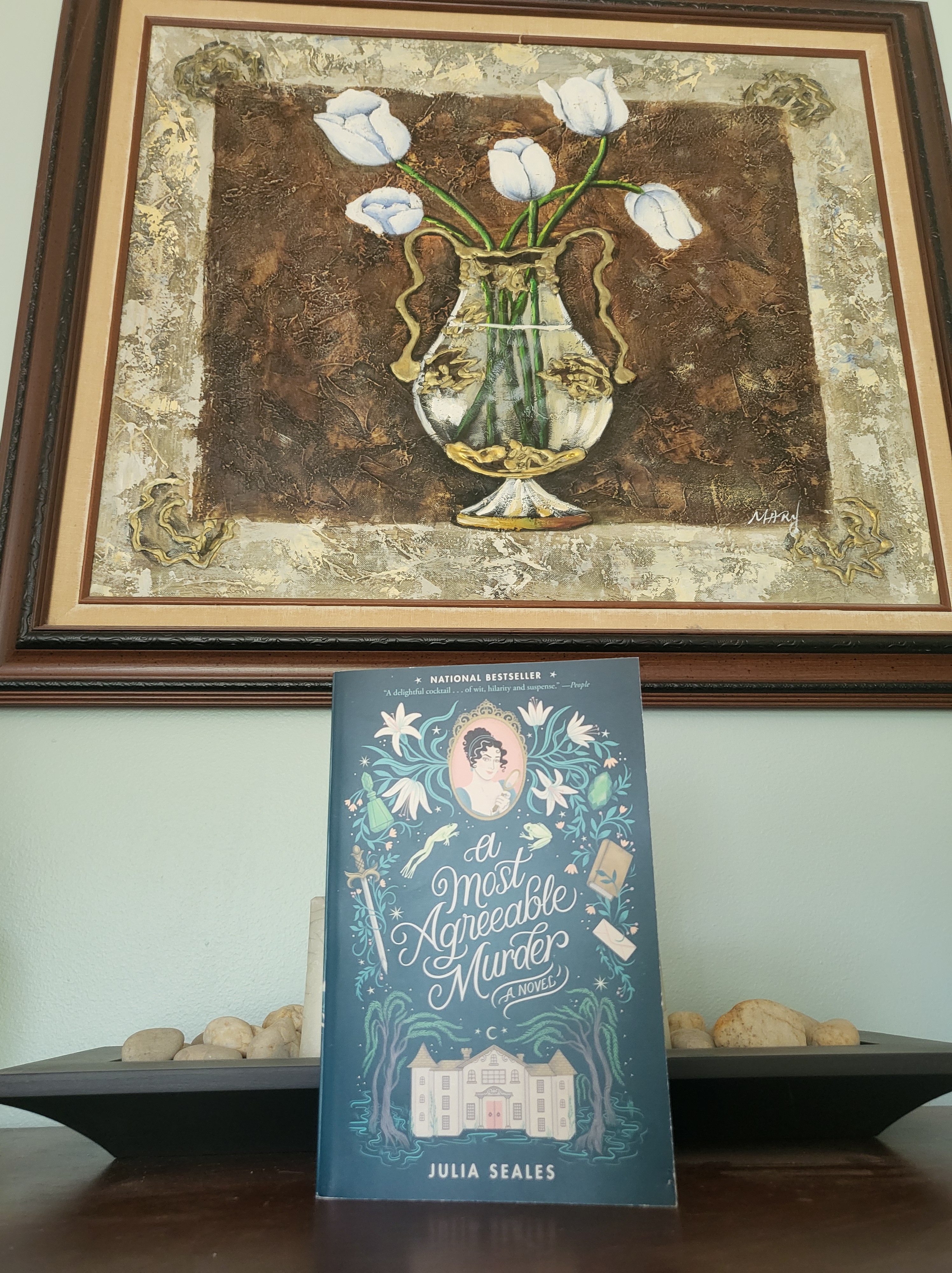
A Most Agreeable Murder by Julia Seales, is a 300+ page debut novel published in 2023 by Random House.
Genre:
Cozy mystery/historical fiction with a hint of romance and heaps of humor
Opening Line:
In the English countryside there was a small township called Swampshire, comprised of several lovely mansions and one disgusting swamp.
Synopsis:
When a wealthy bachelor drops dead at a ball, a young lady takes on the decidedly improper role of detective in this action-packed debut comedy of manners and murder.
Feisty, passionate Beatrice Steele has never fit the definition of a true lady, according to the strict code of conduct that reigns in Swampshire, her small English township–she is terrible at needlework, has absolutely no musical ability, and her artwork is so bad it frightens people. Nevertheless, she lives a perfectly agreeable life with her marriage-scheming mother, prankster father, and two younger sisters– beautiful Louisa and forgettable Mary. But she harbors a dark secret: She is obsessed with the true crime cases she reads about in the newspaper. If anyone in her etiquette-obsessed community found out, she’d be deemed a morbid creep and banished from respectable society forever.
For her family’s sake, she’s vowed to put her obsession behind her. Because eligible bachelor Edmund Croaksworth is set to attend the approaching autumnal ball, and the Steele family hopes that Louisa will steal his heart. If not, Martin Grub, their disgusting cousin, will inherit the family’s estate, and they will be ruined or, even worse, forced to move to France. So Beatrice must be on her best behavior . . . which is made difficult when a disgraced yet alluring detective inexplicably shows up to the ball.
Beatrice is just holding things together when Croaksworth drops dead in the middle of a minuet. As a storm rages outside, the evening descends into a frenzy of panic, fear, and betrayal as it becomes clear they are trapped with a killer. Contending with competitive card games, tricky tonics, and Swampshire’s infamous squelch holes, Beatrice must rise above decorum and decency to pursue justice and her own desires–before anyone else is murdered.
My Thoughts:
This is a delightfully humorous Regency era locked room mystery! I agree with the comparison to the Bridgerton TV show crossed with an Agatha Christie novel, plus some hilarious ridiculousness added for flavor.
Miss Beatrice Steele and her sisters are expected to make advantageous marriages. There are very strict rules of decorum in Swampshire, England, and unfortunately, Beatrice’s interest in reading about murder investigations is quite explicitly forbidden in The Lady’s Guide to etiquette. She is therefore delighted when, one stormy evening at a ball at Stabmort Park, a guest is murdered. Here is her chance to conduct her own investigation while seeming helpful rather than morbid! The investigation is a twisty one, as it seems there are multiple members of Swampshire society hiding their own unseemly secrets.
This was a good mystery story, but the best part is the humor! From Mr. Steele’s constant silly pranks at the most inopportune times, to the frequent allusions to the fact that Beatrice’s youngest sister might be a werewolf without ever addressing it head on, and the explanation that no one else ever attended Miss Bolton’s theatrical productions because all of Swampshire happened to misplace their invitations in their fireplaces – this book was a hoot! The letters, article excerpts, play scripts and other little bits in between chapters are also a nice touch.
There is a bit of a romance burgeoning in this story. At the end of the book is a sneak peek at Book 2, which is the first I learned that this was going to be a series – this book could work perfectly well as a standalone, only the romance has not yet come to full fruition. I, for one, look forward to reading more about Beatrice and Inspector Vivek Drake simultaneously antagonizing and growing to care for one another as they solve crimes together in London.
Here at the beginning it must be said the End was on everyone’s mind.
The Synopsis: Set in a not-too-distant America, I Cheerfully Refuse is the tale of Rainy, an aspiring musician setting sail on Lake Superior in search of his departed, deeply beloved, bookselling wife. An endearing bear of an Orphean narrator, he seeks refuge in the harbors, fogs, and remote islands of the inland sea. After encountering lunatic storms and rising corpses from the warming depths, he eventually lands to find an increasingly desperate and illiterate people, a malignant billionaire ruling class, a crumbled infrastructure, and a lawless society. As his guileless nature begins to make an inadvertent rebel of him, Rainy’s private quest for the love of his life grows into something wider and wilder, sweeping up friends and foes alike in his wake.
My Thoughts:
This meditative dystopian story is brimming with gorgeous prose (and also a fair number of instances of turns of phrase I did not understand, prompting me to wonder if the author was not American–but it turns out that is not the case). In a bleak near future with collapsed infrastructure, a U.S. headed by a proudly illiterate president, and more and more people choosing to shuffle off this mortal coil in search of something better, Rainy and Lark have managed to make a happy life for themselves. When they let a young man board in their home, trouble follows right behind him. Rainy finds himself on the lam in a sailboat on a capricious Lake Superior. As he grieves for the life and love lost to him and attempts to evade those who would do him harm, he encounters numerous strange characters, along with a girl who needs him (and vice versa) more than either would like to admit.
It’s taken me all my life to learn protection is the promise you can’t make. It sounds absolute, and you mean it and believe it, but that vow is provisional and makeshift and no god ever lived who could keep it half the time.
But beyond the beautiful writing and the likable main character who was easy to root for, my overall feeling while reading this book was one of melancholy. So even though I appreciated the author’s skill with words (the main villain is described as a “relentless hellhound and necrotic Adonis”!), how glad am I that I set sail with Rainy on his journey? I’m still not sure myself. 3.75 stars
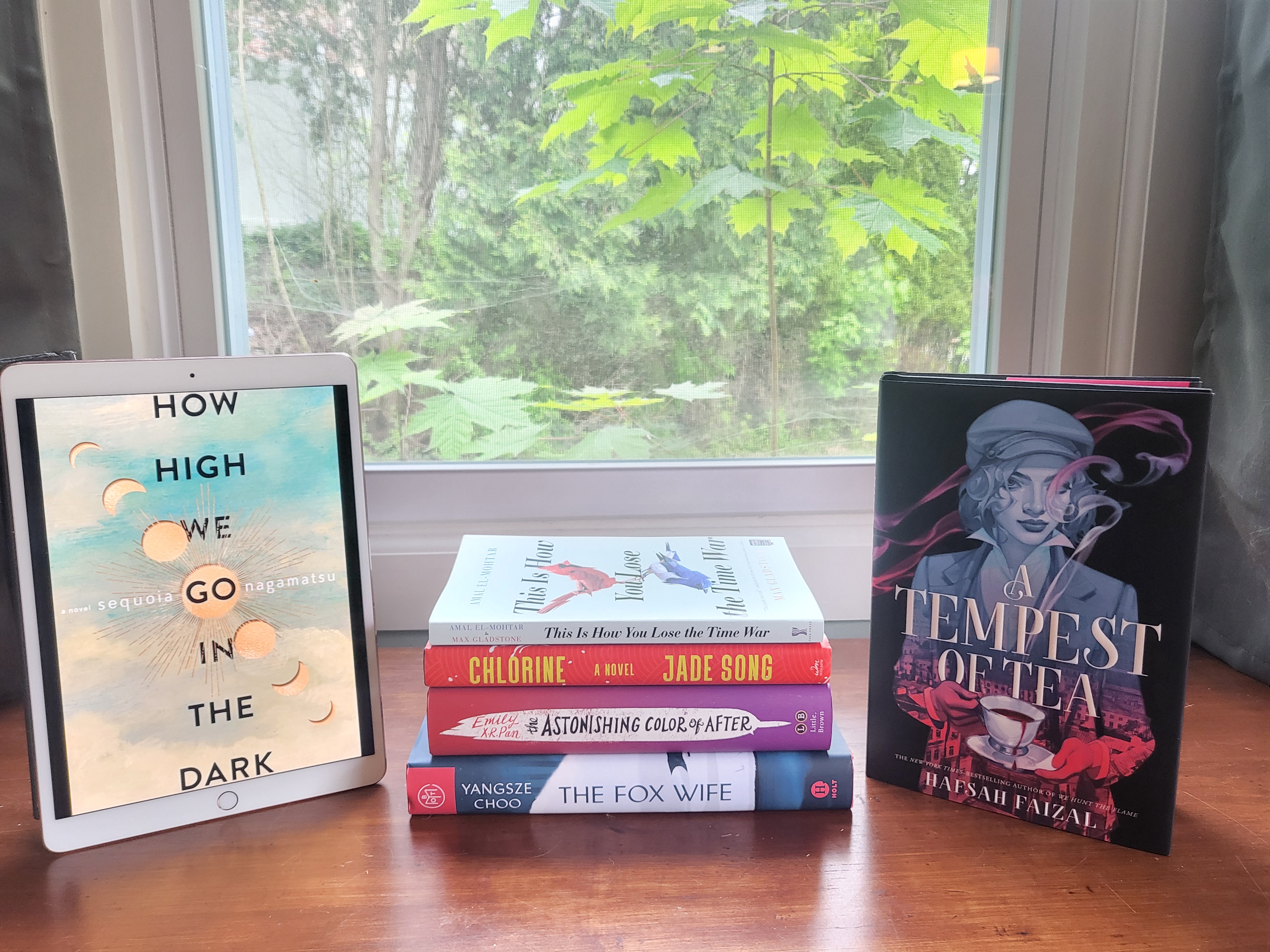
It’s AAPI Heritage Month! Here is a stack of books by Asian American and Pacific Islander authors that I’ve greatly enjoyed, plus my current listen on audio (How High We Go in the Dark by Sequoia Nagamatsu, which I am loving) and a book in my TBR I have on deck (A Tempest of Tea by Hafsah Faizal).
This is How You Lose the Time War by Amal El-Mohtar and Max Gladstone is a science fiction epistolary novella featuring time travel and a queer romance, and was published in 2019. It won Hugo, Locus, Nebula, and Goodreads Choice awards. I read and rated it before I began the habit of writing up reviews on every book I read, so I don’t have my personal thoughts on this one, but I remember being pretty blown away by it. Here is the synopsis:
Among the ashes of a dying world, an agent of the Commandant finds a letter. It reads: Burn before reading. Thus begins an unlikely correspondence between two rival agents hellbent on securing the best possible future for their warring factions. Now, what began as a taunt, a battlefield boast, grows into something more. Something epic. Something romantic. Something that could change the past and the future.
Except the discovery of their bond would mean death for each of them. There’s still a war going on, after all. And someone has to win that war.
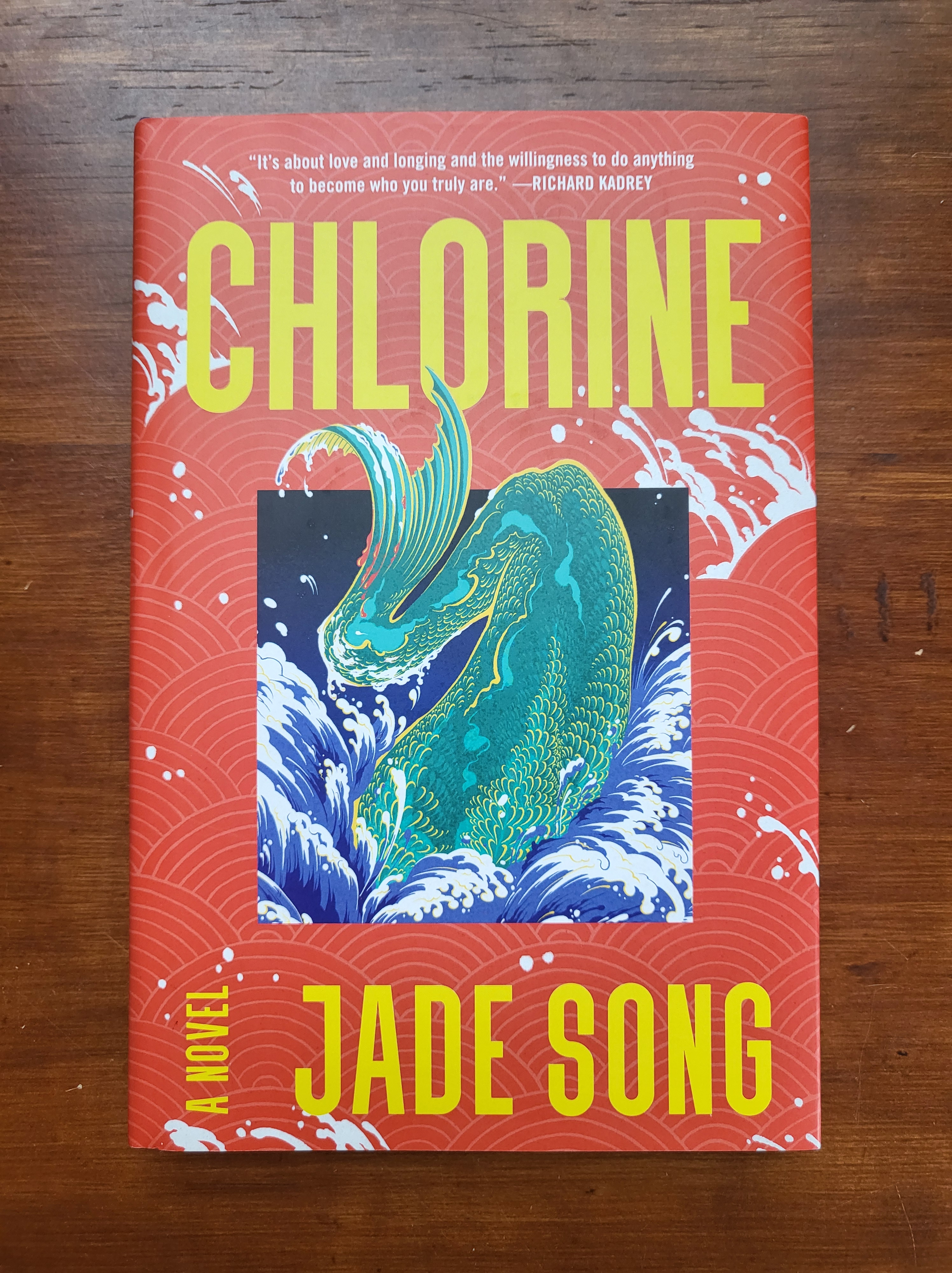
Chlorine by Jade Song is a young adult contemporary fiction novel featuring body horror a la mermaid, published in 2023. I did post my thoughts on this book here in this blog before, but here they are again:
A classic trait of girlhood – forever confusing your desires with that of an older man’s.
Wow!
This book is a little bit like if you crossed The Vegetarian with The Art of Starving. It’s Young Adult contemporary fiction (LGBTQIA+) about Ren Yu, who has loved mermaids ever since she was a little girl. She took to the water right away herself and now swims competitively on her school’s cutthroat swim team. As one of the school’s top swimmers, she has a parasitic relationship with her touchy-feely, quick-to-anger coach, Jim. She and her teammates follow very specific dietary protocols that vacillate between pasta parties and restricting to snacking on small portions of protein throughout the day. Her father leaves to return home to China, she suffers a concussion that threatens her athletic career, and her family expects her to get into an Ivy League school.
Amidst all this stress from a human life catering to human sensibilities and values, Ren Yu experiences an epiphany: she’s not actually a human after all, but has always been a mermaid herself. She is not afraid to take matters into her own hands in order to complete the transformation for her to transcend to her true form.
Star athletes had to be delusional enough to think they could withstand physics and gravity enough to fly up onto the first-place podium and shine with the sheer force of athletic ability; there was nothing more bold than a star, after all, visible with the human naked eye despite its death eons ago.
There were only a couple of things I struggled with in this book. One was the author’s descriptions of being a menstruating woman. If someone’s periods were as Ren Yu’s are described, they should definitely tell their healthcare provider (although, over the course of this book, Ren Yu does learn to not trust in the competence of any medical professionals). And the fact that it took two hours for her mother to teach her how to insert a tampon? And the blood smeared all over the bathroom stall walls and her teammates hands? The trauma of an IUD insertion? I don’t know, maybe this author has just had vastly different experiences with these things than I have, but also I think Ren Yu was supposed to have extreme experiences to assist her in coming to the realization that being a mermaid would be vastly superior to being a human woman. One other part that made me want to gag was two characters getting freaky next to the bathroom where the guy just took a dump and now everything smells like his poop and he asks the girl, “Can you guess what I had to eat?” And then they commence to grind on each other and make out (barf!)
But besides those things, I thought this was a great novel about how the mind can attempt to deal with the pressures and traumas of being an adolescent human.
TW: body dysmorphia, sexual assault
Published in 2018, The Astonishing Color of After by Emily X.R. Pan is another young adult contemporary fiction novel dealing with mental health, this time tied to the grieving process. Sadly, my Goodreads review of this one is basically saying that I forgot to write a review while the details were fresh in my mind, but I do remember that I LOVED this book. Here were my thoughts, such as I could recall at the time:
“Oh, I haven’t written a review for this yet? Well for now suffice it to say there are many haunting and lovely things in this story of a girl who loses her mother to depression, goes to Taiwan to meet her grandparents, and undergoes some fantastical experiences while under the influence of grief and insomnia.”
As mentioned above, I have yet to read A Tempest of Tea by Hafsah Faizal, but I have it in my physical TBR and plan to read it soon. For now all I can comment on is that gorgeous cover!
The Fox Wife by Yangsze Choo is historical fantasy based on Chinese folklore that just came out earlier this year. Again, I posed a review of this book on this blog previously, but in case you missed that, here it is:
An emotional and intriguing tale incorporating elements of Chinese folklore, presented as historical fiction with a side of magical realism.
Chapters alternate between two POVs. Snow’s chapters are told in first person past tense (presented as her diary entries), Bao’s in third person present. Both were equally fascinating, although I did at times take issue with being pulled from one storyline at a particularly good part to shift back to the other. But chapters were never super long, so you never have to wait long to switch back.
Snow is a fox, the kind that can take the form of a human. Once she planned on making the thousand-year journey, a morally refining spiritual pilgrimage, with her mate. But after the greed and cruelty of humans shatters their world, she sets out on a mission of vengeance instead.
Meanwhile, Bao is an older gentleman who has had the ability to hear when someone is lying ever since his childhood nanny prayed to a fox spirit for him. Using his talent, he has become a freelance investigator of sorts. When he is tasked with discovering the identity of a woman found frozen to death in an alleyway, he finds himself on a path that seems to be leading him ever-closer to the subject of a lifelong fixation of his: foxes.
I really liked the unique and fully fleshed characters in this book. The mythological elements added a very nice mysterious and enchanting touch (what is just superstition, and what is something more?). But what resonanted the most with me was the story of grief, and the changes people go through as they process it. I love how the Yangsze Choo’s novels always feature this beautiful mix of magical and moving.
This was a great book, but I think The Ghost Bride by this same author is probably my favorite of her works so far.
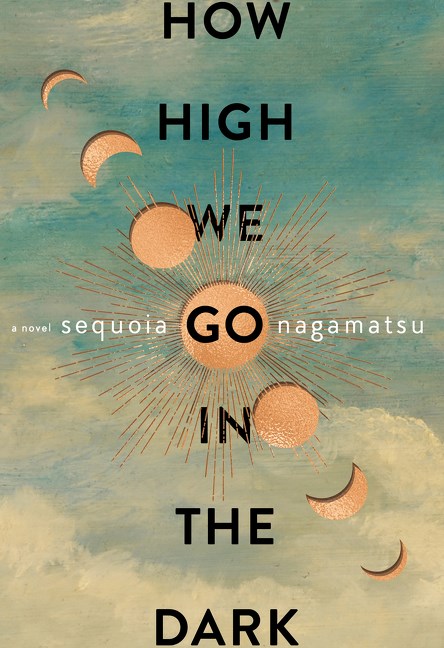
I am currently listening toHow High We Go in the Dark by Sequoia Nagamatsu on audio. Published in 2022, it’s dystopian science fiction composed of interconnected stories about a near future that is all too believable. I am loving it, even if it is rather depressing so far! But since I haven’t finished it and written up final thoughts yet, I will just share the synopsis here:
Dr. Cliff Miyashiro arrives in the Arctic Circle to continue his recently deceased daughter’s research, only to discover a virus, newly unearthed from melting permafrost. The plague unleashed reshapes life on earth for generations. Yet even while struggling to counter this destructive force, humanity stubbornly persists in myriad moving and ever inventive ways.
Among those adjusting to this new normal are an aspiring comedian, employed by a theme park designed for terminally ill children, who falls in love with a mother trying desperately to keep her son alive; a scientist who, having failed to save his own son from the plague, gets a second chance at fatherhood when one of his test subjects-a pig-develops human speech; a man who, after recovering from his own coma, plans a block party for his neighbours who have also woken up to find that they alone have survived their families; and a widowed painter and her teenaged granddaughter who must set off on cosmic quest to locate a new home planet.
From funerary skyscrapers to hotels for the dead, How High We Go in the Dark follows a cast of intricately linked characters spanning hundreds of years as humanity endeavours to restore the delicate balance of the world. This is a story of unshakable hope that crosses literary lines to give us a world rebuilding itself through an endless capacity for love, resilience and reinvention. Wonderful and disquieting, dreamlike and all too possible.
Please feel free to share here some of your favorite AAPI authors and books!
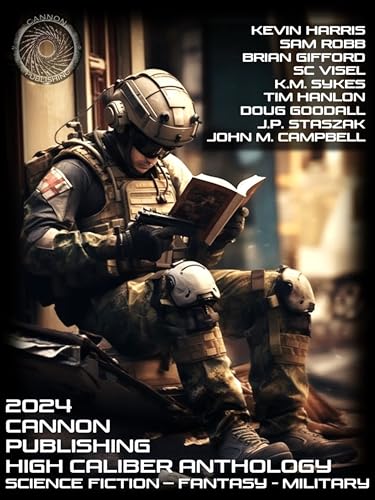
This is a collection of the winning entries to a science fiction/fantasy/military novella contest, published by Cannon Publishing (J.F. Holmes), with writing from Kevin Harris, Sam Rob, Brian Gifford, SC Visel, K.M. Sykes, Tim Hanlon, Doug Goodall, J.P. Staszak, and John M. Campbell.
One of the authors is a coworker of mine, and an all around great person, and so I purchased this anthology to read his work, but the quality of writing across the board was great!
Each story here was either a 3 or 4 star read for me. If some of them were turned into longer works I might rate them even higher – the shorter form just doesn’t always work for me personally, and although these meet the word count for novellas, they just felt a bit more like short stories to me, giving readers a snapshot of life in the imagined worlds rather than a complete and fully fleshed-out story arc. And there’s absolutely nothing wrong with that format, I just find it’s harder to wow me with it.
There were two entries that I wound up skipping, but again it was a personal taste thing, not a quality thing. One had a very interesting premise but the entire story was the details of a single battle, and as a reader (and even while watching movies), I find nothing more boring than that. But obviously that’s me, and if you found yourself picking up this anthology because of the “military” bit in the description, then clearly there is a good chance you will feel differently!
But overall I really enjoyed these stories of monks, trolls, alien invasions, and dark magic. There is a lot of talent on display here, and these authors are worth keeping an eye on for sure. Bravo, everyone!
I previously posted about the books I read for prompts in Book Riot’s 2020 Read Harder Challenge. In reading a total of 51 titles in 2021, I only managed to meet three of the prompts for that year’s challenge. I think instead of detailing those here, I’ll write about my 4 and 5 star reads of the year. I am just going to copy and paste the reviews I wrote for these books over on Goodreads and The StoryGraph, so some are much more thorough and detailed than others. Buckle up!
…my work pursuits are much more modest: neurons and proteins and mammals. I’m no longer interested in other worlds or spiritual planes. I have seen enough in a mouse to understand transcendence, holiness, redemption. In people, I’ve seen even more.
Gifty is a PhD candidate in neuroscience researching the neural mechanisms involved in reward-seeking behavior using optogenetics in mice. We learn about her childhood in Alabama as the daughter of Ghanaian immigrants, how her brother died of a heroin overdose, and how her mother has been sunk low by depression in waves ever since. We see how a turbulent history with her religion has shaped how she approaches the world today.
Gifty struggled when she first had to devise a project for her thesis. “Though I had never been an addict, addiction, and the avoidance of it, had been running my life, and I didn’t want to give it even one more second of my time. But of course, there it was. The thing I really wanted to know. Can an animal restrain itself from pursuing a reward, especially when there is risk involved?” Parse out the technical language in her proposal, and it boils down to
Could this science work on the people who need it most? Could it get a brother to set down a needle? Could it get a mother out of bed?
Beyond looking for a way to help people, we learn that Gifty’s research is also partially driven by a history of incompatible passions and self-loathing, inherited as part of growing up as a black girl in the southern United States. Her church, such a huge part of her early life, went from ecstatically praying for the success of the local star high school athlete to gossiping about addiction being more common in “his kind”.
Nana is the reason I began this work, but not in a wholesome, made-for-TED Talk kind of way. Instead, this science is a way for me to challenge myself, to do something truly hard, and in doing so to work through all of my misunderstandings about his addiction and all of my shame. Because I still have so much shame. I’m full to the brim with it; I’m spilling over. I can look at my data again and again. I can look at scan after scan of drug-addicted brains shot through with holes, Swiss-cheesed, atrophied, irreparable. I can watch that blue light flash through the brain of a mouse and note the behavioral changes that take place because of it, and know how many years of difficult, arduous science went into those tiny changes, and still, still think, Why didn’t Nana stop? Why didn’t he get better for us? For me?
In addition to telling us about Gifty’s brother, her upbringing, her religion, and her research, this story is also largely about her relationship with her mother. Their shared grief has in fact driven a wedge between them. Losing Nana has changed both irrevocably, but is it possible for them to find the way back to one another?
Gyasi’s writing is sublime. I realize this review is quote-heavy, but so much of it is eminently quotable. So allow me one last quote to wrap this thing up!
When I watched the limping mouse refuse the lever, I was reminded yet again of what it means to be reborn, made new, saved, which is just another way of saying, of needing those outstretched hands of your fellows and the grace of God. That saving grace, amazing grace, is a hand and a touch, a fiber-optic implant and a lever and a refusal, and how sweet, how sweet it is.
Very well written and sucks the reader in completely, as with French’s other novels I have read. Only, as her works are largely murder mysteries, don’t expect anything very uplifting.
A very interesting read about schizophrenia and the Galvin family.
As their twelve children passed through adolescence, Mimi and Don Galvin watched helplessly as six of them became psychotic. The author does a superb job balancing writing about the family with what is known about schizophrenia, including current research as well as the history of how it has been understood and treated over the centuries. Learning about the family members’ motivations and how their lives were turned upside down really added to the human interest side of things.
There’s a story of me and Violet that goes through my head sometimes. That story goes like this: …I am not a monster, and neither is she.
NOT a feel good book, that’s for sure, but The Push is a page-turning psychological drama that broke my heart. Seriously, I finished it in two sittings and cried two or three times. Maybe you have to be a parent yourself for it to hit you in the feels as much as it did for me, but still, full of riveting tension.
“…some parts of us are shaped by what we see. And how we’re treated by other people. How we’re made to feel…I don’t want you learning to be like me. But I don’t know how to teach you to be anyone different.”
She left us the next day.
I enjoy Gothic tales to begin with. Throw in an absolutely wonderful main character (Noemi has a sense of personal agency and seems like such a realistic, fully fleshed-out character) in a setting different from the usual (the mountains of Mexico instead of the moors of Europe) to shake things up a bit and add another level of interest, and this book was an all around winner.
After Noemi’s cousin marries someone her family knows little about and moves off to his ancestral home, she isn’t in touch very much. Until she sends a letter claiming her husband is poisoning her and there are voices in the walls. Virgil Doyle, the accused spouse, assures Noemi’s father that his wife is being well looked after by the family doctor in light of her troubling state of mind, but Noemi is sent to investigate whether or not they should insist her cousin be removed to the city to see a psychiatrist.
What Noemi finds is the reliably Gothic setting of a neglected old house inhabited by an exceedingly unusual family who do not welcome her presence. As she works at figuring out what is happening to her cousin, she begins to experience strange things herself. Most notably the nightmares that seem so real.
Noemi finds one potential ally in the patriarch’s nephew, the one family member who isn’t either openly hostile toward her or else leering at her lasciviously. Can she convince him to help her understand the truth about his family, what is really going on at High Place, and whether or not it is too late for her cousin to avoid the fate that awaits her as the newest Doyle?
Hints that began subtly enough were dropped about what the final reveal was going to be, but only enough that I entertained it as a possible component of the answer. There was no way I would have guessed the entirety of how it all came together, keeping me hanging on until the last.
Atmospheric, deliciously creepy up until it becomes outright horrifying, and with a hint of romance, this book only took me two sittings to devour. Delightful!
I found this book to be incredibly interesting. I enjoyed learning about HeLa cells – what makes them so unique, as well as all the scientific discoveries and medical advances that came around in part because of them. Learning about Henrietta and her family really lent to the human interest part of the story.
The book talks about the history of informed consent and ethics in research with human subjects. It was crazy to hear about some of the research done before there were federal laws and IRBs to protect people, like the physician who injected live cancer cells into people without telling them what it was (including cancer patients, prison inmates, and anyone who had gynecological surgery done at Sloan Kettering)!
The second part of the book deals more with Henrietta’s children and grandchildren learning that her cells were still alive in massive quantities 20+ years after her death, and being used in all sorts of research. Her children did not have many opportunities for education, and their health literacy was pretty much zilch. So when they learned that half of HeLa’s DNA was combined with half plant DNA to make a hybrid cell, they believed there was a creature in a lab that was half plant and half their mother. When a scientist in London used HeLa in his cloning research, her family legit believed there were clones of their mother living in London. Even years later, when other medical professionals asked to draw the family members’ blood, the consent was not at all informed – they thought their blood was being tested to see if they had the same cancer that killed their mother, and had no idea their DNA was being used for research.
Then there’s the question of who “owns” and has rights in regards to tissue taken from patients (in Henrietta’s case, without her knowledge). All of the HeLa cells that have existed since they were taken from Henrietta’s cervix in 1951 would probably add up to weigh more than 50 million metric tons, according to one scientist’s estimate made 10 years ago when this book was published. HeLa cells are still sold, often at prices of $100-300 per vial at the time of publication. So how fair is it that Henrietta Lacks’s children and grandchildren can’t afford even health insurance?
And there is a brief foray looking into the horrible things that likely happened to Henrietta’s eldest daughter at an institution for “the negro insane”. I don’t recall the second experiment they said she was likely subjected to her before her death there at the age of 15, but learning about the pneumoencephalographs they performed on residents was bad enough.
A very interesting read, with some really interesting facts reported in the Afterword as far as what rights people have over their own tissues today. Since the book is now 10 years old, I do wonder if anything has changed since then, and plan on looking into it myself.
The Blogess’s newest book is as immensely amusing as her others. If you’ve read her prior works, you’ll know just what to expect.
Lawson addresses health issues and makes points about why it’s okay to be “broken”, but interspersed with the real talk are her usual hilarious takes on stories from her life. Some of these are things she tweeted about when they happened, and as a follower of hers, there were few times throughout this book when I thought, “I remember when that happened!”
I listened to the audiobook, narrated wonderfully by the author herself. I would listen through ear buds while going on long walks around my neighborhood, and many times found myself laughing out loud and then looking around to see if anyone had witnessed it.
Needless to say, Jenny Lawson has become an auto buy for me.
Matt is an openly gay teen (well, open to everyone but his mother, as far as he knows) whose world was turned upside down when his sister took off without so much as a goodbye. In the course of trying to understand what drove her away, Matt realizes that starving himself gives him extraordinary powers. This YA book tackles family dynamics, first romance, and eating disorders/mental health, all while maintaining a very droll tone. A good book for teens, but just as interesting for adults.
SPOILER ALERT! UPCOMING SPOILER! AVERT YOUR EYES, ALL YE WHO WISH TO AVOID A SPOILING!
I do think it was an odd choice to reveal at the end of the book that Matt’s powers were real after all, and not tied to his mental health. An interesting twist, but I think it makes the story’s message less powerful.
Not only was it interesting to learn about the course of Shetty’s life and his time living at the ashram, but this book is also full of practical suggestions for how to “think like a monk”. Topics include detaching oneself from external influences, living a meaningful life through service, cultivating healthy relationships, and more. I listened to the audio version of the book, and the author does a very good job – of course, he is used to sharing insight through the use of his voice, as he is the host of the world’s number one health podcast.
If you are interested in learning more about mindfulness, meditation, and learning how to apply these and other pieces of monk wisdom, this is definitely a book you don’t want to miss.
(It seems I never wrote a review for this one after reading it.Sorry. Think “contemporary murder mystery thriller in Ireland”.)
(Hmm, no review for this, either. I remember I selected it for the October pick for my workplace book club–shout out to Liberty!–because it’s a sort of paranormal horror story. Apparently there are tie ins with Mitchell’s other works, such as The Bone Clocks, but those would have gone over my head, as this was the first book of his I had read.)
(I didn’t write a review for Welcome to Your Authentic Indian Experience, and technically I didn’t read this short story, I listened to Levar Burton read it to me, which was just lovely.)
I really appreciate Rae as a character and the themes of this story. I did enjoy reading it but for two things for which I am partially to blame: I failed to read the author’s comments here on Goodreads, so went into this having no idea it wasn’t going to be a complete story in and of itself, with a cliffhanger ending; and I think it would have been a good idea for me to have reread the companion novel, Thorn, (and even the companion short story, The Bone Knife) before diving into this one. You don’t need to read those first to understand this book, but I had managed to forget some plot details that would have been helpful to know. But mostly, I remember being really into the idea of a romance with a certain thief after reading Thorn, and it turns out I should have rekindled that before jumping in, because here I was just not that into it. A reminder of why I had wanted to see that happen might have helped.
Looking forward to the next part of Rae’s story!
A fun read about some people you’d actually want to be friends with playing a risqué game, and the relationships they develop as a result.
There is certainly explicit sex here, but the majority of these scenes just wind up glossed over. Which is actually probably okay, as there is quite a lot of sex happening, and it would surely get repetitive after a while of reading about it over and over again!
Although I APPRECIATE the way the main characters spoke and thought, I did find it highly unlikely that there might be four high school students who are all that reasonable, intelligent, and mature. I don’t know how likely it is that there are even four adults all in one place who think and speak like this.
The middle of the book dragged a bit for me, but I enjoyed it over all.
Note: Karan K Anders is a pseudonym for self-published author Andrea K Host (I’m finding I’m not able to type an ‘o’ with an umlaut here?), but since her other works only feature “fade to black” romance scenes, she differentiated this one with a different pen name.
This book had me in tears, but it was well worth it because Chika’s life deserves to be recognized. I enjoyed learning about this little girl with a big personality. There are also inspirational notes about parenting/family/love. I did not agree with everything pertaining to the Alboms’ thoughts and feelings about Chika’s medical providers, but these things were always treated in a respectful way in this book, with the acknowledgement that no one in these situations knows the “right” thing to do.
Thank you, Mr. Albom, for sharing Chika and her story with us.
WHY IS THIS IMAGE SO MUCH LARGER THAN THE OTHERS OMG WHY
I think he must be a good man. But nobody is only one thing.
Inti and her team have released wolves back into Scotland in an attempt to rewild it and mitigate some of the damages that go hand in hand with climate change. The locals are not pleased.
Eventually we are treated to a murder mystery in an isolated rural area, where everyone seems to know each other’s secrets and outsiders may not be much more welcome than the new predators threatening the livestock. In the midst of all this are Inti and her twin sister, their own history and the damages it wrought, and the wild that can still be found inside some people as well as in the forest.
Very emotional at times, with a romance that was pretty flat but an engaging plot and some intriguing characters. And wolves, which is always a bonus.
Another lovely installment in the Murderbot Diaries!
Minus one star just because some of SecUnit’s funny lines seemed a little too forced this time, but there were still plenty that made me grin. It was another engaging plot, and I love MurderBot as much as ever.
AGAIN, AHHH
My favorite of all mythology retellings I’ve read to date. This book is not fast paced, but it is emotional – I definitely cried, SEVERAL times, mostly when it came to the bonds between parents and their children that were so beautifully depicted here.
The author does a spectacular job of making gods and other characters of myth all sympathetic and relatable, which I think is not such an easy thing to do. I loved this book!
(Definitely not a Bore Ragnarok, eh, Call Me Kevin fans?
This year, I am undertaking Book Riot’s Read Harder Challenge for the first time. The challenge provides 24 tasks that prompt you to read things outside of your usual purview. Book Riot also provides a reading log to help you track what you read throughout the year, and offers stats on how many books you read of each genre, how many by authors of color, how many with LGBTQIA protagonists, etc. As far as the challenge, here are the tasks I’ve completed so far.
Task #1: Read a YA nonfiction book.
IraqiGirl: Diary of a Teenage Girl in Iraq by IraqiGirl
This is a collection of blog entries written by a teenage girl in Iraq during the US occupation after the overthrow of Saddam Hussein. As such, it left me wishing for something that went a little deeper, something a little more reflective, but this never purports to be a memoir. It is a great source for showing readers just how the lives of Iraqi civilians were affected during this time, and how they felt about it all. However, I have to admit it bothered me a bit just how one-sided the author’s thoughts seemed to be. She blames the US soldiers for all of the flying bullets and explosions, but never once seems to consider who or why they are attacking. I can understand just wishing the occupying forces would leave to put an end to the fighting, but there should at least be an acknowledgment that there were insurgents exchanging gunfire and planting car bombs. The author also does not acknowledge what the US was aiming to do during the occupation, why the forces were there, but I suppose the lesson here is that civilians whose lives are seriously disrupted, endangered even, don’t necessarily understand or even care why. They just want the disruption and danger to stop. Something to be considered no matter how you feel about it intellectually.
Task #5: Read a book about a natural disaster.
The Johnstown Flood by David McCullough
In the nineteenth century, a dam was built in the mountains of Pennsylvania to facilitate the canal that was being built at the time. By the time the dam was completed, the canal was defunct. It sat neglected for years before being purchased by an exclusive gentleman’s hunting and fishing club. The reservoir created by the dam was stocked with fish, cottages were built along the lakeside, and Pittsburgh’s successful and wealthy businessmen visited the clubhouse in pursuit of leisure. Over the years, the stability of the dam was questioned, and shoddy maintenance was performed by people wholly unqualified. In 1889, a storm unlike anything seen before caused the neglected dam to fail, leading to nearly 20 million tons of water cascading down the mountainside and completely decimating Johnstown below, killing over 2,000 people and wiping out almost every single thing that stood in its path. This book gives a detailed history of the disaster, everything leading up to it, and what followed. The eyewitness accounts are harrowing. This is a fascinating read, although I’m not entirely sure it counts as a natural disaster, as it was the failings of men that led to the extreme rains having such a calamitous outcome.
Task #8: Read an audiobook of poetry.
Teaching My Mother How to Give Birth by Warsan Shire
Poetry generally isn’t my thing, but then again, the point of this challenge is to read outside of your comfort zone. I don’t listen to a whole lot of audiobooks, either – nonfiction I can do, but fiction in audio format just does not work very well for me. However, listening to this book of poetry as read by the author is definitely the way to go. Warsan Shire is a Kenya-born Somali poet based in London. Born in 1988, she is an artist and activist who uses her work to document narratives of journey and trauma, often as told through women’s bodies.
“Your daughter’s face is a small riot, her hands are a civil war, a refugee camp behind each ear, a body littered with ugly things but God, doesn’t she wear the world well.”
Task #11: Read a debut novel by a queer author
Gideon the Ninth (The Locked Tomb #1) by Tamsyn Muir
I read this book before deciding to take on the Read Harder challenge. I will copy my Goodreads review here, which is quite a bit longer than the those I wrote above.
Well hot damn!
A solar system of necromancers across nine planets is overseen by an Emperor god, Necromancer Divine, King of the Nine Renewals, the Resurrector, Necrolord Prime. Saints from each of the Nine Houses have served the Emperor as immortal Lyctors for the past 10,000 years, but over time their numbers have dwindled and vacancies have opened up. The heir to each House and their cavalier primaries are invited to the ancient, ruinous, (haunted?) Canaan House to face a challenge involving mysterious necromantic tech to earn a place as a new Lyctor. Some of the competitors are being picked off, but by whom…or by what?
The Emperor needs necromancers. The Ninth Necromancer needs a swordswoman. Gideon has a sword, some dirty magazines, and no more time for undead nonsense.
This book is marketed as “lesbians in space,” which, strictly speaking, is true. However, that blurb gives many readers the false impression that character sexuality may take precedence over plot, and that the space setting is at the forefront of the story. The main character has one hell of an adventure, all while she happens to be a lesbian. Almost all of the story takes place in a palace on one planet, as “decadent nobles vie to serve the deathless Emperor”. And it’s great!
This Science Fantasy story reminds me a bit, in some aspects, of Pierce Brown’s Red Rising. The “decadent nobles” with Latin-inspired names, potentially from Greek mythology-inspired Houses, travel to another planet to compete with one another in a challenge. And I get the feeling that, similar to the RED RISING series, the sequel will have us spending much more time in space.
The story matter may be quite grim, but the snarky tone of the narration is endlessly amusing.
She said, “I’ll still do it.”
Harrowhark chewed on the insides of her cheeks so hard they looked close to staving in. She steepled her fingers together, squeezed her eyelids shut. When she spoke again, she made her voice quite calm and normal: “Why?”
“Probably because you asked.”
The heavy eyelids shuttered open, revealing baleful black irises. “That’s all it takes, Griddle? That’s all you demand? This is the complex mystery that lies in the pit of your psyche?”
Gideon slid her glasses back onto her face, obscuring feelings with tint. She found herself saying, “That’s all I ever demanded,” and to maintain face suffixed it with, “you asswipe.”
Some major mysteries are left unanswered at the conclusion of this part of the story, and I am 100% along for the ride when the sequel comes out this summer! (August 4th is the release date!)
Task #16: Read a doorstopper (over 500 pages) published after 1950, written by a woman
I had also already read three books this year that qualify for this prompt before starting the challenge. These include Middlegame by Seanan McGuire, The City of Brass (The Daevabad Trilogy #1), and The Most Fun We Ever Had by Claire Lombardo. Here I’ll post my Goodreads review of the last one.
Er, it turns out I never actually wrote a Goodreads review, just a post in the group for a book club consisting of some coworkers. So it’s not very thorough, but here were the thoughts I posted there:
I enjoyed this book. Sometimes you just want to reach into the pages and strangle some of the characters, but overall I thought it had a lot of really accurate messages about relationships – as parents, as siblings, as spouses. Parts of it really resonated with me.
I feel like Wendy was a really great character. I mean, she was definitely a jerk at times, so not like she was a great person, necessarily, but a really interesting character that added a lot of color to the story.
Task #17: Read a sci-fi/fantasy novella (under 120 pages)
The Black God’s Drums by P. Djèlí Clark
I love the world constructed within the pages of this book, a steampunk alternate history New Orleans influenced by African deities, the Orisha. I enjoyed the voice of this story as well, the dialect writing. My one issue was that, with its novella length, it just didn’t do enough for me overall. I would totally read more by this author, though!
Task #20: Read a middle grade book that doesn’t take place in the US or the UK
The Neverending Story by Michael Ende
This is another book I read before starting the challenge, for another Goodreads book club I am in, Sword & Laser. I think it counts for this challenge prompt, as the majority of the story takes place in the fantasy world of Fantastica. I listened to it in audio format, which I already said is not usually how I like to consume my fiction. Maybe that had something to with why I really, really did not care for it. Another likely reason is that it is middle grade fiction, something I don’t often find myself able to appreciate. Things were overly dramatic and very black and white. The movie based off this book actually only portrays the first half of the story. After the events in the movie have occurred, Bastian’s adventures in Fantastica are relayed, during which he becomes a giant douche. If you like reading drawn out, oversimplified stories about giant douches having dramatic adventures in a fantasy world where everyone and everything is cookie cutter, then this might be your jam.
Task #21: Read a book with a main character or protagonist with a disability (fiction or non)
Show Me a Sign by Ann Clare LeZotte
This is an #OwnVoices story featuring a girl living in a historically-based village on Martha’s Vineyard where 1 out of 4 people was born deaf. I didn’t exactly love this book, again probably only because middle grade fiction just doesn’t really do it for me. However, I think this would be a great option for assigned reading for elementary school students. Everyone in the village knows sign language, and families often come up with their own dialects. The story addresses how villagers feel about the Wampanoag and freedmen in their midst, as well as how mainlanders feel about the island’s deaf population, and the main character learning how to deal with her neighbors whose views differ from her own.
Those are the Read Harder Challenge tasks I have met so far, and I plan to post again with updates as I forge ahead. Happy reading!
Then he stopped suddenly and said in a strange voice, “No, no, listen, don’t listen to me, listen. You can find your people if you are brave. They passed down all the roads long ago, and the Red Bull ran close behind them and covered their footprints.”
I have fond memories of the movie based off of this book, watched several times when I was a child. Of note to me was how closely the movie follows the book as compared to current book-to-screen adaptations (perhaps because of its shorter length, but also likely thanks to the author also writing the screenplay). And the movie’s soundtrack – the music moves me to this day!
“Do you know what I am, butterfly?” the unicorn asked hopefully, and he replied, “Excellent well, you’re a fishmonger. You’re my everything, you are my sunshine, you are old and gray and full of sleep, you’re my pickle-face, consumptive Mary Jane.” He paused, fluttering his wings against the wind, and added conversationally, “Your name is a golden bell hung in my heart. I would break my body to pieces to call you once by your name.”
“Say my name, then,” the unicorn begged him. “If you know my name, tell it to me.”
“Rumpelstiltskin,” the butterfly answered happily. “Gotcha!”
I liked the book well enough. The writing was certainly poetic and lovely, the unicorn remains a sort of tragic fairy tale heroine, but tragic only through the lens of a silly mortal. Humorous at times, the story also has deep messages about mortality, joy, beauty, and the overall fleeting nature of human experience. Here seems like a good place to mention that I think King Haggard is a seriously underrated character in classic fantasy!
“They are nothing to me,” King Haggard said. “I have known them all, and they have not made me happy. I will keep nothing near me that does not make me happy.”
It’s hard to say what I would have thought of this book without the associations of my fond recollections of watching the movie as a child, but really a middle of the road 3 stars seems apt. I appreciated some aspects of the fairytale and the language, other parts of the book were a miss with me. I couldn’t always account for the characters and their behavior, or why everyone else seems to love the roving outlaw part while I just found it kind of annoying.
But did I mention Haggard?
“I suppose I was young when I first saw them,” King Haggard said. “Now I must be old–at least I have picked many more things up than I had then, and put them all down again. But I always knew that nothing was worth the investment of my heart, because nothing lasts, and I was right, and so I was always old.”
Not a favorite of mine, but a solid read. And you know what, from the sheer quotability I’m finding as I write this review, I’m going to go ahead and award a fourth star out of five.
“I have been mortal, and some part of me is mortal yet. I am full of tears and hunger and the fear of death, though I cannot weep, and I want nothing, and I cannot die. I am not like the others now, for no unicorn was ever born who could regret, but I do. I regret.”
A decade ago, Darrow was the hero of the revolution he believed would break the chains of the Society. But the Rising has shattered everything: Instead of peace and freedom, it has brought endless war. Now he must risk everything he has fought for on one last desperate mission. Darrow still believes he can save everyone, but can he save himself?
And throughout the worlds, other destinies entwine with Darrow’s to change his fate forever:
A young Red girl flees tragedy in her refugee camp and achieves for herself a new life she could never have imagined.
An ex-soldier broken by grief is forced to steal the most valuable thing in the galaxy—or pay with his life.
And Lysander au Lune, the heir in exile to the sovereign, wanders the stars with his mentor, Cassius, haunted by the loss of the world that Darrow transformed, and dreaming of what will rise from its ashes.
Red Rising was the story of the end of one universe, and Iron Gold is the story of the creation of a new one. Witness the beginning of a stunning new saga of tragedy and triumph from masterly New York Times bestselling author Pierce Brown.
A thrilling and action-packed book that sets us up for a new branch of Red Rising story to tell.
Brown does a good job at the multiple-narrator thing, the POV switching with each chapter. We follow along with Darrow, Lysander au Lune (grandson of the Sovereign whose regime was toppled in the revolution), Lyria of Lagalos (a Red released from the mines when the Society crumbled at Mustang and Darrow’s feet), and Ephraim ti Horn (a Gray thief who was once engaged to marry a character familiar to readers of Morning Star). We see more of those we’ve come to know in the previous three books, such as Sevro, Victra, Sefi, Cassius, and the wonderful character of Romulus au Raa.
They planted us in stones, watered us with pain, and now marvel how we have thorns.
I’ve seen the writing in this book compared to that of George R.R. Martin in ASOIAF, but I take one exception to that – our heroes fall on hard times here, and yes, it sets us up for the new trilogy, but what Martin does differently that works so well is to throw the protagonists a bone every once in a while as well. Sure, he usually lifts them up just so they can crash down all the harder, but here we didn’t even get those instances to feel good about the way things were going for once. The more to invest you in reading on in the series, I suppose, but I think Martin’s method is more effective.
Still, Brown knows how to spin an exciting tale. In addition to his storytelling, he has a beautiful way with words.
Love is the stars, and its light carries on long after death.
If you were a fan of the original Red Rising trilogy, I fail to see how you could be disappointed with Iron Gold.
The magical adventure begun in The Bear and the Nightingale continues as brave Vasya, now a young woman, is forced to choose between marriage or life in a convent and instead flees her home—but soon finds herself called upon to help defend the city of Moscow when it comes under siege.
Orphaned and cast out as a witch by her village, Vasya’s options are few: resign herself to life in a convent, or allow her older sister to make her a match with a Moscovite prince. Both doom her to life in a tower, cut off from the vast world she longs to explore. So instead she chooses adventure, disguising herself as a boy and riding her horse into the woods. When a battle with some bandits who have been terrorizing the countryside earns her the admiration of the Grand Prince of Moscow, she must carefully guard the secret of her gender to remain in his good graces—even as she realizes his kingdom is under threat from mysterious forces only she will be able to stop.
When I read the first book in the Winternight trilogy, I found it to be a good dark fantasy story based on fun and interesting bits of Russian folklore. It was exciting, it was spooky at times. Vasya was a great heroine who was easy to root for.
Book 2, in comparison, was a bit of a letdown for me.
The setting and atmosphere in this book were just as great as they were in its predecessor. The members of Russian folklore continue to make enchanting appearances across the snowy landscape and politics of a medieval Russian winter. We have spirits both helpful and mischievous, mystical horses, warnings imparted by vengeful ghosts, and a sorcerer who has found a way to cheat Death.
On the other hand, the biggest disappointment here was the character of Vasya. Her development in this installment is more of a regression. She tries to experience a freedom not readily available to women in her time, but winds up almost dying several times in the attempt, and being saved time and again by the male potential love interest. Why can she not save herself just once, after being such a strong character with a great sense of agency in book 1?
Speaking of love, I found the romance aspects in this story lukewarm at best. An unconventional, clever country girl labeled a witch and a frost-demon? I could ship that so hard! But their encounters here are rather lacking in any sort of exciting tension. As this is Young Adult historical fiction I certainly wasn’t expecting smut, but the romance is missing much of a spark at all.
There was still enough for me to enjoy in this book that I plan on reading the next in the trilogy, but I will keep my fingers crossed that Vasya’s character arc improves, and the romance heats up (I’m hoping that’s not too much to ask of the winter king!)