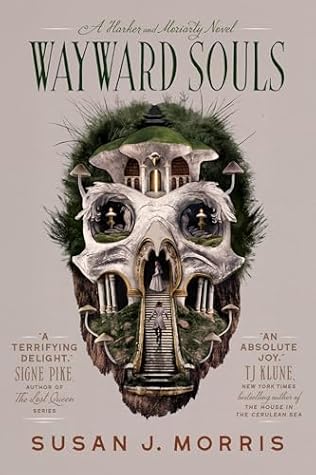
Wayward Souls by Susan J. Morris is the second book in the Harker & Moriarty series, with a publish date by Inky Phoenix Press of Bindery Books of March 17, 2026.
Genre:
Historical Fantasy, Paranormal Mystery
Blurb:
The delightfully dark sequel to the gothic supernatural mystery Strange Beasts.
Six days before Samhain—the night when the veil between worlds is thinnest—Samantha Harker, daughter of Dracula’s killer, and Dr. Helena Moriarty, daughter of the famed criminal mastermind, are thrown into their next the mysterious disappearance of two Society field agents in Ireland. Only this time, the Royal Society is sending Jakob Van Helsing to keep an eye on them.
Sam and Hel may have solved the Paris case, but that doesn’t mean the Society trusts them. Sam has the power to slip into the minds of monsters, and Van Helsing has sworn to kill her at the first sign of corruption. And if Hel can’t prove her father’s existence, she’ll soon go down for his crimes.
Their investigation takes them from the crumbling ruins of Ireland’s untamed wilds to the occult societies of the rich and powerful. The connection between the Sam and Hel is electric, but as they fall deeper into each other’s orbit, their secrets only multiply. For Hel, it’s the sins she committed when she was her father’s pawn. For Sam, it’s a plague of death omens, mysterious black feathers, and a siren song no one else can hear. And then comes a chilling revelation that is poised to shatter The agents who disappeared were each haunted by a ghost. And so, it seems, is Sam.
With characters drawn from the worlds of Dracula and Sherlock Holmes, Wayward Souls is a twisty puzzle box of a historical fantasy—perfect for fans of Genevieve Cogman, Theodora Goss, Freya Marske, T. Kingfisher, and Gail Carriger.
Opening Line:
Samantha Harker folded her hands on the scarred mahogany table, grateful her emerald-green riding habit would disguise any hint of sweat.
My Thoughts:
Sam and Hel (the daughters of Jonathan and Mina Harker from Dracula and Professor Moriarty, the nemesis of Sherlock Holmes, respectively) are off on another adventure in this sequel to Strange Beasts. This time London’s Royal Society for the Study of Abnormal Phenomena have sent them to Ireland with Jakob Van Helsing accompanying to keep an eye on things, as they don’t quite trust Hel’s loyalties or Sam’s abilities.
Like its predecessor, the vibes in this book are perfectly on point! Steeped in the darker aspects of Celtic mythology and folklore, this story was perfect for my spooky season reading (but with the Irish setting being such a large part of the story, St. Patty’s Day would be a fine time to pick it up as well!) People in Ireland are disappearing in ways that smack of the supernatural and it’s up to our team of field agents to figure out who or what is behind it all, preferably before the night of Samhain, when the veil between worlds is thinnest and dangers from the Otherworld are at their peak.
A theme of this installment is that no one is only one thing – all good or all bad. Characters who were midlevel villains of the last book have the opportunity here to show that they have another side. Our heroines have to learn to allow themselves as much grace as they do the monsters they confront in their line of work, who are sometimes made the way they are by monstrous acts committed against them.
I hadn’t recalled from the first book that the story is all told with third person POV through Sam’s perspective, so readers can only really get an idea of Hel and Van Helsing’s thoughts and feelings through their interactions with her. I do think a reread of that one would have been beneficial, as I couldn’t recall much about the situation with Sam’s grandfather, which comes into play as a fairly major plot thread here.
One complaint I have with this book is the same one I had for the first in the series – I couldn’t always follow the characters’ reasoning when they came to conclusions about things in their investigation. The answers and explanations here were a bit convoluted, with a lot going on. I kind of had to just enjoy the ride and accept the characters’ determinations without fully appreciating how they arrived at them.
Still, this was overall a fun story and perfect fit for my October reading, and I am grateful to NetGalley, Bindery Books, and Inky Phoenix Press for the eARC in exchange for my unbiased review.
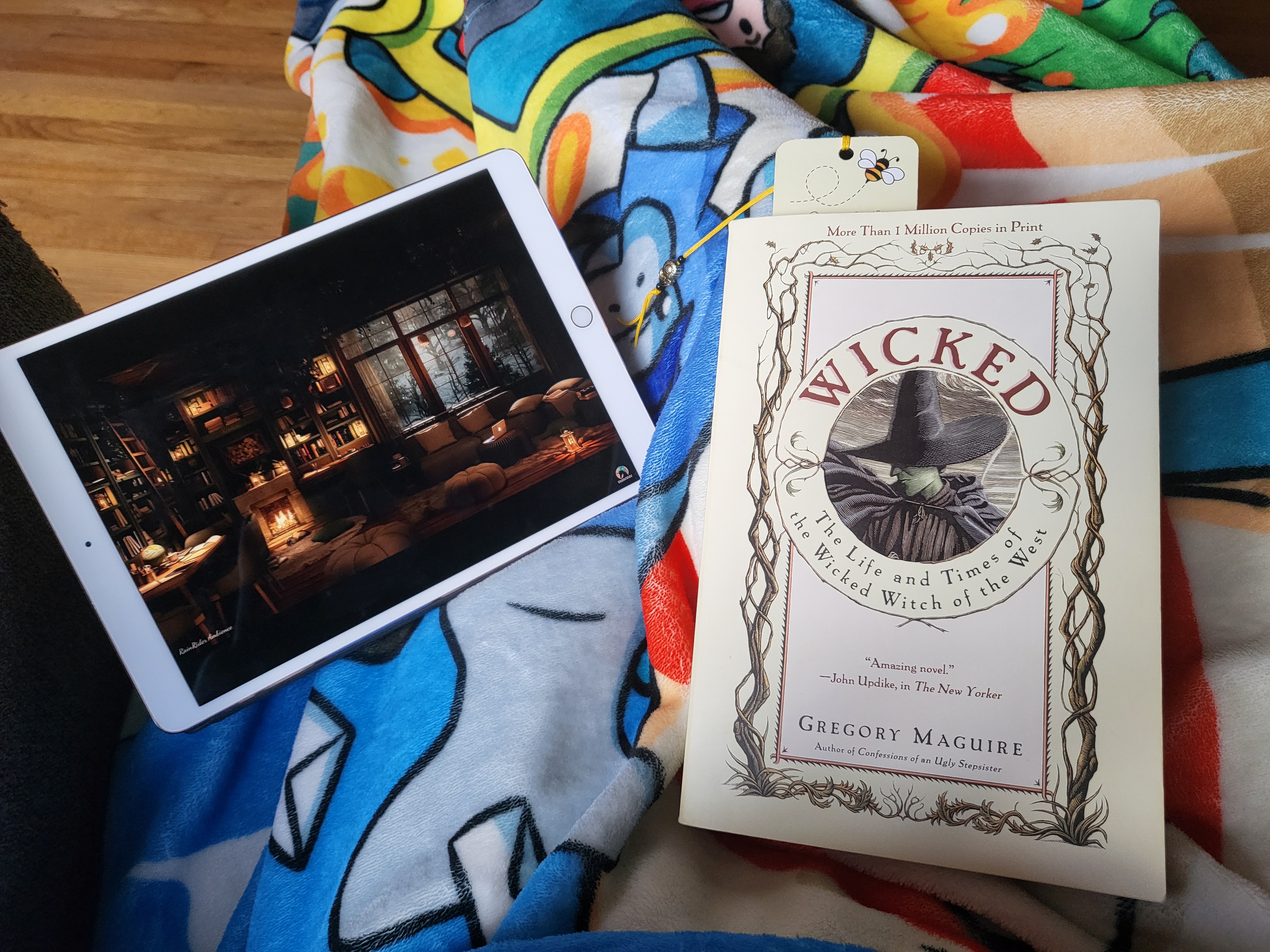
Wicked: The Life and Times of the Wicked Witch of the West by Gregory Maguire is 406 page novel published in 1995 by ReganBooks, and is the first in The Wicked Years series.
Genre:
Fantasy, Retelling
Opening Line:
A mile above Oz, the Witch balanced on the wind’s forward edge, as if she were a green fleck of the land itself, flung up and sent wheeling by the turbulent air.
My Thoughts:
Oh, this book–I wanted to live in its pages forever!
I can certainly see how this book would not be every reader’s cup of tea. It is not a fast paced, action packed, plot driven narrative. The writing is very literary in style as readers are planted in the world of Oz and learn of its cultures, religions, and politics through the lens of one woman’s life story. But the writing is also absurd and humorous at times, surprising laughs out of me when I wasn’t expecting them. The five Parts of the story follow different eras of Elphaba’s life, each section taking place several years after the previous one. Through her life story we confront questions of morality, faith, and philosophy. And though it fell apart a bit at the end for me and left me with many questions, I loved every minute of my time spent in Maguire’s Oz! (To be clear, I definitely would not want to LITERALLY spend time there.)
In Part I, Munchkinlanders, we meet Elphaba’s parents: Frex, the unionist minister, and Melena, often left alone at their remote cottage to console herself with mind-altering substances. Frex is on a mission to preach against tiktokism and the pleasure faith that is becoming more popular when Melena gives birth to their first child, who is born shockingly green of skin and with razor sharp teeth (and because the author seems to be rather fixated on male genitalia in this first part of the book, she is born with “a bit of organic effluvia” or something in her groin that makes the midwives argue at first over whether the infant is a boy or a girl). She also avoids water at all costs, as it seems to pain her. Frex and Melena believe this child is meant as a punishment for them, or perhaps that she is possessed by some devil.
Perhaps, thought Nanny, little green Elphaba chose her own sex, and her own color, and to hell with her parents.
When Melena is expecting again, she faithfully takes capsules provided by Yackle, a crone at an alchemy shop, to try to prevent a recurrence of the defects of her first child (instead, little Nessarose is born without arms). In the reading of tea leaves, Yackle predicts greatness for Melena’s children, two sisters.
“She said history waits to be written, and this family has a part in it.”
In this part of the story we also get introduced to the Quadlings of southern Oz, as Frex and Melena befriend a foreigner named Turtle Heart. Quadlings seem to be seers of some sort, and to be the only residents of Oz who are aware of our/Dorothy’s world. Quadling Country is swampy land where the people build their homes in the trees, connected by platforms secured with ropes. Workers from the Emerald City have begun to build dikes and divide the land into parcels that will no longer be self-sustainable, and then they find the land is rich in rubies. The Quadlings have foreseen a cruel and mighty stranger king arriving in Oz via hot air balloon, exterminating them in order to pillage their land for its riches. Frex decides this means the population down south are more in need of his ministrations, and he sets off with his pregnant wife, toddler daughter, and Quadling friend in tow.
“She is herself pleased at the half things,” Turtle Heart said. “I think. The little girl to play with the broken pieces better.”
In Part II, Gillikin, 17 year old Elphaba is off to university. She winds up befriending her pretty roommate, Galinda, which could not be more of a surprise to either of them.
Galinda was slow coming to terms with actual learning. She had considered her admission to Shiz University as a sort of testimony to her brilliance, and believed that she would adorn the halls of learning with her beauty and occasional clever sayings. She supposed, glumly, that she had meant to be a sort of living marble bust: This is Youthful Intelligence; admire Her. Isn’t She lovely?
Galinda does not understand why Elphaba spends so much time reading old sermons about the nature of good and evil. Pagans of yore believed evil originated with the vacuum created when the Fairy Queen Lurline, who they considered to be the the creator of Oz, left them: “When goodness removes itself, the space it occupies corrodes and becomes evil, and maybe splits apart and multiplies. So every evil thing is a sign of the absence of deity.” But the early unionists argued evil was an invisible pocket of corruption floating around, “a direct descendant of the pain the world felt when Lurline left”, and anyone might pass through it and become infected with evil by no fault of their own.
“But they believe in evil still,” said Galinda with a yawn. “Isn’t that funny, that deity is passe but the attributes and implications of deity linger-“
“You are thinking!” Elphaba cried.
During her time at this institution of higher learning, Elphaba becomes aware of the growing discrimination, encouraged by the laws passed by the Wizard of Oz who had usurped the Ozma Regent years before, against Animals (anthropomorphized, sentient and speaking versions of lower case A animals). One of their professors, Doctor Dillamond, is a Goat researching the biological basis for what makes an animal different from an Animal and from a human, to disprove that Animals are lesser and stop the inhumane treatment of those who had, up until the arrival of the Wizard, been considered equal members of society. It is during this time in her life that Elphaba learns her righteous indignity, a spirit of activism, and her derision for political machinations. This part of the story includes a murder, and a bid to recruit Elphaba, Glinda (who has changed her name for reasons I can’t explain without spoilers), and Nessarose into the service of the despotic Wizard. His Oz is “a seething volcano threatening to erupt and burn us in its own poisonous pus”, with “communities on edge, ethnic groups against one another, bankers against farmers and factories against shopkeepers”. The one attempting the recruiting assures Elphaba she can harness her spirit and she “needn’t live a life of unfulfilled rage”.
Also, an old woman named Yackle works selling tickets at some questionable sex club.
In Part III, City of Emeralds, we see Elphaba’s time as a secret agent, an underground activist. It is also when she carries out a romance with Fiyero, and I find I have to comment on his character here. I have never seen the Wicked musical, but I see that in the upcoming version, Fiyero is played by Jonathan Bailey, who seems lovely. I am a bit confused by this casting, though, as the character of Fiyero is an Arjiki prince from the Vinkus to the far west, a dark-skinned man with blue diamond tribal tattoos over his entire body. He is described as dark-skinned multiple times, ochre-skinned, and one character observes that his skin is the color of shit (this book is all about prejudice and discrimination in “civilized” society.) So why is he played by a white dude?
Also, Fiyero is kind of the worst. All he does is patently disregard and disrespect all of Elphaba’s clearly expressed wishes, so I don’t understand the romance between them at all. But he does allow for conversations with Elphaba about the ethics of her righteous campaign and the eschewing of personal responsibility for any collateral damage. There is talk of terrorists hiding behind their ideals, and when questioned about the chance for innocent bystanders to be caught in the crossfire, Elphaba goes so far as to say, “Any casualty of the struggle is their fault, not ours.” This is also when we first hear about Elphaba questioning the existence of souls, and that she certainly does not believe that she herself is in possession of one.
After some more murder, we find ourselves in Part IV, In the Vinkus. At the end of the previous section, Elphaba arrived at a mauntery (a convent) in a state of “dreamless, sleepless grief” and is welcomed by a decrepit old woman, mad Mother Yackle. Seven years later, it is time for Elphaba to finally leave the mauntery “to conduct an exercise in expiation”:
“You feel there is a penalty to pay before you may find peace. The unquestioning silence of the cloister is no longer what you need. You are returning to yourself.”
Elphaba joins a caravan headed into the Vinkus accompanied by Liir, a young boy raised among the orphans at the Cloister of Saint Glinda. They travel to Kiamo Ko, the seat of the royal family of the Arjiki, where Elphaba plans to seek forgiveness from Fiyero’s wife, Sarima. But Sarima will not hear of it:
“You want to throw down your burden, throw it down at my feet, or across my shoulders. You want perhaps to weep a little, to say good-bye, and then to leave…This is my home, I am a nominal Dowager Princess of Duckshit, but I have a right to hear and I have a right not to hear. Even to make a traveler feel better.”
There is more talk evil and good (“in folk memory evil always predates good”), and there is the question of who Liir’s parents are or were (I felt so bad for that little boy!) But Elphaba will not leave Kiamo Ko without being forgiven for what happened with her and Fiyero, and so she and Liir over time become part of the household and family. During this time, Munchkinland secedes from Oz.
In Part V, The Murder and its Afterlife, things have not been going well for Elphaba. Now her sister (who had come to be viewed as a religious tyrant) has been killed be a house falling from a tornado, and some foreign girl has the magic shoes that Nessarose had promised would be Elphaba’s if she were to predecease her. The Wizard and Elphaba each have something the other wants. There is more talk of Yackle, the Kumbric Witch of legend, the Clock of the Time Dragon, the Other Land, souls, good and evil, parentage. Who is in thrall to whom? And it all comes to a head in an ending we are familiar with from the Wizard of Oz, albeit through a different perspective than that told by the victor of the story.
What I didn’t love about this last part was that Elphaba here hardly seemed recognizable as the Elphaba in all the rest of the book. So I couldn’t really understand her motivations here. Some reviewers describe it as her descent into madness, so I guess that could explain it. But boy did I enjoy the journey getting to this point, and I think this book presented me with things I will be thinking about for a long time.
Maybe the definition of home is the place where you are never forgiven, so you may always belong there, bound by guilt. And maybe the cost of belonging is worth it.
I think I MUST read the sequel at some point, since people seem to say it answers some of the questions left by this book. I look forward to it!
People who hated this book seem to primarily have picked it up either under the belief that it would be like the Broadway musical, which it apparently isn’t (and now I’m wondering if I really want to see the movie version of the musical after all, since I loved the book so much and will probably be disappointed by how different the movie/musical is), or under the belief that it was a children’s book because the source material it is reimagining was for children. So be aware: the musical based off of this book apparently takes liberties and does not follow it precisely (this grim story also seemed like a very odd choice to turn into a musical, to me); and this story explaining everything that Elphaba went through to shape her into the Wicked Witch of the West painted as the villain is most certainly not for children.
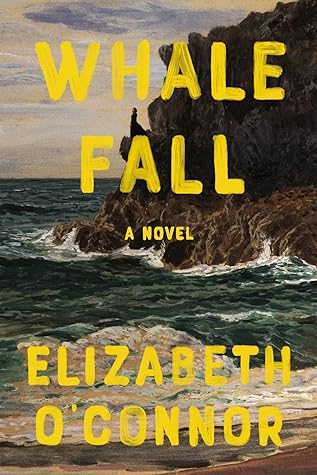
A whale washes ashore on an isolated Welsh island. A couple from Oxford arrive to research an ethnography of the few remaining residents (those who haven’t moved to the mainland yet to find better prospects than continuing to battle the natural world in an attempt to make lives from fishing and catching lobster). Manod, an eighteen year old woman on the island with good English skills, works for the researchers as a translator until they leave.
And that’s it, that’s the story.
This is a very literary novel that is far from plot-driven. Crafted sentences are sometimes incomplete, comprising paragraphs that may or may not have anything to do with the ones preceding or following them. It did successfully have me feeling transported to the island, feeling the sea spray on my skin and smelling the day’s catch. And I liked how the researchers were writing a book about a way of life that only existed in their minds, using their subjects more than studying them (if this were a plot-driven novel, I would insist on seeing them get their comeuppance!)
But the style of the book just didn’t 100% work for me. It didn’t develop any characters enough to allow me to feel invested in them. I have no idea what the purpose of all the whale bits of the story were for (because there was a whole lot about the whale.) Was it metaphor? If so, for what? And why would you NOT want people to come haul away the months-old giant rotting carcass on your beach?
So in all, this was a 3.5 star mixed bag for me. Kind of sadly beautiful, but not super engaging. I usually really enjoy literary novels, but maybe my tastes in reading are changing now that I am consuming way more books than I ever have before?
Thank you to Pantheon and NetGalley for the ARC in exchange for an honest review.
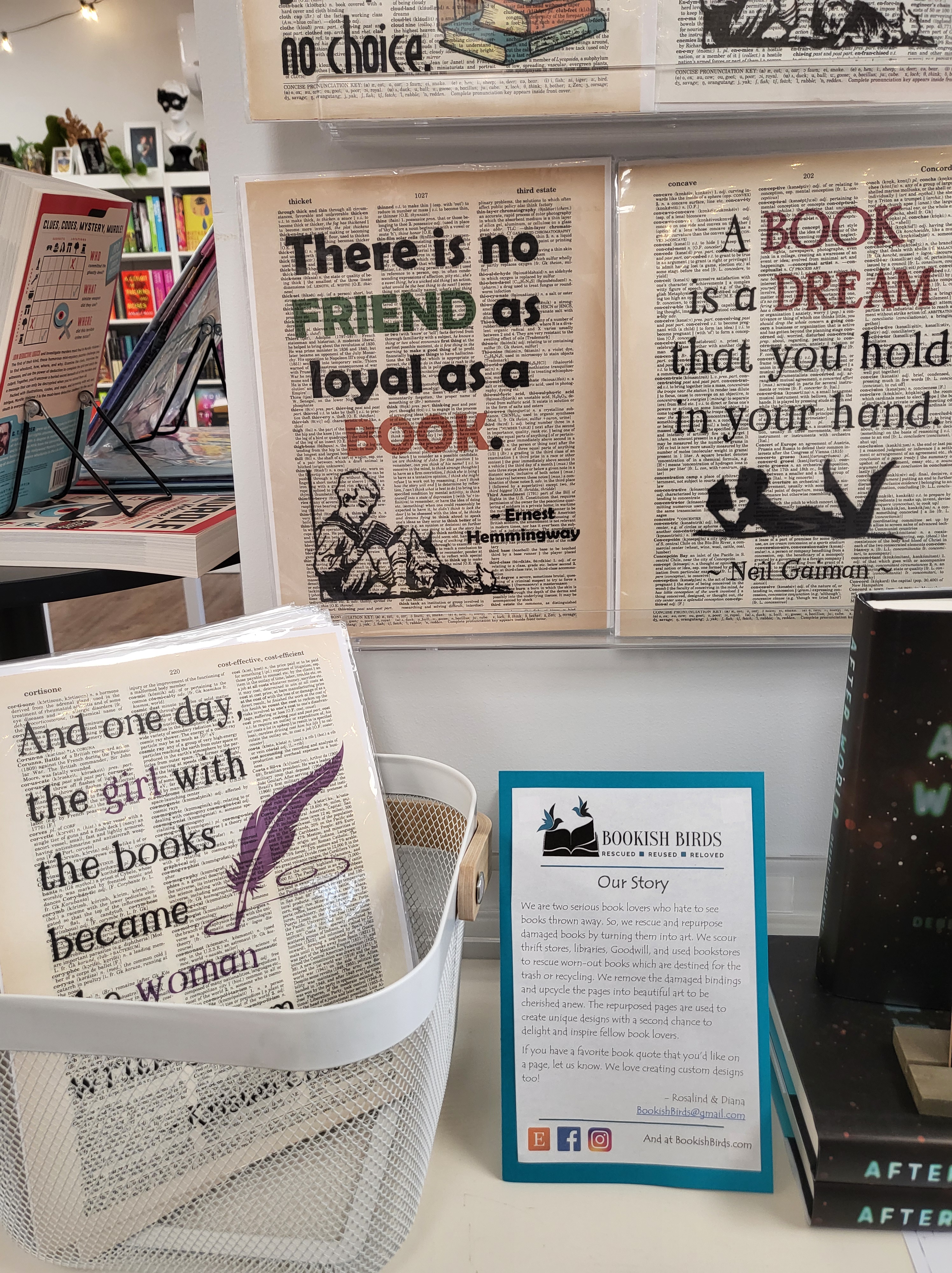
Art by Bookish Birds, on sale display at Golden Bee Bookshop in Liverpool, NY
It has occurred to me that it might be interesting to do a little deep dive on the opening lines of books I read. At the end of the month maybe I’ll publish a post about this for books I read in April, but for now, let’s see about all of the others I have read so far this year. Here we go!
January’s books:
The lightning seeded the fog with a fire that churned like a restless embryo.
The Fall of Babel by Josiah Bancroft
I dream sometimes about a house I’ve never seen.
Starling House by Alix E. Harrow
Since I barely venture outside these days, I spend a lot of time in one of the armchairs, rereading the books.
I Who Have Never Known Men by Jacqueline Harpman
Each year when Shesheshen hibernated, she dreamed of her childhood nest.
Someone You Can Build a Nest In by John Wiswell
Alferes Antonio Sonoro was born with gold in his eyes.
The Bullet Swallower by Elizabeth Gonzalez James
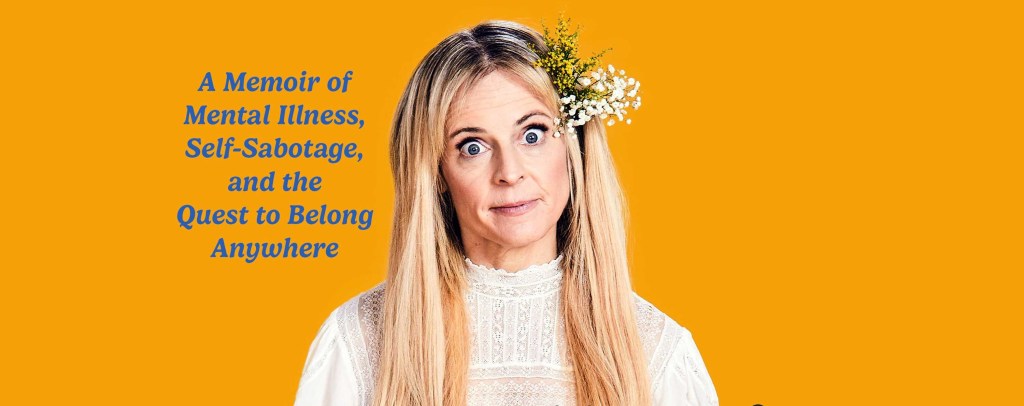
I love being asked to join, so much so that I will say yes to an invitation without knowing exactly what I’ve agreed to.
Sure, I’ll Join Your Cult by Maria Bamford
The body floats downstream.
The Frozen River by Ariel Lawhon
Alright, let’s share our notes about these opening lines from the books I read in January!
I greatly enjoyed The Books of Babel, but that first line from the final book is just, like…wut? It must be especially confusing to someone not familiar with the series, as they wouldn’t already be aware of the lightning and the fog to which this line is referring.
As for Starling House, dreaming about a house you’ve never seen catches the reader’s interest right away. What’s the story there? I Who Have Never Known Men‘s opener is less of a hook, but it does make you wonder why there is only a limited number of books if the narrator is rereading “the” books.
When it comes to Someone You Can Build a Nest In, everything about this monster romance is wonderfully unique, and starting off by introducing a main character who hibernates and grew up in a nest is about as intriguing as it comes! This one takes first prize from me for the January books.
The Bullet Swallower‘s first line is okay, but really requires another line or two to explain what exactly it means. The beginning of comedian Maria Bamford’s memoir is both funny and informative about what you can expect the book to be about.
The opening line of The Frozen River, which I admittedly DNFed (although it has gotten a lot of love from many readers), comes across as kind of uninspired to me, but at least the fact that there is a body involved, one floating in a river no less, might hook you.
February’s books:
“Your future contains dry bones.”
How to Solve Your Own Murder by Kristen Perrin
On the eve of Mad Purdy’s first class at Elmswood Public Library, all the leaves on the trees turned red over night.
The Parliament by Aime Pokwatka
On Sunday, September 11, 2011, three men were murdered in a second-floor apartment on a dead-end street in Waltham, Massachussetts.
The Waltham Murders by Susan Clare Zalkind
Being a serial killer who kills serial killers is a great hobby…
Butcher & Blackbird by Brynne Weaver
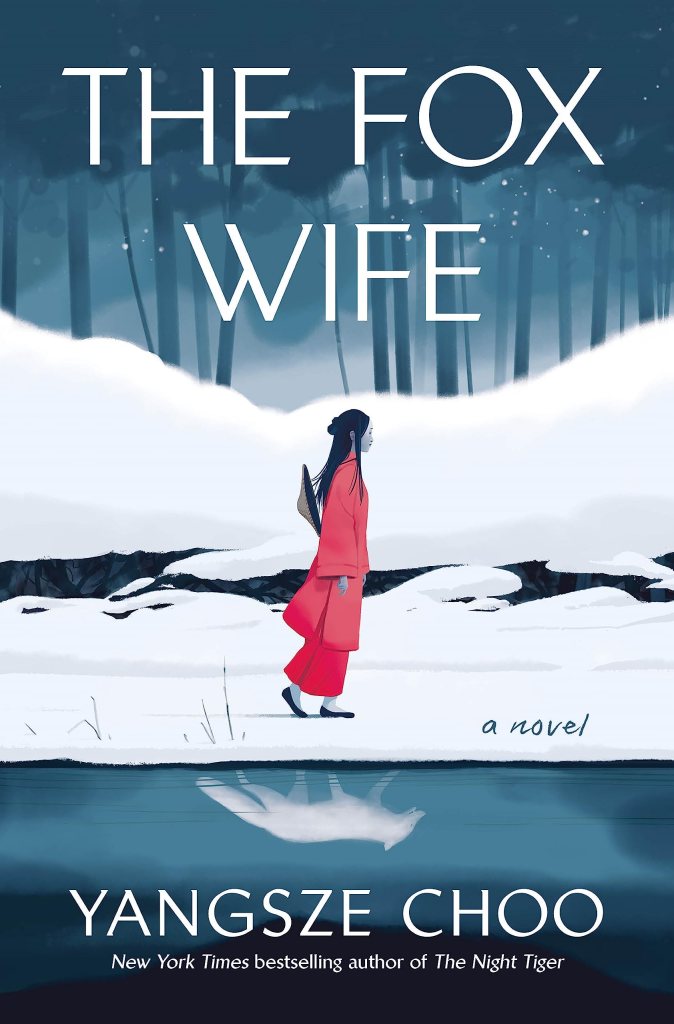
Perhaps you know this story: Late one evening, a beautiful woman comes knocking on an unsuspecting scholar’s door.
The Fox Wife by Yangsze Choo
So personally I find the opener for How to Solve Your Own Murder to be kind of “meh”, but if you read on you learn that this line was part of a fortune told to a young woman who believed wholeheartedly in her foretold doom. The opening line of The Parliament is just “meh” with no further qualifiers. It gives us a setting, sure, but that’s it.
The Waltham Murders is nonfiction, and the first line is about as attention-grabbing as they come. Butcher & Blackbird starts by letting you know the premise of the book in an amusing way, setting readers up for what to expect. But I think The Fox Wife has the best opening line of any of the novels I read in the month of February.
March’s books:
In an old wardrobe a djinn sits weeping.
The Djinn Waits a Hundred Years by Shubnum Khan
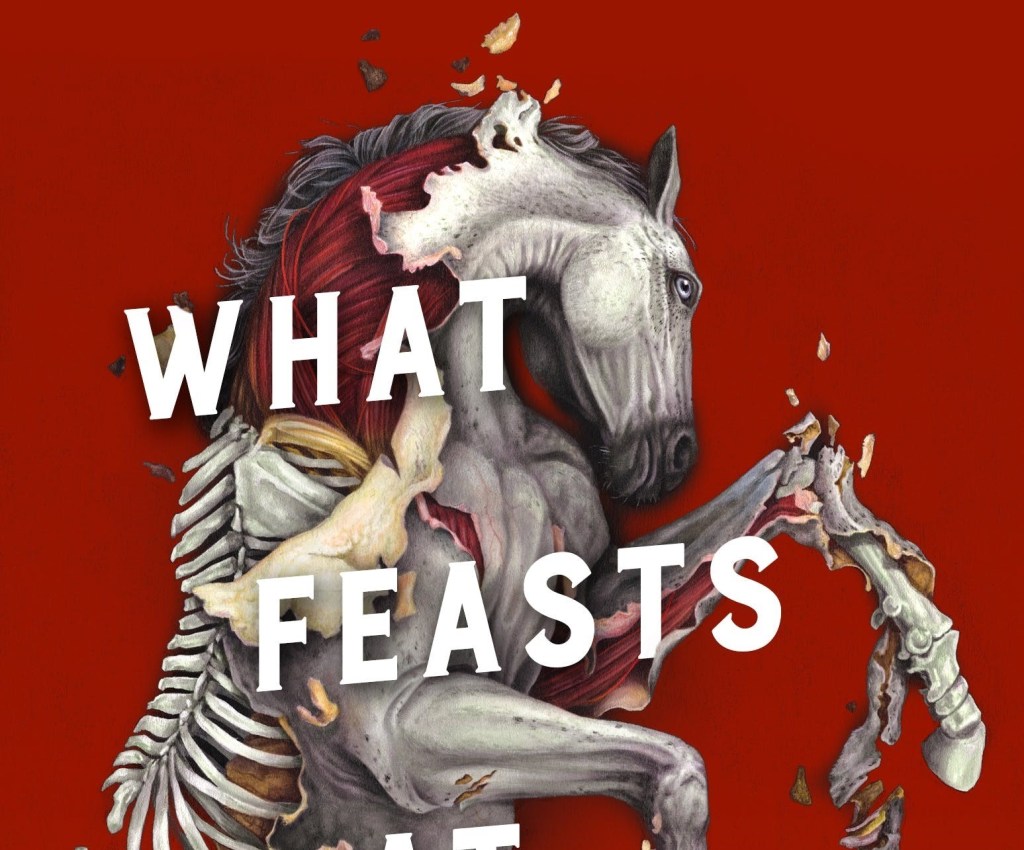
A poet once wrote that the woods of Gallacia are as deep and dark as God’s sorrow, and while I am usually skeptical of poets,I feel this one may have been onto something.
What Feasts at Night by T. Kingfisher
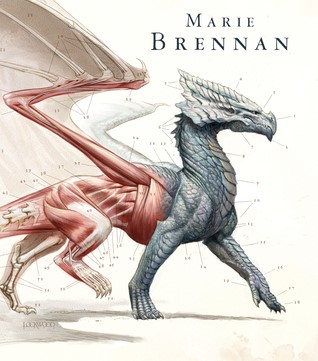
Not a day goes by that post does not bring me at least one letter from a young person (or sometimes one not so young) who wishes to follow in my footsteps and become a dragon naturalist.
A Natural History of Dragons by Marie Brennan
“Hey, Barbara, you got a hanging man in the Three-Four precinct.”
What the Dead Know by Barbara Butcher
Barry Sutton pulls over into the fire lane at the main entrance of the Poe building, an Art Deco tower glowing white in the illumination of its exterior scones.
Recursion by Blake Crouch
In that time, I was called Brother Kellin of Cambrin, and I was an awful monk.
2024 High Caliber Awards (from the first entry, Mightier than the Pen by Kevin Harris)
The opening line of The Djinn Waits a Hundred Years is great: ooh, a djinn! Why is it weeping in a wardrobe?! The one for What Feasts at Night is also wonderful, really setting the tone; it’s also very “voicey” — this one is my favorite of the whole batch for month of March.
The first line of A Natural History of Dragons is pretty “meh”.
What the Dead Know is nonfiction about working as a death investigator in NYC, so I guess it gets straight to the point by opening with a dead body.
The opener for Recursion does absolutely nothing to grab the reader. But then we’re back in pretty great territory with Mightier than the Pen – amusing, plus now I want to hear more about what makes Kellin an awful monk.
This book checks off a lot of boxes for me: Gothic, poignant, slow burn, literary. I enjoy reading Gothic tales in new and different locales other than your standard British moors. And there was a lot of nostalgia for me here, bringing me back to all the time spent at the home of a childhood friend where we watched Bollywood movies and I learned a bit of Hindi.
After the death of her mother, Sana and her father leave their farm in South Africa and move into a dilapidated mansion on the coast. The grand estate was abandoned in a rush in 1932 and has been falling apart ever since, eventually being turned into tenement apartments that draw an eclectic group of individuals all seeking to forget their pasts. What a cast of characters!
“…those people who live at the edge are the ones who are really living–they know what it is to exist“
Sana was hoping to leave behind the things that haunt her when they moved, but not only is she disappointed in that, she finds her new home is itself haunted by its own tragedy. The quiet, curious girl looking to understand the world around her starts digging, and much to the house’s chagrin, begins unearthing the secrets of the original inhabitants who fled over 80 years before.
It has sensed for a long time her uneasy presence in the house but it has ignored it the way it always ignores the presences of other things unrelated to its grief.
I really liked both timelines in this book: the history of Meena and Akbar, as well as Sana and her fellow misfits doing the best they can in their current day circumstances. For whatever reason stories that include twins often wind up being some of my favorites, and so the conjoined twin who did not survive the separation surgery was like an added bonus here, even though she’s horrible.
My one complaint is that I wanted a bit more from the ending. It ended okay, but the execution of the climax and resolution seemed a bit lacking to me, compared to how wonderful the writing throughout the rest of the book was. But I loved every minute building up to that point!
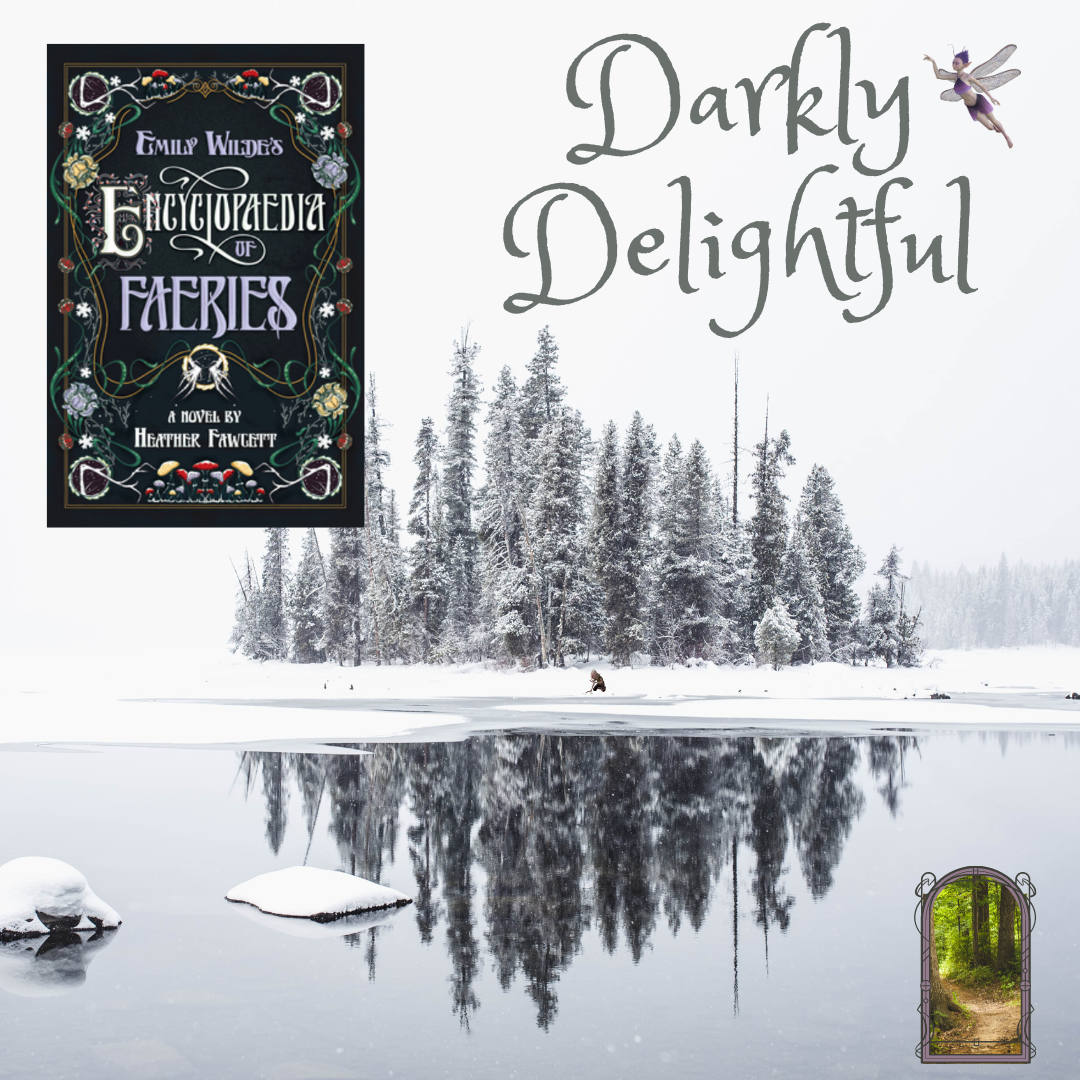
The first book in the Emily Wilde series by Heather Fawcett, Emily Wilde’s Encyclopaedia of Faeries, is darkly delightful!
Stuffy Cambridge professor and dryadology expert Emily Wilde travels to an isolated Arctic Nordic island to perform field research on faeries. With her loyal dog, reference books galore, and her trusty journal, she is ready to contend with troublesome but benign common Fae, malevolent and powerful courtly Fae, and any scientific or scholarly challenges that come her way. What she is not prepared to face, however, are the locals and the societal conventions that come with interacting with them.
Emily’s infuriatingly charming colleague Wendell Bambleby invites himself to assist in her research, showing up at her rented cottage unannounced. Might he have any ulterior motives? I was not expecting the gentle ‘opposites attract’ romance aspect of the story that shows up here, but it was one of my favorite parts!
…it is hard not to be entertained by Bambleby. It is one of the things I resent most about him. That and the fact that he considers himself my dearest friend, which is only true in the sense that he is my sole friend.
There are abductions and dismemberment in this book, but also a heartwarming tale of how a socially awkward academic learns to become part of a community. It is presented as Emily’s journal (with a helpful entry or two provided by Bambleby), complete with footnotes, because: stuffy academic.
I cannot wait for book two, for more amusing Emily and Bambleby banter!
“Why don’t we go for a stroll? You can entertain me with a list of your demands. Then I can find a nice place to nap whilst you hunt for some common fae to harass.”
This year, I am undertaking Book Riot’s Read Harder Challenge for the first time. The challenge provides 24 tasks that prompt you to read things outside of your usual purview. Book Riot also provides a reading log to help you track what you read throughout the year, and offers stats on how many books you read of each genre, how many by authors of color, how many with LGBTQIA protagonists, etc. As far as the challenge, here are the tasks I’ve completed so far.
Task #1: Read a YA nonfiction book.
IraqiGirl: Diary of a Teenage Girl in Iraq by IraqiGirl
This is a collection of blog entries written by a teenage girl in Iraq during the US occupation after the overthrow of Saddam Hussein. As such, it left me wishing for something that went a little deeper, something a little more reflective, but this never purports to be a memoir. It is a great source for showing readers just how the lives of Iraqi civilians were affected during this time, and how they felt about it all. However, I have to admit it bothered me a bit just how one-sided the author’s thoughts seemed to be. She blames the US soldiers for all of the flying bullets and explosions, but never once seems to consider who or why they are attacking. I can understand just wishing the occupying forces would leave to put an end to the fighting, but there should at least be an acknowledgment that there were insurgents exchanging gunfire and planting car bombs. The author also does not acknowledge what the US was aiming to do during the occupation, why the forces were there, but I suppose the lesson here is that civilians whose lives are seriously disrupted, endangered even, don’t necessarily understand or even care why. They just want the disruption and danger to stop. Something to be considered no matter how you feel about it intellectually.
Task #5: Read a book about a natural disaster.
The Johnstown Flood by David McCullough
In the nineteenth century, a dam was built in the mountains of Pennsylvania to facilitate the canal that was being built at the time. By the time the dam was completed, the canal was defunct. It sat neglected for years before being purchased by an exclusive gentleman’s hunting and fishing club. The reservoir created by the dam was stocked with fish, cottages were built along the lakeside, and Pittsburgh’s successful and wealthy businessmen visited the clubhouse in pursuit of leisure. Over the years, the stability of the dam was questioned, and shoddy maintenance was performed by people wholly unqualified. In 1889, a storm unlike anything seen before caused the neglected dam to fail, leading to nearly 20 million tons of water cascading down the mountainside and completely decimating Johnstown below, killing over 2,000 people and wiping out almost every single thing that stood in its path. This book gives a detailed history of the disaster, everything leading up to it, and what followed. The eyewitness accounts are harrowing. This is a fascinating read, although I’m not entirely sure it counts as a natural disaster, as it was the failings of men that led to the extreme rains having such a calamitous outcome.
Task #8: Read an audiobook of poetry.
Teaching My Mother How to Give Birth by Warsan Shire
Poetry generally isn’t my thing, but then again, the point of this challenge is to read outside of your comfort zone. I don’t listen to a whole lot of audiobooks, either – nonfiction I can do, but fiction in audio format just does not work very well for me. However, listening to this book of poetry as read by the author is definitely the way to go. Warsan Shire is a Kenya-born Somali poet based in London. Born in 1988, she is an artist and activist who uses her work to document narratives of journey and trauma, often as told through women’s bodies.
“Your daughter’s face is a small riot, her hands are a civil war, a refugee camp behind each ear, a body littered with ugly things but God, doesn’t she wear the world well.”
Task #11: Read a debut novel by a queer author
Gideon the Ninth (The Locked Tomb #1) by Tamsyn Muir
I read this book before deciding to take on the Read Harder challenge. I will copy my Goodreads review here, which is quite a bit longer than the those I wrote above.
Well hot damn!
A solar system of necromancers across nine planets is overseen by an Emperor god, Necromancer Divine, King of the Nine Renewals, the Resurrector, Necrolord Prime. Saints from each of the Nine Houses have served the Emperor as immortal Lyctors for the past 10,000 years, but over time their numbers have dwindled and vacancies have opened up. The heir to each House and their cavalier primaries are invited to the ancient, ruinous, (haunted?) Canaan House to face a challenge involving mysterious necromantic tech to earn a place as a new Lyctor. Some of the competitors are being picked off, but by whom…or by what?
The Emperor needs necromancers. The Ninth Necromancer needs a swordswoman. Gideon has a sword, some dirty magazines, and no more time for undead nonsense.
This book is marketed as “lesbians in space,” which, strictly speaking, is true. However, that blurb gives many readers the false impression that character sexuality may take precedence over plot, and that the space setting is at the forefront of the story. The main character has one hell of an adventure, all while she happens to be a lesbian. Almost all of the story takes place in a palace on one planet, as “decadent nobles vie to serve the deathless Emperor”. And it’s great!
This Science Fantasy story reminds me a bit, in some aspects, of Pierce Brown’s Red Rising. The “decadent nobles” with Latin-inspired names, potentially from Greek mythology-inspired Houses, travel to another planet to compete with one another in a challenge. And I get the feeling that, similar to the RED RISING series, the sequel will have us spending much more time in space.
The story matter may be quite grim, but the snarky tone of the narration is endlessly amusing.
She said, “I’ll still do it.”
Harrowhark chewed on the insides of her cheeks so hard they looked close to staving in. She steepled her fingers together, squeezed her eyelids shut. When she spoke again, she made her voice quite calm and normal: “Why?”
“Probably because you asked.”
The heavy eyelids shuttered open, revealing baleful black irises. “That’s all it takes, Griddle? That’s all you demand? This is the complex mystery that lies in the pit of your psyche?”
Gideon slid her glasses back onto her face, obscuring feelings with tint. She found herself saying, “That’s all I ever demanded,” and to maintain face suffixed it with, “you asswipe.”
Some major mysteries are left unanswered at the conclusion of this part of the story, and I am 100% along for the ride when the sequel comes out this summer! (August 4th is the release date!)
Task #16: Read a doorstopper (over 500 pages) published after 1950, written by a woman
I had also already read three books this year that qualify for this prompt before starting the challenge. These include Middlegame by Seanan McGuire, The City of Brass (The Daevabad Trilogy #1), and The Most Fun We Ever Had by Claire Lombardo. Here I’ll post my Goodreads review of the last one.
Er, it turns out I never actually wrote a Goodreads review, just a post in the group for a book club consisting of some coworkers. So it’s not very thorough, but here were the thoughts I posted there:
I enjoyed this book. Sometimes you just want to reach into the pages and strangle some of the characters, but overall I thought it had a lot of really accurate messages about relationships – as parents, as siblings, as spouses. Parts of it really resonated with me.
I feel like Wendy was a really great character. I mean, she was definitely a jerk at times, so not like she was a great person, necessarily, but a really interesting character that added a lot of color to the story.
Task #17: Read a sci-fi/fantasy novella (under 120 pages)
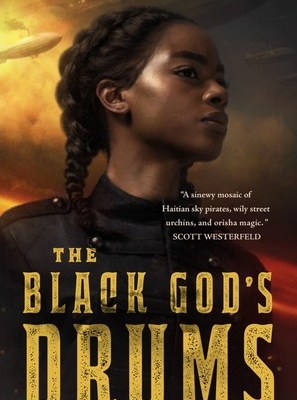
The Black God’s Drums by P. Djèlí Clark
I love the world constructed within the pages of this book, a steampunk alternate history New Orleans influenced by African deities, the Orisha. I enjoyed the voice of this story as well, the dialect writing. My one issue was that, with its novella length, it just didn’t do enough for me overall. I would totally read more by this author, though!
Task #20: Read a middle grade book that doesn’t take place in the US or the UK
The Neverending Story by Michael Ende
This is another book I read before starting the challenge, for another Goodreads book club I am in, Sword & Laser. I think it counts for this challenge prompt, as the majority of the story takes place in the fantasy world of Fantastica. I listened to it in audio format, which I already said is not usually how I like to consume my fiction. Maybe that had something to with why I really, really did not care for it. Another likely reason is that it is middle grade fiction, something I don’t often find myself able to appreciate. Things were overly dramatic and very black and white. The movie based off this book actually only portrays the first half of the story. After the events in the movie have occurred, Bastian’s adventures in Fantastica are relayed, during which he becomes a giant douche. If you like reading drawn out, oversimplified stories about giant douches having dramatic adventures in a fantasy world where everyone and everything is cookie cutter, then this might be your jam.
Task #21: Read a book with a main character or protagonist with a disability (fiction or non)
Show Me a Sign by Ann Clare LeZotte
This is an #OwnVoices story featuring a girl living in a historically-based village on Martha’s Vineyard where 1 out of 4 people was born deaf. I didn’t exactly love this book, again probably only because middle grade fiction just doesn’t really do it for me. However, I think this would be a great option for assigned reading for elementary school students. Everyone in the village knows sign language, and families often come up with their own dialects. The story addresses how villagers feel about the Wampanoag and freedmen in their midst, as well as how mainlanders feel about the island’s deaf population, and the main character learning how to deal with her neighbors whose views differ from her own.
Those are the Read Harder Challenge tasks I have met so far, and I plan to post again with updates as I forge ahead. Happy reading!
Then he stopped suddenly and said in a strange voice, “No, no, listen, don’t listen to me, listen. You can find your people if you are brave. They passed down all the roads long ago, and the Red Bull ran close behind them and covered their footprints.”
I have fond memories of the movie based off of this book, watched several times when I was a child. Of note to me was how closely the movie follows the book as compared to current book-to-screen adaptations (perhaps because of its shorter length, but also likely thanks to the author also writing the screenplay). And the movie’s soundtrack – the music moves me to this day!
“Do you know what I am, butterfly?” the unicorn asked hopefully, and he replied, “Excellent well, you’re a fishmonger. You’re my everything, you are my sunshine, you are old and gray and full of sleep, you’re my pickle-face, consumptive Mary Jane.” He paused, fluttering his wings against the wind, and added conversationally, “Your name is a golden bell hung in my heart. I would break my body to pieces to call you once by your name.”
“Say my name, then,” the unicorn begged him. “If you know my name, tell it to me.”
“Rumpelstiltskin,” the butterfly answered happily. “Gotcha!”
I liked the book well enough. The writing was certainly poetic and lovely, the unicorn remains a sort of tragic fairy tale heroine, but tragic only through the lens of a silly mortal. Humorous at times, the story also has deep messages about mortality, joy, beauty, and the overall fleeting nature of human experience. Here seems like a good place to mention that I think King Haggard is a seriously underrated character in classic fantasy!
“They are nothing to me,” King Haggard said. “I have known them all, and they have not made me happy. I will keep nothing near me that does not make me happy.”
It’s hard to say what I would have thought of this book without the associations of my fond recollections of watching the movie as a child, but really a middle of the road 3 stars seems apt. I appreciated some aspects of the fairytale and the language, other parts of the book were a miss with me. I couldn’t always account for the characters and their behavior, or why everyone else seems to love the roving outlaw part while I just found it kind of annoying.
But did I mention Haggard?
“I suppose I was young when I first saw them,” King Haggard said. “Now I must be old–at least I have picked many more things up than I had then, and put them all down again. But I always knew that nothing was worth the investment of my heart, because nothing lasts, and I was right, and so I was always old.”
Not a favorite of mine, but a solid read. And you know what, from the sheer quotability I’m finding as I write this review, I’m going to go ahead and award a fourth star out of five.
“I have been mortal, and some part of me is mortal yet. I am full of tears and hunger and the fear of death, though I cannot weep, and I want nothing, and I cannot die. I am not like the others now, for no unicorn was ever born who could regret, but I do. I regret.”
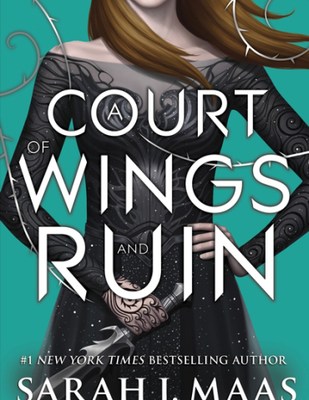
I recently read A Court of Wings and Ruin by Sarah J. Maas. My good friend Court saw the cover and remarked, “Hey, that book is about me!” You know, since his name is in the title. I agreed, saying it was a biography about him. “You know, not so much with the wings, but a whole lot of ruin.” In response to which he quipped, “Little Wings, Big Ruin.”
I’m sharing this just because it makes me giggle, and maybe you’ll giggle too. “Little Wings, Big Ruin: The Memoirs of Court Chapman*”.
*To protect his identity, I have changed his name. You know, just his last name. Obviously I didn’t change his first name, or else this entire anecdote wouldn’t make any sense. I mean, I’m not a total liar-geez, guys, back off!










 Jessica Crawford