Broken Country by Clare Leslie Hall is a 320 page standalone novel published in 2025 by Simon & Schuster.
Genre:
Literary Fiction
Subgenres:
Romance, Suspense
Opening Line:
The farmer is dead, he is dead and all anyone wants to know is who killed him.
My Thoughts:
4.5 stars
This is an emotional story following Beth, a young woman in North Dorset, England. Chapters alternate between timelines, one in 1955 when teenaged Beth meets and falls in love with Gabriel Wolfe, and one in 1968 when she is married to a farmer named Frank Johnson. Interspersed are also chapters showcasing a murder trial occurring after the other timelines, although who is on trial for whose murder is not made clear until near the end.
There is a touching story here about relationships before and after the loss of a child, both broken relationships and healing ones. A love of the natural world is on display in the writing. I found the parts describing infidelity difficult to read, but everyone at least winds up addressing their wrongdoings. Beth’s complicated feelings and the looming murder we know is going to happen create a tense atmosphere set against the simple pleasures of the pastoral setting and the love for a child.
Thank you to NetGalley and Simon & Schuster for the eARC of this moving story in exchange for my unbiased review.
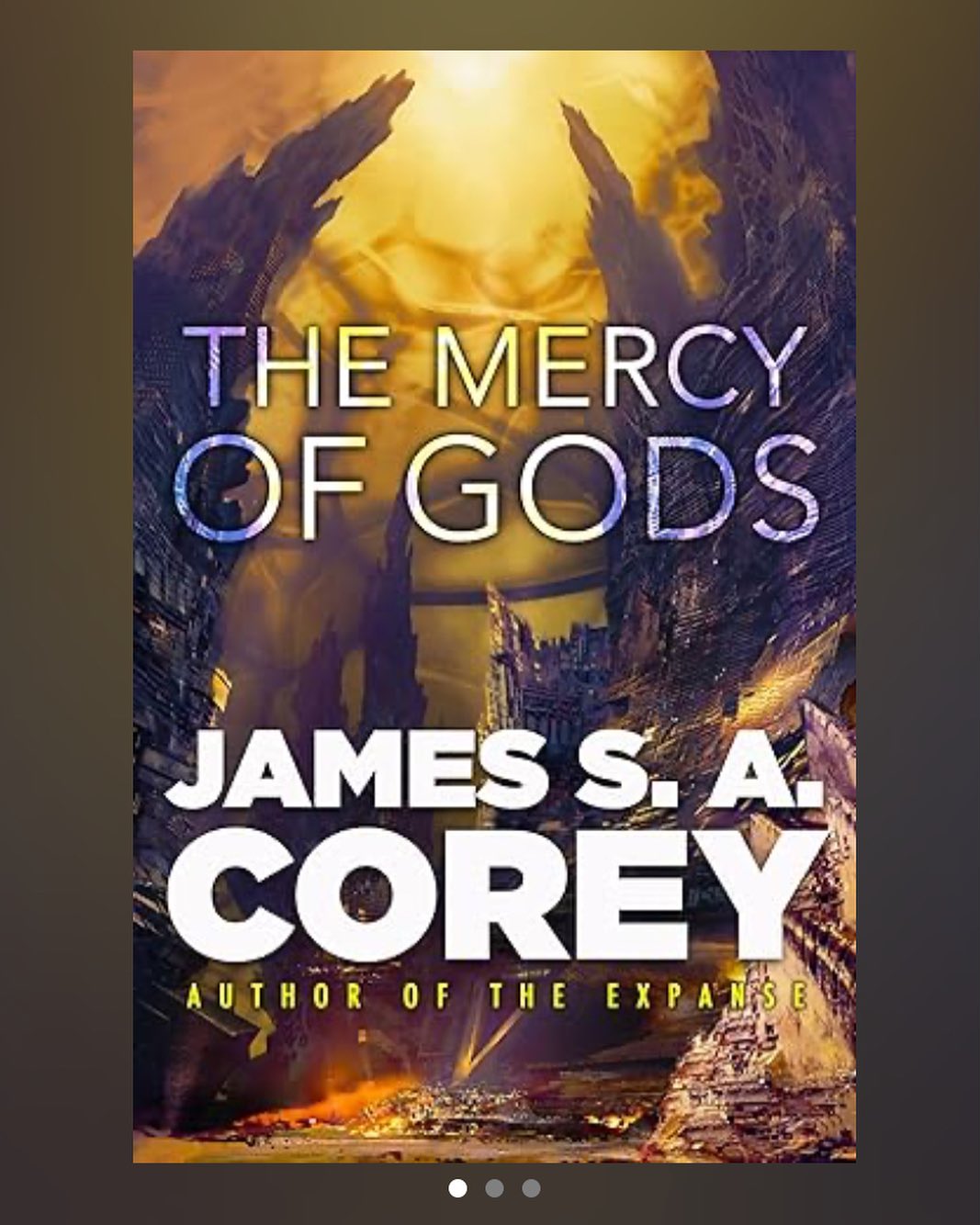
The Mercy of Gods by James S.A. Corey is a 423 page novel published by Orbit of Hatchette Book Group published in 2024, and is Book One of the Captive’s War, a planned trilogy that will also feature additional novellas in between main installments. Like the author’s previous series, The Expanse, this work has also already been confirmed to be in the works as a television adaptation.
Genre:
Science Fiction
Synopsis:
A spectacular new space opera that sees humanity fighting for its survival in a war as old as the universe itself.
How humanity came to the planet called Anjiin is lost in the fog of history, but that history is about to end. The Carryx – part empire, part hive – have waged wars of conquest for centuries, destroying or enslaving species across the galaxy. Now, they are facing a great and deathless enemy. The key to their survival may rest with the humans of Anjiin. Caught up in academic intrigue and affairs of the heart, Dafyd Alkhor is pleased just to be an assistant to a brilliant scientist and his celebrated research team. Then the Carryx ships descend, decimating the human population and taking the best and brightest of Anjiin society away to serve on the Carryx homeworld, and Dafyd is swept along with them. They are dropped in the middle of a struggle they barely understand, set in a competition against the other captive species with extinction as the price of failure. Only Dafyd and a handful of his companions see past the Darwinian contest to the deeper game that they must play to learning to understand – and manipulate – the Carryx themselves. With a noble but suicidal human rebellion on one hand and strange and murderous enemies on the other, the team pays a terrible price to become the trusted servants of their new rulers. Dafyd Alkhor is a simple man swept up in events that are beyond his control and more vast than his imagination. He will become the champion of humanity and its betrayer, the most hated man in history and the guardian of his people. This is where his story begins.
First Line:
You ask how many ages had the Carryx been fighting the long war?
My Thoughts:
“I think some important scientific questions have finally been answered. Alien life exists, and they are assholes.”
I’ve only read one other James S.A. Corey book, the first in The Expanse series, Leviathan Wakes. Looking back at my review, it seems I thought that one started and ended with a bang, but was a real slog in between. In contrast, this book was much more consistent throughout.
I did watch The Expanse TV show and loved it. In many ways, The Mercy of Gods felt reminded me of that other series: humanity laboring to learn about a previously unknown alien threat.
If they survived this alien hellscape, it would be because of this. Because in the face of trauma and violence, what they wanted first was to know, to understand.
In the far future, an alien race called the Carryx has made a habit of conquering other worlds and assimilating its native intelligent species, IF said species can prove themselves useful to their new overlords. Otherwise, they get culled. Humanity has now fallen into the clutches of this merciless intergalactic empire. Can they prove their worth? Should they revolt, even knowing it’s a death sentence? In the meantime, the reader is aware that there is another race if aliens locked in a generations-long war with the Carryx, and maybe they might be the ones to finally topple the tyrants.
The characters are a collection of humans the Carryx found most likely to be useful – top tier scientists and scholars, for example. There is the young research assistant who knows how to read other people and act in a way to set them at ease; the man who irritates his fellows by defaulting to making jokes in times of stress (mentioned to be gay, although this aspect of does not come into play in this part of the story); the researcher whose suicidal ideation comes flooding back once she runs out of her routine medication as a prisoner. This work group serves as this book’s version of the crew of the Rocinante, and while I wasn’t overly fond of or super connected to any of them, I didn’t actively dislike any of them like I did in Leviathan Wakes (I enjoyed the characters as they were portrayed on the TV show MUCH more!)
“Stop sciencing all over my story,” Jellit said. “The fact is that it worked.”
Overall this was an interesting story, with a lot of intriguing ideas and a sense of tension carrying it forward. But I am disappointed that this is a case of Book One of the series offering zero resolution of any kind. Obviously I expected the overarching story to continue, but often each installment in a series has a more focused arc that meets with some kind of resolution, but not so here. If I do read on, it will have to be with the understanding that the next book while likely also leave me feeling this way, waiting until the end of book three to feel any satisfaction whatsoever. I might be willing to do that, but honestly, since it’s already been announced this series is being turned into another television show, I am more likely to just wait to watch that.
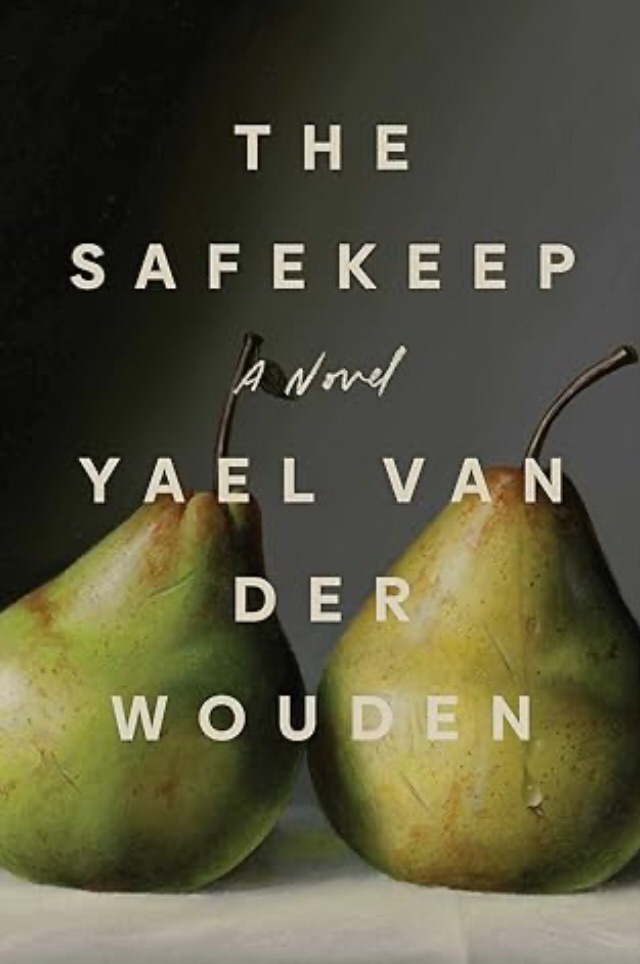
The Safekeep by Yael van der Wouden is a 272 page standalone novel published byAvid Reader Press of Simon & Schuster in 2024, and was shortlisted for the Booker Prize 2024.
Genre:
Historical fiction, literary fiction
Synopsis:
An exhilarating, twisted tale of desire, suspicion and obsession between two women staying in the same house in the Dutch countryside during the summer of 1961-a powerful exploration of the legacy of WWII and the darker parts of our collective past.
A house is a precious thing…it is 1961 and the rural Dutch province of Overijssel is quiet. Bomb craters have been filled, buildings reconstructed, and the war is truly over. Living alone in her late mother’s country home, Isabel knows her life is as it should be—led by routing and discipline. But all is upended when her brother Louis brings his graceless new girlfriend Eva, leaving her at Isabel’s doorstep as a guest, to stay for the season. Eva is Isabel’s antithesis: she sleeps late, walks loudly through the house, and touches things she shouldn’t. In response, Isabels develops a fury-fueled obsession, and when things start disappearing around the house—a spoon, a knife, a bowl—Isabel’s suspicions begin to spiral. In the sweltering peak of summer, Isabel’s paranoia gives way to infatuation—leading to a discovery that unravels all Isabella has ever known. The was might not be well and truly over after all, and neither Eva—nor the house in which they live—are what they seem.
Mysterious, sophisticated, sensual, and infused with intrigue, atmosphere, and sex, The Safekeep is a brilliantly plotted and provocative debut novel you won’t soon forget.
Opening Line:
Isabel found a broken piece of ceramic under the roots of a dead gourd.
My Thoughts:
She had made the kitchen a lovely place. Isabel could cry at it: at how a room could be made, and left behind, and turn terrible by way of absence. How a space could miss a person. How a person could stop–
This book is literary historical fiction set in the Netherlands in 1961, with references to the years of World War II. I was digging it at first, but then wound up getting really bored by it for a while, as plot advancement stalls and we are treated to many, many pages of the main character just being angry and hateful. Things then take a turn and get quite spicy for Isabel (who seems to be portrayed as on the autism spectrum, as well as with some OCD/paranoia/anxiety stemming from the wartime).
Eva said this often: You know what I mean, and Isabel mostly never knew what she meant, not exactly. Only that Eva was frightened and that she saw people as danger. Isabel understood fear. Isabel rarely considered other people at all.
The romance aspect of the story was certainly not boring, but was portrayed in a way I found quite awkward and uncomfortable (there was a whole lot of “pushing” and “pulling” going on in the love scenes, and I understand why these terms might be used once for an affair in which the lovers don’t want to want each other, but these sentiments were a bit overused).
About two thirds of the way in, reading a non-POV character’s diary really flips things around with some magnificent revelations that blew me away. But unfortunately by the end I was bored again.
The writing on the sentence-level overall was good, certainly, but I did get tired with the stilted nature of the prose (a lot of sentences and thoughts and dialogue cut off midway without being completed).
Although I was predominantly underwhelmed by this book, the payoff from reading the diary entries alone was worth it. It will have you seething about man’s inhumanity to man, as it unveils some experiences of being a Dutch Jew in and around the time of the Holocaust.
The Favorites by Layne Fargo is a 448 page standalone novel published by Random House in 2025.
Genre:
Contemporary Fiction, Retelling
Opening Line:
Today is the tenth anniversary of the worst day of my life.
My Thoughts:
Guys, I think I already read one of my top ten books of 2025.
When I was strong and self-assured, people recoiled from me. They told me I was too competitive, too ambitious, too much. But when I was brought low, bruised and bleeding, a princess in need of rescue instead of a conquering queen, they loved me.
This book is a reimagining of Emily Bronte’s Wuthering Heights with modern competitive ice dancers, and I was absolutely addicted to it! I did enjoy Wuthering Heights, although it boggles my mind that people call it a romance. I consider it a pure revenge story, and for whatever reason, I really seem to dig the revenge stories (that one, The Count of Monte Cristo, The Stars my Destination.) Although The Favorites has revenge, it is definitely more of a love story, albeit one that is a bit toxic at times.
At first I thought the comp of this book to the classic just meant it was inspired by it and had many of the same themes, but it’s more than that. Our characters are Heath Rocha (Heathcliff), Katarina Shaw (Catherine Earnshaw), Lee Shaw (Hindley Earnshaw), Isabella Lin (Isabella Linton), and Garret Lin (Edgar Linton). There are similarities to the story arc, but it is definitely not an exact copy in a new setting.
Kat has long idolized Olympic gold medalist Sheila Lin, and wishes fervently to follow in her footsteps to become a champion ice dancer. Because this is what she wants, Heath learns to be her ice dance partner. The two have been skating together since children, and in love with each other almost as long. The rub is that Kat is the most important thing in the world to Heath, and while Kat loves Heath like crazy, becoming champion is the most important thing to her.
They wind up presented with the amazing opportunity to train with Sheila Lin herself at Lin Academy. There they work alongside Sheila’s twin children, Garrett and Bella. The Lins are wealthy and entitled, and Heath can’t say he loves the way Kat changes when she’s around them and training at such a prestigious facility.
I really liked the best frenemy situation between Kat and Bella. They become friends, but both are incredibly ambitious and have the same goal, so they use one another as motivation to always push to improve and best the other. Even as competitors, the way they understand one another is a strong glue binding them.
“Any bitch can get married, but-“ “It takes a special bitch to be national champion?” “Exactly.”
Interspersed between some chapters are transcripts from the documentary that commemorates the ten year anniversary of what Kat calls the worst day of her life, while the rest of the book is written in Kat’s POV, first person past tense. This style was great, it added a lot.
Kat and Heath realize the public respond more to their romance story as skate partners than they do to their performances as elite athletes, and decide to play it up for the press. Some in the industry consider them something of a scandal. Through it all, Heath’s number one goal in life is to be enough for the woman he loves, while Kat doesn’t take her eyes off the prize of taking home the Olympic gold. Unsurprisingly, some of the other hopefuls don’t shy away from trying to sabotage rival teams.
The characters in this book just all felt so real to me, multilayered, not 100% good or bad throughout. I loved taking this wild ride with them.
And as a side note, I also really enjoy the playlist the author put together for this book. Usually I avoid those, because although authors say it’s music that inspired them while writing, I can like the book and yet still not share their taste in music. In this case I took a look at the playlist because so many songs are mentioned in the book as the pieces the ice dancers are performing to. And it turns out this extra long playlist has many, many songs I am loving and would never have otherwise found on my own.
All the stars for this book, which had a 41 year old woman who doesn’t dance and hates being the center of attention asking, “Is it too late for me to start training in ice dance?” It did seem a bit overlong, but as I wanted to live in its pages forever, that didn’t bother me. I would love to see this as a movie some day!
People seem to have a strong preference for either the US or UK version of the book cover. How do you feel about them?
Those Fatal Flowers by Shannon Ives is a 384 page standalone novel from Dell of Ballantine Books with a publish date of January 21, 2025.
Genre/Subgenres:
Mythology Retelling, Historical Fiction, Romance
Opening Line:
The night before Ceres’ palace becomes a tomb, it’s halls are filled with music.
Synopsis:
Greco-Roman mythology and the mystery of the vanished Roanoke colony collide in this epic adventure filled with sapphic longing and female rage—a debut novel for fans of Madeline Miller, Jennifer Saint, and Natalie Haynes.Before, Scopuli.
It has been centuries since Thelia made the mistake that cost her the woman she loved. As the handmaidens charged with protecting Proserpina, the goddess of spring, Thelia and her sisters are banished to the island of Scopuli, cursed to live as sirens—winged half-woman, half-bird creatures. In luring men to their death, they hope to gain favor from the gods who could free them. But then ships stop coming and Thelia fears a fate worse than the underworld. Just as time begins to run out, a voice emerges, Proserpina’s voice; and what she asks of Thelia will spark a daring and dangerous quest for freedom.
Now, Roanoke.
Thelia can’t bear to reflect on her last moments in Scopuli, where she left behind her sisters. After weeks drifting at sea, Thelia’s renewed human body is close to death. Luckily, an unfamiliar island appears on the horizon—Roanoke. Posing as a princess arriving on a sailboat filled with riches, Thelia infiltrates the small English colony. It doesn’t take long for her to realize that this place is dangerous, especially for women. As she grows closer to a beautiful settler who mysteriously resembles her former love, Thelia formulates a plan to save her sisters and enact revenge on the violent men she’s come to hate. But is she willing to go back to Scopuli and face the decisions of her past? And will Proserpina forgive her for all that she’s done?Told in alternating timelines, Those Fatal Flowers is a powerful, passionate, and wildly cathartic love letter to femininity and the monstrous power within us all.
My Thoughts:
What happens when you mix a mystery from America’s history with mythology, feminist rage, and romance?
This book right here.
It presents an interesting case: what if sirens from Greco-Roman mythology were responsible for the disappearance of the inhabitants of the lost colony of Roanoke? The author explains that her aim with this story was to explore the effects of loss and guilt on the psyche while also examining structural violence. It does a fair job in this endeavor, while also including a sapphic love story.
Our main character is Thelia, one of three sisters who acted as handmaidens to Proserpina (Persephone), and who were transformed into winged creatures to assist in the search for their charge when she was abducted by Dis (Hades). When they fail to find and rescue the goddess, they are imprisoned on an island as punishment. There, they lure sailors with their singing. (This book alternately refers to them as harpies and sirens, but I think the singing and luring part indicates they were just sirens, not harpies?)
After centuries have gone by, Thelia learns there may be a way to lift the curse she and her sisters are under, but it requires the sacrifice of many treacherous men…something the English colony of Roanoke in the Americas has more then a few of.
I liked the unique premise of the story and the bits detailing the lives of Thelia and her sister sirens on the island of Scopuli, and the writing on the sentence level was good.
On the other hand, I questioned the reliability of the behavior and speech of the Puritans depicted here. The men and women of Raleigh drank an awful lot of alcohol in this book, and said things like, “Fun little secret for you, my lady” before revealing some bit of gossip. I’m no scholar of history, but these things didn’t seem right to me. And I just wasn’t much feeling the romance — it was a bit of instalove on Thelia’s side (although in part because the object of her affections apparently looks so much like her long lost love that for a time she is trying to determine if it might actually BE her); and also, when on a timed mission for redemption, shouldn’t a centuries old divinity be able to keep it in her skirts?
All the hate for anything male really bothered me, BUT this does get addressed later on in the book, as Thelia finally learns that “monsters are made, not born”.
So while this book wasn’t a home run for me, it was decent and presents some intriguing concepts. If I were allowed half or even quarter star ratings, I’d say this was a 3.25 or 3.5 read for me.
Thank you the NetGalley and Dell/Penguin Random House for the eARC in exchange for my honest review!
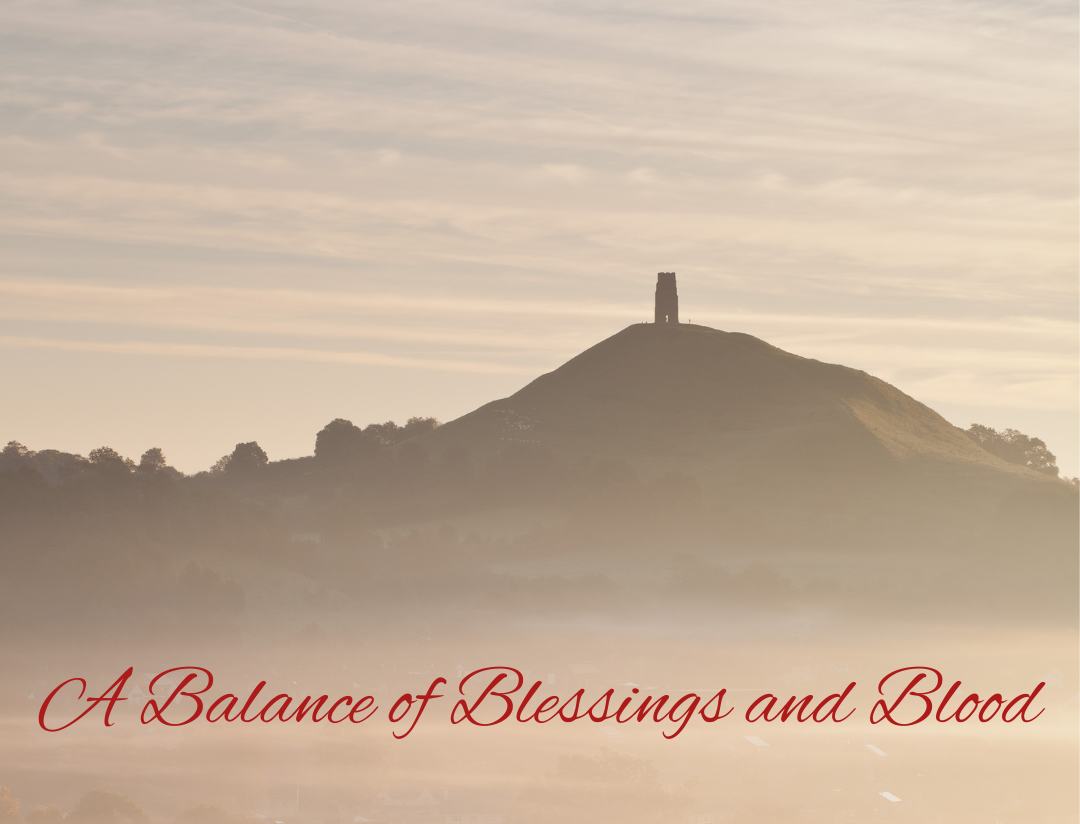
I wrote this short story for consideration for inclusion in an anthology about Morgana le Fey. Alas, it was not accepted, but I am quite fond of it and so decided to share it here. Let me know your thoughts!
I opted to write about a version of Morgana as described by Geoffrey of Monmouth in his narrative poem, Vita Merlini, which was published in 1155 AD and was the enchanting figure’s first appearance in literature that is currently recognized. Her name is given as Morgen in that work, and so that is how I chose to refer to her in my story.
The sea swells and surges up the shores of Avalon. The swash rises through the air in a spinning rush of water, forming an aqueous column that coalesces into the form of a naked woman. The figure solidifies in a gradual progression from the bottoms of her bare feet to her water darkened tresses.
Morgen has returned home.
Her sisters have been awaiting her arrival. Glitonea, taking her turn as lookout, approaches with a robe held open before her. “What word?” she asks as she wraps the garment about her eldest sister’s shoulders, which are glistening with water droplets and adorned with gooseflesh.
Her lips pressed into a thin line, Morgen looks to Glitonea and gives a bare shake of her head. The news is grim.
But she is surprised to see that beyond a brief furrowing of the brow, her sister does not seem as dismayed as she might. Morgen realizes that the Glitonea is harboring news of her own, and it is something that has her excited. She waits for the other woman’s storm colored eyes to meet her own.
“What is it?”
“Men have come to the island.” The words are expelled in a rush.
“Men?”
“Mortals.”
Buffeted by the bracing sea air, Morgen pulls the ends of the robe tightly around her body and gazes up at the tor that juts up from the coastline while considering this news. After a moment, the two women begin the trek up the cliffside path to the keep, the home they share with their seven other sisters. Glitonea soon breaks the silence.
“Did you really find nothing?” she asks in a faint voice.
Morgen did not find nothing. Her travels through the seas took her to Greece, where she found a dragon with no less than one hundred heads thwarting her efforts to seek a meeting with the Daughters of the Evening. She found waters in Europe that restored sight, waters that drove its drinkers mad or bestowed great strength. She had been soaring over yellowed plains when through the air came to her an albatross’s cry resonating in such torment that her own wings missed a beat and her heart dropped in her breast. She had encountered a species of bird that brings forth life through the shedding of its own blood, a sacrificial offering of balance.
What Morgen did not find was an answer to how to stop the golden apple tree at the center of Avalon from continuing to wither and die, and with it the island’s magic.
The boons of the Fortunate Isle are tied to that singular tree with its resplendent fruit. Its roots feed enchantment into the soil, sending its gifts outward through its communion with the rest of the land. It is thanks to this tree that Avalon is so fruitful of its own account, without need of plough or toil. For its devoted inhabitants, the land provides without fail the fruit and grains that feed them and the herbs they use in their healing balms, unguents and tonics. It is the exceptional nature of the place that grants the sisters that call it home the alacrity and ease with which they have been able to focus and enhance their spellwork. Their conjurations are threefold as strong as they would otherwise be.
And now it all decays. Over the past months an insidious rot has taken hold, the effects of which have been subtle as of yet, but worrisome all the same.
“Nothing of use. At least not that I can see,” Morgen answers. As they climb the wooden steps to the elevated entrance of the keep, she says, “Tell me of these men.”
Glitonea obliges gladly. “At first we thought it was just three of them, two warriors in hauberks and a man dressed like a bard, all ferried by Barinthus on his barge. But as they came ashore we saw there was another man, wounded, laid out on the deck.”
“You offered healing?” Morgen asks. What she really means is, were you able to heal the man, or have your abilities deteriorated even too far for that?
A look of consternation steals over Glitonea’s face as she explains, “We each of us tried. But you have always been the most skillful healer among us. Perhaps you will succeed where we have not.” Then, somberly, “It is a most grievous wound.”
Crossing through the eastern solar of their home Morgen sees more of her sisters, some alone and others arranged in groups. Save for Thitis, who is drawing doleful music from a cither, her favored instrument that she has not found the will to take up much in the past months, they appear to stand or lounge around purposelessly. They have been thrown from their routine with the arrival of strangers and do not know quite what to do with themselves. One of them lets escape a titter and Morgen glances over her shoulder to look for the source. Moronoe and Tyronoe are leaned in close conversation with one another before a tapestry depicting a stag posed within a ring of hazel trees. The former holds a hand clasped over her mouth. It is unsurprising to Morgen that those two, despite the grave manner of the men’s visit, would yet be delighted by their presence. The opportunity for social exchange outside of their circle appeals to many of the women, of course, but there are those who are especially enamored with the potential for commerce of the sexes. There are also those who will have been disappointed that the ferryman had not brought them fresh female company.
As she exits the room and approaches the keep’s central staircase, Morgen tells Glitonea, “I will go to my chamber to dress. Then I will see to these men.”
Standing in her bed chamber and dressed now in a sleeved undergarment, Morgen plaits the damp tangle of her hair with a deft hand. She slips into a dark green peplos, fastening it at the shoulders with brooches. All the while her mind is a churning maelstrom.
There had been seasons of Morgen’s life when mortals coming ashore would have appealed to her foremost as an opportunity for exercises in love. Such activities held little interest for her these days, and not only because she has tired of partners scorning their beloved the moment they grow bored, all lovers feeling jilted in the end. If one of the paramours is skilled in enchantment, well, the accusations flung become all the more absurd.
But now. The golden apple tree waning for the first time since the sisters had made the island their home decades before, and Avalon’s magic with it. The ill portent of the albatross’s lament. And now the arrival of mortals. What did it all mean? Had she missed some sign writ in the stars? Had her skills reading the heavens diminished so much?
From the cabinet beside her bed, Morgen pulls out a corded belt to cinch around her waist. From one side she hangs a pouch of herbs, from the other a ceremonial blade in its leather sheath. Before shutting the cupboard door, something catches her eye. On the floor, half hidden behind her slippers, is the drinking horn she had once spelled. The charm she laid over the instrument was designed to reveal infidelity by causing any unfaithful lover who attempted to drink from it to spill its contents without a single drop passing his or her lips. For many days and nights she had struggled to perfect the magic. Finally, she learned that in order to force a person’s secrets into the open in this way required her to divulge one of her own. Only after speaking her greatest shame into the mouth of the vessel would it perform as intended. This took further consideration on her part, as Morgen is a woman who does not involve herself overmuch with the concept of shame. Just as she feels an entirely changed being from the one she was at the time of the horn’s creation, she feels no antagonism for that woman of the past; some of her actions may have been misguided, but her feelings then were just as valid as her desire to restore Avalon’s glory now.
Toeing the horn further to the back of the cabinet, she shuts the door and goes to see about healing a wounded man.
The prostrate form has been laid out atop the golden coverlet over Tyronoe’s bed. His chain mail and greaves have been removed, leaving him stripped down to tunic and breeches. His brow is furrowed and his mouth twisted in a grimace, but his eyes remain closed; he has withdrawn into himself. Blood-covered hands are crossed gingerly over the black stain spread over his abdomen, an unconscious guarding of a wound that draws the eye like a baleful storm cloud on the horizon.
Arrayed around the bed are those who accompanied the injured man to the island as Glitonea has relayed. One of the soldiers has yellow curls, the other brazen eyebrows and a beard halfway to gray. The bard doffs his cap and falls to his knees before Morgen where she stands next to Glitonea just inside the threshold.
“Great Lady! I am called Taliesin. These good men of Caerleon are of the king’s retinue. You, Lady, are renowned across the lands for your great skill in healing ailments of all kinds, your talents said to be matched only by your wisdom and beauty. We come to beseech you: please, do what you can to save the life of the Benevolent and Wise King Arthur!”
Halfway during this speech, Morgen had returned her eyes to the figure on the bed. The man Taliesin remains kneeling on the floor as he awaits her response. Morgen turns her head slightly in her sister’s direction and speaks in a soft undertone. “You did not say he was a king.”
“Does it matter?”
Morgen crosses the room in measured steps, approaching the bed. “How did he sustain this injury?” she asks. The bard struggles off his knees to stand behind her.
“Run through with a sword wielded by his own nephew,” the younger of the soldiers answers. He glares through his curling locks as he speaks these words, but Morgen knows his animosity is directed at this nephew, not at her.
Stopping at the bedside, she continues to assess the sight before her. The muscles of the king’s throat work as he labors to swallow what moisture his body is able to muster, eyes still screwed shut. Eventually she shifts her scrutiny down toward the gash in his belly. She begins to reach a gentle hand toward laceration when she is surprised to find the man’s own suddenly gripping her wrist, more strength in his hold than she would have thought he was capable of summoning in his current state.
She looks up and finds his eyes open and staring into hers. She notices they are green.
Silence commands the room for several long moments while they observe one another. Finally one of his soldiers ventures, “My Lord King?” Arthur’s grip loosens until he eventually drops his hand to his side, but his eyes remain open. He does not speak.
Morgen returns her attention to the wound. It is not a clean cut, but jagged as though his opponent had wrenched the steel in a twisting motion before tugging it free. It seems a cruel act born of a singular enmity. She lets her fingers hover over the rent in the flesh and extends her senses, confirming what she has already begun to suspect.
It is too late to save this man. The injury is a grievous one, yes, but his body’s reaction to the insult has passed the point of reversal, birthing a cascade of further catastrophes throughout his systems, setting a multitude of fires that cannot all be doused before he succumbs. Looking at the man’s face, Morgen sees he has shut his eyes once more, and notices now the gray shadow that has begun to tint his skin. She imagines he does not have much time left.
To the side of this throat she can see the fluttering of a pulse, the blood yet coursing through his veins, albeit more feebly than usual. The blood of a king. The eddies within Morgen’s mind swirl with a new turbulence as she considers this.
“I have heard of you, Arthur of Pendragon,” she says. She believes he can still hear her, though he makes no response. “You are known to have united the peoples of your land. It is said you champion equality among your advisors, allowing no unfair advantages due to birth or other circumstances left to fate alone. You treat all persons with respect without requiring them to earn it, but rather allowing them the agency to lose it by their own efforts. You have been found worthy across varying fields. You, Arthur, are a Great King.”
She hears one of the other men choke back an expression of grief. It does not do to weep or otherwise conspicuously convey sorrow before a death has occurred, as it may draw the attention of forces from the Otherworld that would only hasten that outcome, even if it had not been an inevitability.
Morgen takes a moment to arrange her face before lifting it to address Taliesin. “You must leave him here with us. His recovery is not a thing that can be managed in a short time.”
It is as though a flame has been lit within the bard, the way his face lights up at these words. “You can heal him, then!” he cries. Morgen makes no answer. “Yes, yes, we will leave him in your capable hands, Lady. Your divinely appointed skills cannot be rushed, we understand! No motte and bailey is raised in a single day.”
Morgen nods and then resumes her position next to her sister. They watch as the men huddled around the recumbent form in the bed, taking their leave of their lord and speaking their reassurances and pledges to him. The women see tears of relief upon the younger soldier’s cheek. They and several other of their sisters walk the men down to the beach, where Barinthus is already waiting with his barge, as he is always aware when his services are needed. The bard continues to effuse gratitude and praise even as the vessel pushes off from shore.
Some of the women pull away and return to the keep. Morgen and Glitonea remain the longest, watching the forms of the departing mortals recede along the bobbing waves.
“You let them believe we would heal him,” Glitonea remarks after several long moments.
Morgen swipes away strands of hair that the wind blown in off the sea has stuck to her lips. “They heard what they wanted to hear,” she demurs.
“What you wanted them to hear,” Glitonea amends. Morgen makes a swift tilt of her head as if to say: these things are the same. “What is it you are planning?”
Looking her sister full in the face, Morgen explains. “You asked if it mattered that he is a king. In calling himself a king, a man dons a mantle of importance like a cloak, granting himself a significance that may not have been there before. This consequence goes beyond surface level. He is changed in ways he may not have anticipated.”
Glitonea stares out to sea, considering these words. In time, Morgen says, “Help me gather the others. We will need a litter to convey him.”
The nine sisters stand in Avalon’s central grove, arrayed around a dying man laid beside an apple tree. The tree is also dying.
The browned edges of shriveled leaves curl inward. The golden fruit is wrinkled and dull. Usually while standing in this orchard there can be heard a low, sonorous tone that seems to originate in the earth itself. Always faint, the sound is now nearly imperceptible.
Thitis kneels on the ground with the man’s head and shoulders laid in her lap, holding him tilted slightly so that he is angled toward the tree. Had he been aware of his surroundings, perhaps a hope that the women were about to feed him one of the golden apples said to grant immortality would have flared within his chest. Yet he is heedless. Before transferring him to the litter to bring him to the tree, Morgen had tipped one of her draughts into his slackened mouth and induced him to swallow. His brow had soon smoothed and he now slept the peaceful sleep of the untroubled, pain nothing more than a bad dream from which he had moved on to sweeter visions. It was not his suffering Morgen sought; she was not a monster. In fact, she found herself wishing for a moment that she had had the chance to meet the man before fate had come calling on him. Her words before had been sincere. The deeds he was known for were mostly cause for great admiration, although ruling a kingdom was never a bloodless endeavor.
They would drop his armor into the sea, after, as an offering, and in supplication for his safe passage to the Otherworld.
Morgen lowers herself to her knees before him.
“Sisters,” she calls out. “For decades the magic of Avalon, spawned from this very spot, has provided life to the island. Sustenance. Restoration. Knowledge and guidance. But in all things, there must be a balance. The magic is owed its due. What can we offer as equipoise for these gifts?” She looked at the others, all standing with their heads held high, except for the kneeling Thitis, who stroked the man’s hair. Morgen slid her blade from its sheath on her belt and answered her own question. “We offer the death of a king!”
In one sure motion, Morgen glides her blade in between King Arthur’s ribs and upward into his heart. She withdraws it and Thitis tilts him further, so that his heart’s blood pumps directly onto the earth housing the tree’s roots.
The women all begin wailing, their keening sending birds from the surrounding foliage into startled flight, as the golden apple tree unfurls verdant leaves, its fruit plumpens and gleams, and the earth sings.
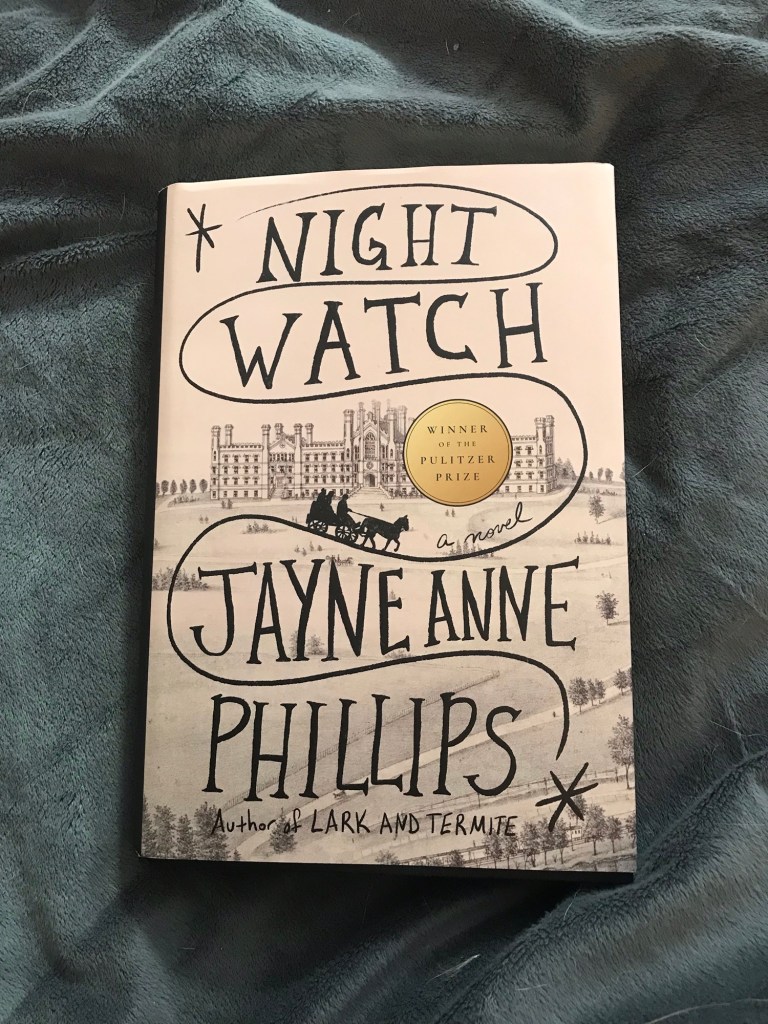
Night Watch by Jayne Anne Phillips is a 276 standalone novel published by Knopf in 2023, and the winner of the 2024 Pulitzer Prize for Fiction.
Genre:
Historical Fiction, Literary Fiction
Synopsis:
In 1874, in the wake of the War, erasure, trauma, and namelessness haunt civilians and veterans, renegades and wanderers, freedmen and runaways. Twelve-year-old ConaLee, the adult in her family for as long as she can remember, finds herself on a buckboard journey with her mother, Eliza, who hasn’t spoken in more than a year. They arrive at the Trans-Allegheny Lunatic Asylum in West Virginia, delivered to the hospital’s entrance by a war veteran who has forced himself into their world. There, far from family, a beloved neighbor, and the mountain home they knew, they try to reclaim their lives.
The omnipresent vagaries of war and race rise to the surface as we learn their their flight to the highest mountain ridges of western Virginia; the disappearance of ConaLee’s father, who left for the War and never returned. Meanwhile, in the asylum, they begin to find a new path. ConaLee pretends to be her mother’s maid; Eliza responds slowly to treatment. They get swept up in the life of the facility—the mysterious man they call the Night Watch; the orphan child called Weed; the fearsome woman who runs the kitchen; the remarkable doctor at the head of the institution.
Opening Line:
I got up in the wagon and Papa set me beside Mama, all of us on the buckboard seat.
My Thoughts:
This book, the winner of the 2024 Pulitzer Prize for Fiction, is stirring literary historical fiction. It tells the story of ConaLee and her family and the many ways their lives are affected by the Civil War.
The fighting has ceased, but not the grief.
The family includes a daughter of Irish immigrants working as indentured servants on a plantation, and the infant born of a slave raped by the master who can pass as white. When the latter leaves his pregnant wife to fight for the Union, he is obviously subjected to the horrors of war – but so are his family, left on the homestead to protect themselves from deserters from both sides of the war. After enduring the resulting traumas, ConaLee and her mother find sanctuary at the Trans-Allegheny Lunatic Asylum of Weston, West Virginia, and its moral treatment regimen.
It’s common in these times. So many of our patients, all classes of society, find themselves sole survivors, nine years on, of our–national catastrophe. It is still–unspooling, O’Shea said, like malignant thread.
Important to note that this novel is written in a way that will turn some readers off. Dialogue is not in quotation marks. The flow of each paragraph meanders a bit. It worked for me, but it won’t for everyone. It is a very well researched book, and includes several photographs of the asylum as well as contemporary artwork of the Civil War era.
I greatly enjoyed this story overall, but the writing style did have me feeling rather distanced from the climax scene, making it much less impactful than it should have been, and I was underwhelmed by the ending as a result. But still 4.75 stars altogether!
The Most Wonderful Crime of the Year by Ally Carter is a 304 page standalone novel published in 2024.
Genre:
Romance, Mystery
Opening Line
Excerpt from the Official Police Interrogation of Margaret Chase and Ethan Wyatt
December 25
Mrs. Chase: Well, of course I have his blood on my hands.
Synopsis:
Knives Out gets a holiday rom-com twist in this rivals-to-lovers romance-mystery from New York Times bestselling author Ally Carter.
The bridge is out. The phones are down. And the most famous mystery writer in the world just disappeared out of a locked room three days before Christmas.
Meet Maggie Chase and Ethan Wyatt:
She’s the new Queen of the Cozy Mystery.
He’s Mr. Big-time Thriller Guy.
She hates his guts.
He thinks her name is Marcie (no matter how many times she’s told him otherwise.)
But when they both accept a cryptic invitation to attend a Christmas house party at the English estate of a reclusive fan, neither is expecting their host to be the most powerful author in the world: Eleanor Ashley, the Duchess of Death herself.
That night, the weather turns, and the next morning Eleanor is gone.
She vanished from a locked room, and Maggie has to wonder: Is Eleanor in danger? Or is it all some kind of test? Is Ethan the competition? Or is he the only person in that snowbound mansion she can trust?
As the snow gets deeper and the stakes get higher, every clue will bring Maggie and Ethan closer to the truth—and each other. Because, this Christmas, these two rivals are going to have to become allies (and maybe more) if they have any hope of saving Eleanor.
Assuming they don’t kill each other first.
My Thoughts:
This book was pretty good, but a bit confusing in that it seemed to try to be many kinds of stories all at once. Was it a murder mystery or a romance? Cozy and lighthearted comedy, or dark and twisty?
I was the most excited when I thought it was an elaborate game in which our characters, a colorful and eccentric group gathered at an English estate, were to compete against one another to be the first to solve a fabricated mystery. But then it winds up being about actual attempted murder, and being snowed in with a would-be killer who continues to create mayhem. Then the final answer to the murder mystery portion of the story seemed to kind of come out of left field (the motive is something that the reader is not aware of until the actual moment of the final reveal). And I hesitate to call it a locked room mystery, because you never actually get the answer to the how the missing person disappeared from the locked room.
But this book is actually mostly a romance. While I liked Maggie and Ethan each individually, the romance was actually a tad creepy (he has loved her from afar for years and is way, way too intimate way too fast for someone who has yet to receive any indication that his attentions are welcome). And Maggie repeatedly doubting and needing constant reassurance had me annoyed with her by the end.
This review sounds like mostly complaints, but really it wasn’t bad. Part of my issue, too, may be that I listened to this on audio, which doesn’t always work for me. There is one narrator for Maggie’s chapters (the majority of the book), and a separate one for Ethan’s chapters. One seems very talented in general, but has some very noticeable vocal fry. Both were a bit cringey when doing voices for the opposite gender, but one far moreso than the other. And they acted out some of the same characters quite differently (e.g. one of them portrays a particular character speaking in a bold and sassy manner, while the other acts her out as super timid). With all of these things taken together, I gave this one 3.75 stars, but it may have been a 4 if I had read it with my eyes instead of my ears.
The Wedding People by Alison Espach is a 384 page standalone novel published in 2024 by Henry Holt and Co.
Genre:
Contemporary Fiction
Opening Line:
The hotel looks exactly as Phoebe hoped.
My Thoughts:
“I suppose I didn’t realize that’s what it would feel like getting older.”
“…it is all about moving on. Saying goodbye to whoever you thought you were, whoever you thought you would be.”
I LOVED this book that is equal parts cathartic and laugh out loud funny.
Phoebe’s life has imploded over the past several years. One final straw in the midst of a deep clinical depression sends her to The Cornwall (a fancy historic hotel in Newport, Rhode Island she had always hoped to visit one day) in a green silk dress, equipped with no luggage but instead a plan to end her life.
But she decides that’s how some people are (she decides that she likes deciding things now that she is forty and alone, that’s how some people are). Some people don’t ask for what they need. Some people are like religious children that way, mistaking suffering for goodness.
In the meantime, Lila has booked the hotel for her wedding week, and it was supposed to only have guests for the wedding staying. Phoebe’s reservation was a clerical error. The two women meet on the elevator and Lila asks Phoebe what she’s doing there. Unemcumbered by any concerns about what may or may not be socially appropriate, experiencing a sense of freedom by the thought that she will not live past the night, Phoebe tells the truth. She is there to kill herself. Lila, who has spent years and one million dollars planning the perfect wedding, is horrified. This could totally ruin everything!
In her bid to talk Phoebe out of her decision, Lila is more her true self around her new acquaintance, not putting on an act of the perfect bride like she is for everyone else. Phoebe, thinking it won’t matter for long, continues to feel able to speak and act in a brutally honest, direct manner. This itself opens up to her a new way she could choose to be moving forward. Coming across the wedding people like this actually helps her realize that there is another option besides taking her own life, a different way to approach living.
Over the course of a week the two women help each other face hard truths and find a way forward, which was really heartwarming. As someone who has struggled with depression, I loved reading about Phoebe moving through it and coming out on the other side stronger with a little help from authentic human connection. I laughed, I cried! This is a strong contender for my favorite book of the year.
There is a metaphor with a Newport diner that has been demolished by hurricanes and rebuilt several times:
Phoebe imagines that rebuilding after each devastation must be a real chore, especially for a place like Flo’s, which has knickknacks covering every inch of the walls. To rebuild each time with the same level of bursting, idiosyncratic personality–how do you do that?…How do you act like this singular and quirky existence is entirely natural and will never be destroyed again?





 Jessica Crawford