Of the books I read in November, only a few have different US and UK book covers. Which do you prefer?
While the color scheme of the US book cover for Cara Hunter’s Murder in the Family is more eye-catching, the UK version seems more thematically appropriate to me, and gets my vote.
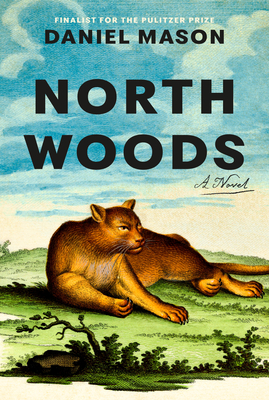
North Woods by Daniel Mason is one of my absolute favorite reads of the year – possibly even THE top read! That being said, no offense to the catamount, but I prefer the UK book cover.
The Kind Worth Killing by Peter Swanson has four different covers, one for both hardcover and paperback editions in the UK and US. Personally, the US paperback version speaks to me the most, but overall I kind of just feel “meh” about all of them.
There aren’t many things I find more intriguing than learning about the journey that begins with finding unidentified human remains, then studying them and investigating to discover who they belonged to, and ultimately, it is hoped, what happened to them.
I have an anthropology degree I’ve never used (changing career tracks and attending nursing school immediately after obtaining it), but have continued my lifelong interest in the subject, most especially with forensic anthropology. I read popular science books that are published on the topic. Oftentimes these are written by scientists in a very factual manner (like Sue Black’s survey of the human skeleton, including examples of specific cases she attended and what she was able to learn about a person from particular bones). This book takes a different approach. Written by a podcaster/writer/researcher/English professor, it describes the investigation into a specific Jane Doe’s identity with a narrative that includes the day to day process of planning and conducting the research.
I assume the decision was made to present it this way to make it more relatable, maybe? More like a story than strictly informational? However, for me, this made for a 50% absolutely fascinating read, and 50% boring drag. I honestly could not have cared less what hairstyle complemented Dr. Amy Michael’s cheekbones, or about the author’s skin care routine or keto diet; nor all the times the author ordered a Coke (Coke Zero twice at Mexican restaurants, Diet Coke at the trampoline park), the times she ordered a salad (including the time it came without dressing), all the times she flew Delta, and whether she then traveled to her hotel via rideshare or however else. I just wanted to get back to the matter at hand!
I also grew a little bored with the explanations of certain science topics with which I was already familiar, but of course the book couldn’t and shouldn’t just assume all readers are already brushed up on those. What I DID find super interesting was the specifics on the research and investigation done to identify this specific person, and several other Does brought up along the way. I also appreciated that the author includes in her writing the names of all the professionals who contributed, as well as some programs and nonprofits that readers might choose to look into more on their own.
Looking past the filler I did not care for, there was still plenty of great interest. Whether you’re a fan of true crime content or forensic anthropology and genealogy, you’ll probably find a lot to like in this book.
Sometimes, overwhelmed, she retreats into the forests of the past. She has come to think of them as her private Archive, herself an Archivist, and she has found that the only way to understand the world as something other than a tale of loss is to see it as a tale of change.
The gorgeous, lyrical prose of North Woods by Daniel Mason transports readers to a parcel of land and shows them the changes it undergoes over the course of centuries. A love poem for nature, it teaches of the land’s native flora and fauna, as well as how various outside seeds, spores, insects, and microorganisms make their way there and work changes upon it. Each vignette tells of the succession of people who find their way onto this land, live out their messy lives there, and leave their own indelible marks.
Interspersed with fictional primary accounts such as letters, songs, and speeches, we get peeks into the lives of several generations of people. There are the lovers who flee their Puritan Massachusetts colony to make a life for themselves in the woods, the woman and her child taken captive by native peoples, the escaped slave making her way north to Canada. There is the ex-soldier apple orchardist and his twin daughters, and the landscape painter harboring an illicit love in his breast (“Nature doing her best to draw me into her cloak of melancholy, but I have the memory of my friend”). The robber baron with dreams of a hunting lodge, the vulnerable woman who accidentally invites danger to her home, and the schizophrenic whose hallucinations might be more than they seem (“Diabolical tools, a ruptured earth, words which froze in winter; were it a poem, not a disease, she might find it fascinating”). The amateur historian looking to dig up the past. And then there is the wildlife that makes the place its home in between the people. Sprinkled amongst the stories are love, lust, murder, art, and more.
This literary novel is not for readers looking for fast-paced plot driven stories. I had to take my time reading each line, allowing myself to fully absorb the beauty of it all. And I loved every minute of it!
”What…What are you doing?” she asked groggily. “Just seeing what it’s like to love you when I can’t see you.”
Shark Heart by Emily Habeck is a bittersweet story about life and love.
The world in this book is identical to our own except for one key difference: some people develop a disease that causes them to mutate into a different species. When married couple Wren and Lewis learn that the latter is transforming into a shark, it’s analogous to learning one’s partner has a terminal illness. Or when a relationship undergoes anything unexpected that completely changes how things were “supposed” to be.
Wren is practical, Lewis is a dreamer. When they exchange their wedding vows, they could have never imagined how different their lives would look after only a year of marriage.
In their innocence, they failed to grasp the labor of losing a partner, how the tasks of simple existence would become logistical feats and one person’s burden.
This is a character-driven literary novel told in parts (three, I think), with some “chapters” being only a sentence or two long. In addition to the story of Wren and Lewis, the middle section tells about Wren’s mother, Angela, getting pregnant as a teenager and then trying her best to parent after receiving a life-changing diagnosis of her own. The book is chock full of love and grief, and learning to love with both. It is lovely and sad, although it does end on a hopeful note.
Wren no longer sees life as a long, linear ladder with a beginning, middle, and end. Instead, she considers how life is like a spiraling trail up a mountain. Each circling lap represents a learning cycle, the same lesson at a slightly higher elevation. Wren realizes she likes to rest as much as she likes to climb. She begins to enjoy the view.
What the River Knows by Isabel Ibañez is adventurous historical fiction with a dollop of magical realism following Inez Olivera, a spirited young woman from Argentina, and Whitford Hayes (Whit), a disillusioned British ex-soldier who lost his way. 90% of the book is written from Inez’s POV, although several chapters have a short end cap from Whit.
In the late nineteenth century, Inez’s parents are presumed dead after going missing in the deserts of Egypt, and she is determined to discover what exactly happened. She joins her archaeologist uncle in Cairo, where she meets Whit, the man hired to help Tio Ricardo, and also to do his dirty work. Why does an archaeologist have need of someone like this? There is seedy business going on in the field, where there are those who would steal and sell priceless historical artifacts for personal profit, rather than preserve it for its significance to cultural heritage. This makes for downright dangerous business, and Inez’s tio immediately tries to send her back home to Argentina.
He tries and he fails (see the description of Inez, “a spirited young woman”). After repeating this cycle a few times, Inez successfully finds herself part of the team searching for the tomb of none other than Cleopatra. She is thrilled at the idea of assisting with such an endeavor, but her main goal is always to learn the truth of what happened to her parents.
This story is chock full of mystery, adventure, history, and magic. There is a prominent romance element as well. It was really a good deal of fun! The one thing I found irritating was that an easily avoided lack of communication was used to develop the majority of tension in the plot. Inez asks for information over and over again, and if people JUST TOLD HER THE TRUTH, so many of the things that go wrong in this story would have been avoided. This is always pretty frustrating to me as a reader!
I’m not sure why this is billed as Young Adult, as the main character is 19, and there are no particular themes that stand out to me as YA.
Also, BE FOREWARNED, it seems this is planned to be the first book in a series, because it does “end” with some pretty major cliffhangers, including one big twist,
The comparison of this story to The Mummy is apt (I couldn’t speak to Death on the Nile.) I greatly enjoyed the Egyptian setting, although couldn’t say how much of the way it was depicted here is accurate (possibly very, it seems well researched, I just don’t know much about how it felt to visit Cairo in 1844). I really liked both Inez and Whit, so the romance piece worked for me as well. This is my first time reading a work by this author, and I was not disappointed.
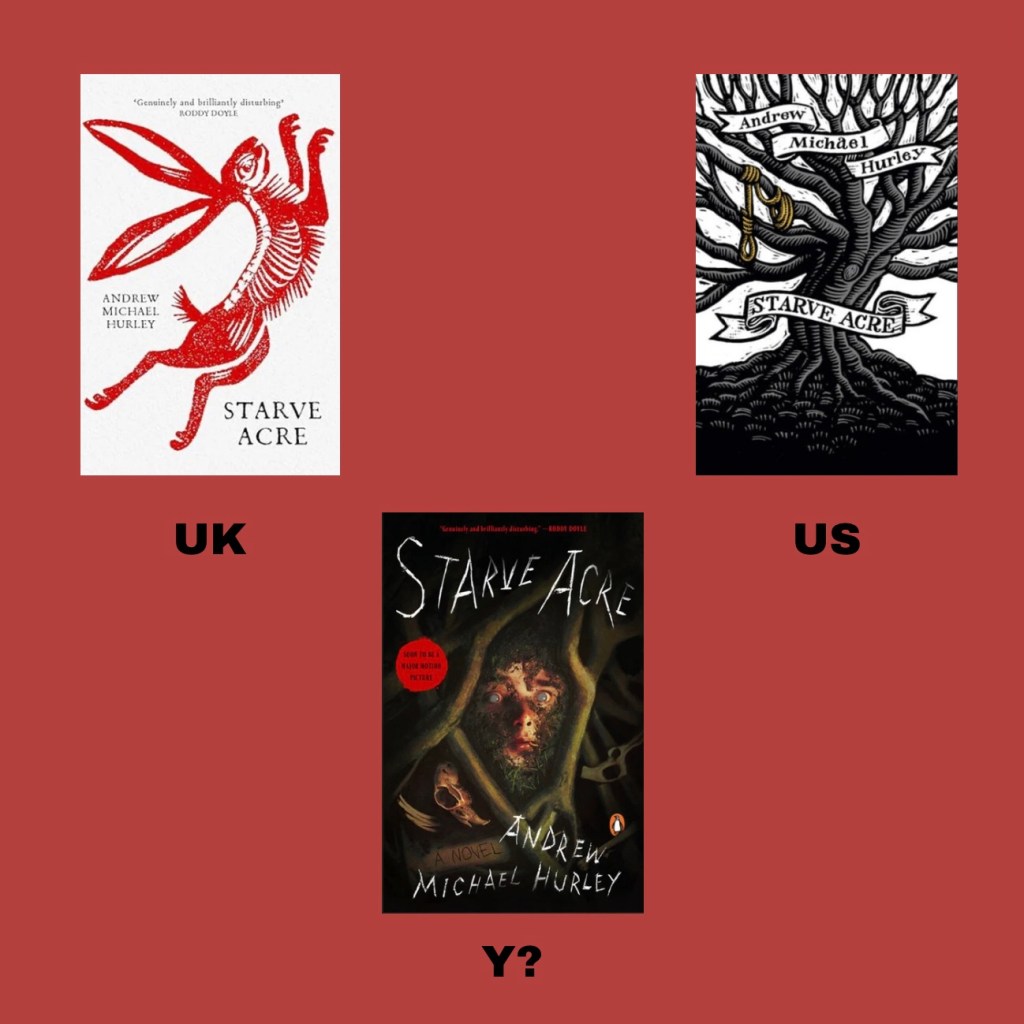
I recently read Starve Acre by Andrew Michael Hurley, a book that had been on my TBR for some time. Apparently it’s being turned into a major motion picture, and the edition of the book I received when I ordered it earlier this year is the “media tie-in” version. I personally like both the original UK and US editions so much better than the one I wound up with! But this gave me an idea for a blog post, which is to say, let’s have a look at the UK and US editions of the covers of some of the books I’ve read this month.
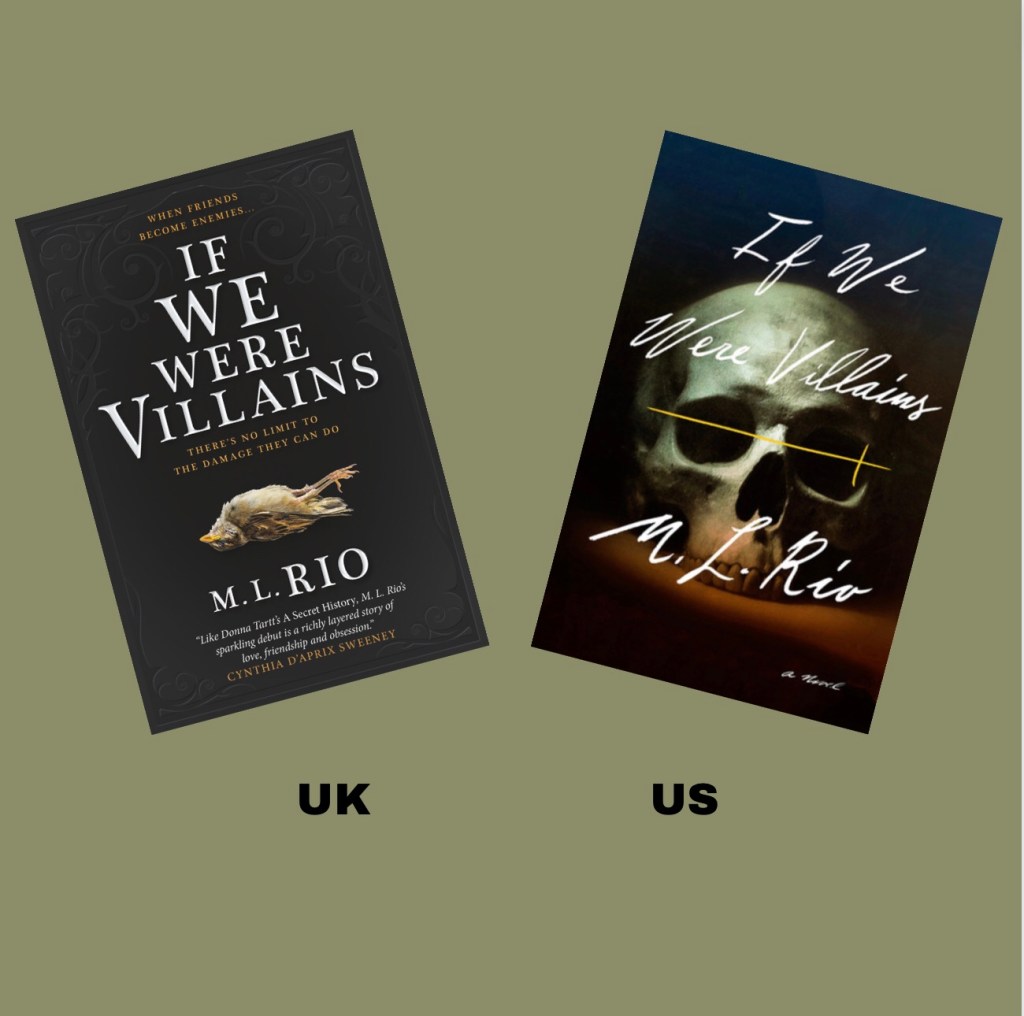
If We Were Villains by M. L. Rio. I have to vote for the US cover here. Although, despite the fact that, as I said, I have had my eye on this book for a long time, never before did I notice the yellow lines over the middle of the 💀. Both the skull image and the font of the text appeal more to me in this version, as well as it’s cleaner, less cluttered look.
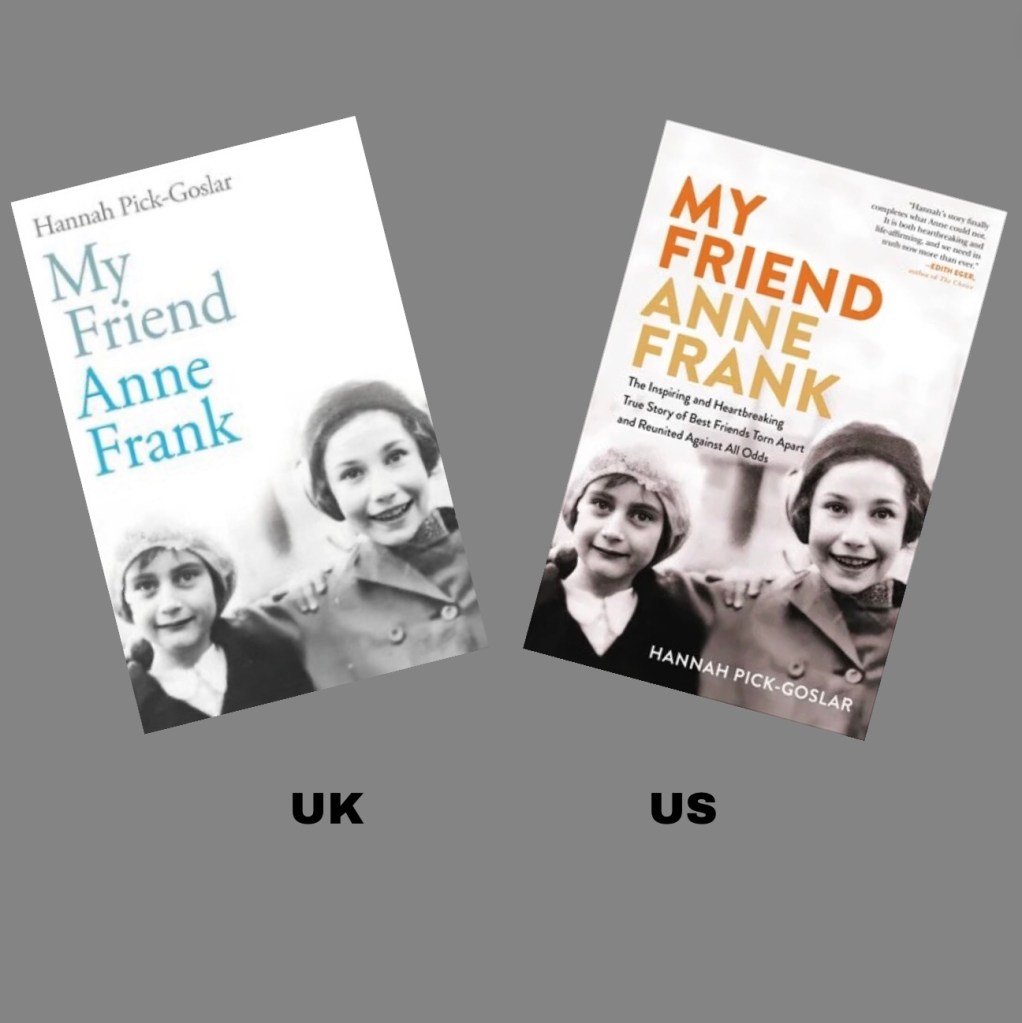
My Friend Anne Frank by Hannah Pick-Goslar (is “The Inspiring and Heartbreaking True Story of Best Friends Torn Apart and Reunited Against All Odds” the official subtitle for the US edition, but not the UK one?) Obviously both covers utilized the same original photo, but again I find the US version more eye-catching, with the image less washed out and the bolder color choice.
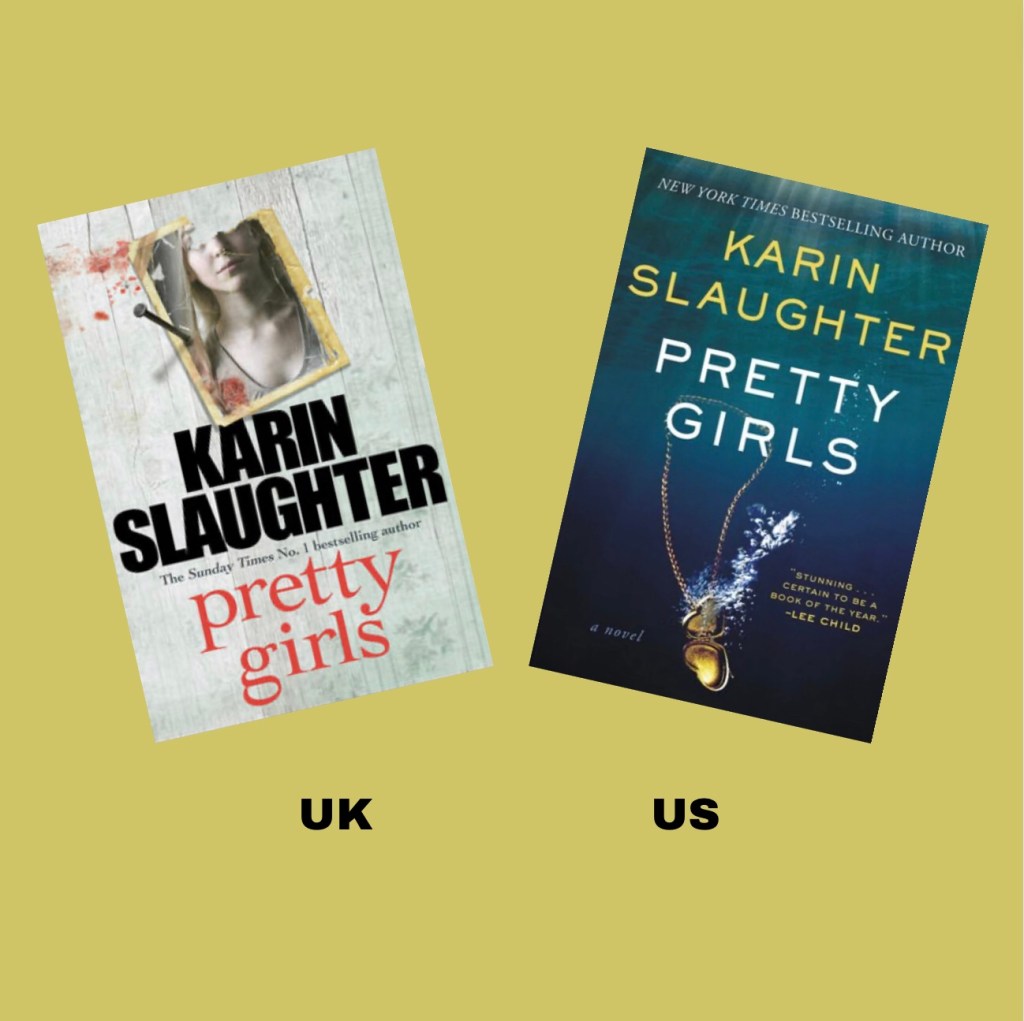
Pretty Girls by Karin Slaughter. Hmm, these might be a tie for me. Blue and green are my two favorite colors, and so the US version has that going for it. But the smears of blood on the UK cover really are a nice touch. A nice touch derived, as it is, from a very bad touch (be sure to look up content warnings for this book if there are certain topics you are especially sensitive to!)
Whale Fall by Elizabeth O’Conner has a publication date set for May 7, 2024, but I was able to read an ARC. Although the color (in all that empty space) of the UK edition is nice, the US is a clear winner for me again here. I just really dig the font and the fact that the text looks like it was painted by brush strokes. Additionally, it conveys a better sense of the harsh nature of the sea that is an integral part of the story.
So there you have it. Was I surprised that this was almost a clean sweep for the US? Yes! Is this a fluke for my October reading only? I don’t know—maybe I’ll do this again for my November reads, and we’ll see!
By the by, here are the original cover editions that got me on this kick.
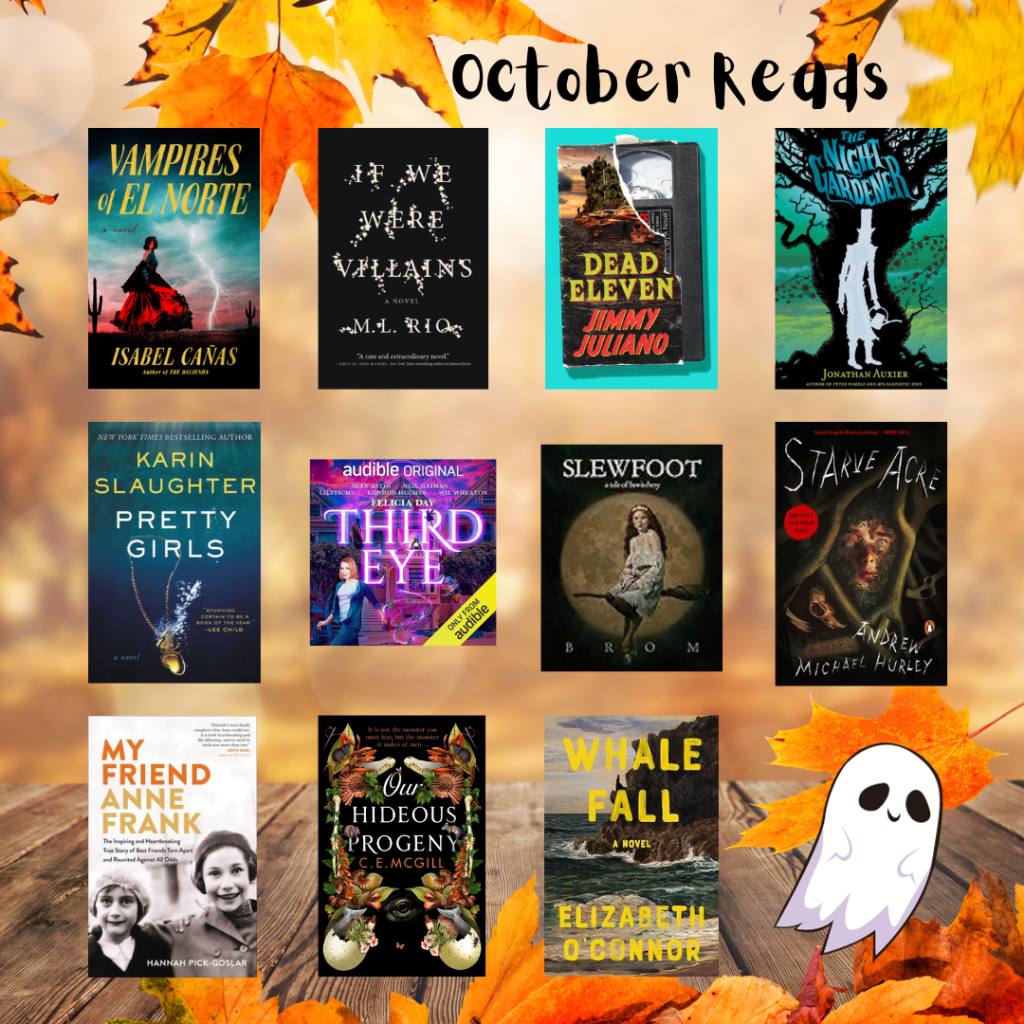
Here is a final graphic showing all of the books I fit into the month. All were ⭐️ ⭐️ ⭐️ or above for me, not a stinker in the bunch!
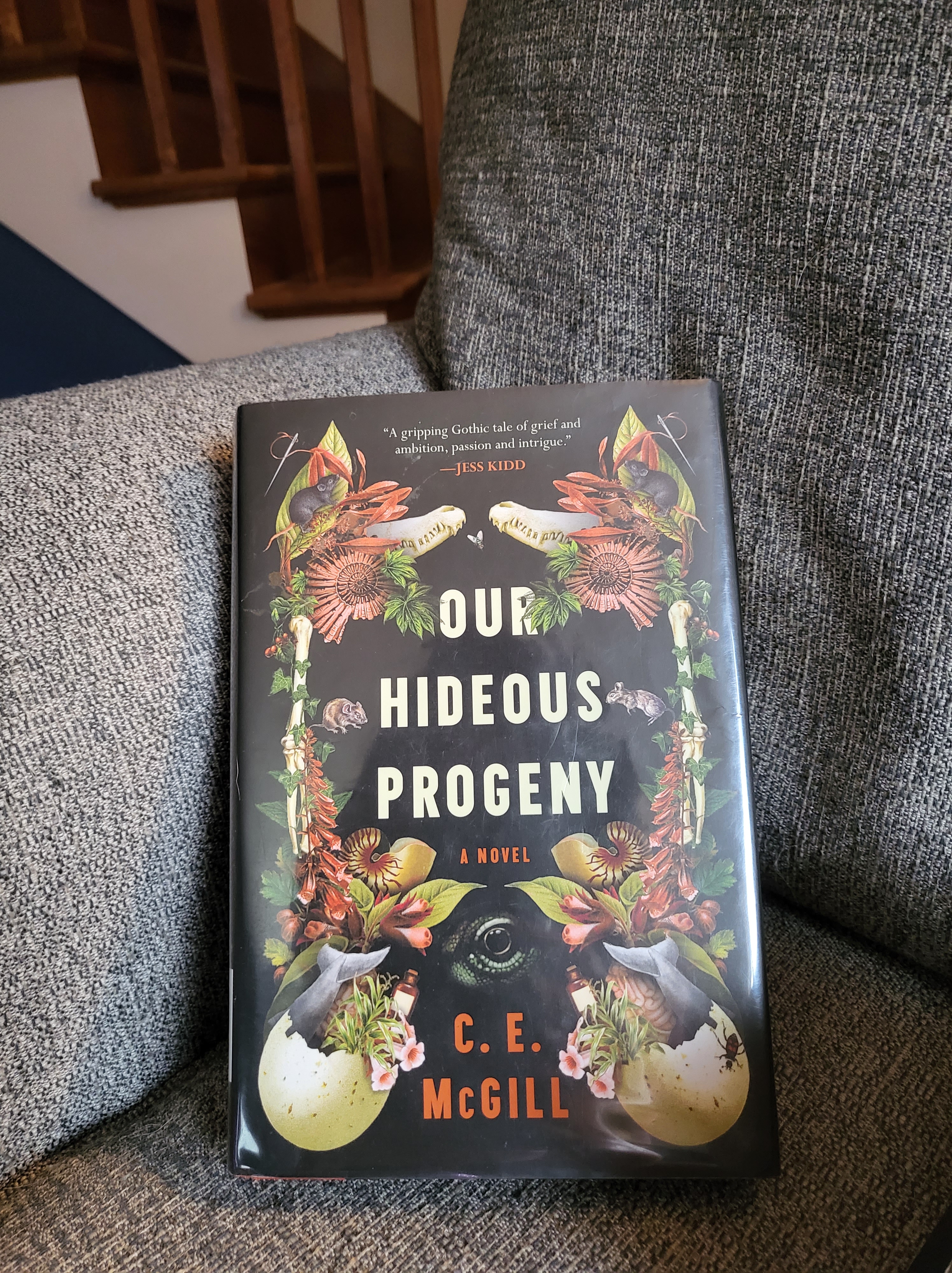
Likely capping off my spooky season reading, this is OUR HIDEOUS PROGENY by C. E. McGill.
But I have never been a sensible soul. I have only ever, always, been angry.
In the mid-nineteenth century, Mary and her husband are scientists with particular interests in fossils and prehistoric creatures. As a woman (and a bastard), Mary has to work twice as hard to even attempt to be acknowledged in the field. Through poor decisions on her husband’s part, they find themselves at risk of losing the respect of the scientific community, as well as in great financial debt.
That is when Mary finds the notes of her great uncle, Victor Frankenstein.
“One cannot afford principles, if one is trying not to drown.”
According to the author’s note, they first pitched this story idea to their academic advisor as, “Frankenstein, but, like, with dinosaurs?” And I enjoyed it very much! It’s Gothic, concerns itself with academics in Britain’s scientific community in the Victorian era, deals with grief as well as caring over credibility, and is full of feminist rage. Although she is married to a man, Mary also develops romantic attachments to women. And, oh, how I adored that Creature! My only complaint would be that the pacing seemed a bit off, with things dragging a bit in the middle. Overall, I loved it!
It will not have been for nothing, I wanted to cry, no matter what happens-don’t you see? Don’t you see? Because it is already worth something. It is worth something, even in the dark. Even if no one else ever loves it but me.
Do you like fun things? If so, then do I have a treat for you!
Third Eye by Queen of the Geeks Felicia Day is an auditory experience not to be missed. It’s an Audible Original about seven hours in length, and it is a full on audio production, complete with sound effects, music, and a full cast. We’re talking Neil Gaiman as the narrator, plus Sean Astin, Wil Wheaton, London Hughes, and many, many more—including a Weird Al cameo!
The story subverts the Chosen One trope, the main character having failed at defeating the Great Evil as the oracle’s prophecy foretold. It features mages, vampires, faeries, a half-demon, and lots and lots of laughs. If any of this sounds like your jam, what are you doing still reading this blog post? Go listen!
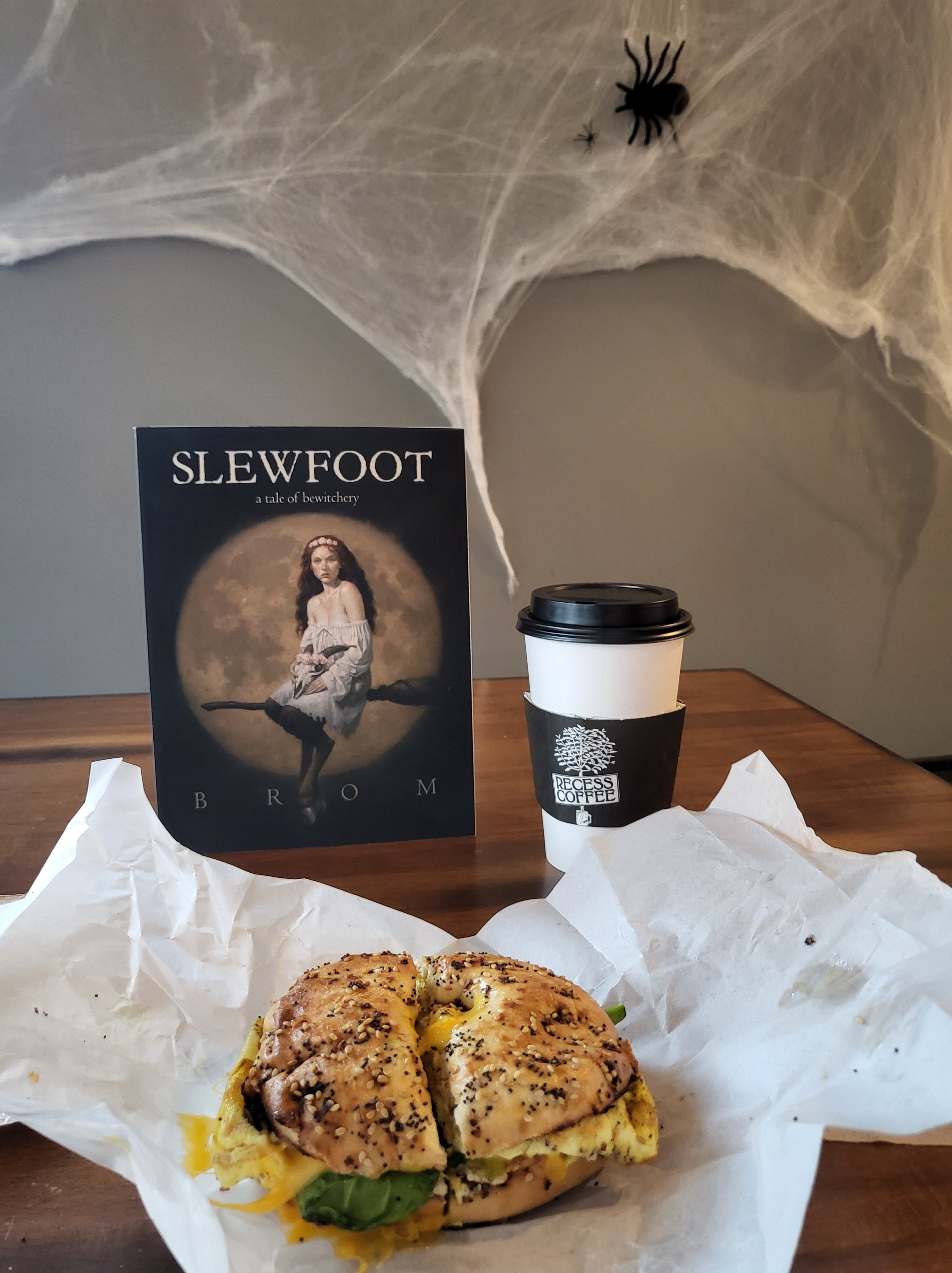
Slewfoot: A Tale of Bewitchery by Brom was a highly appropriate addition to my October reading.
Newly widowed in 17th century New England, Abitha attempts to keep the farm running by herself, something the members of the Puritan community she lives in are not entirely sure is what a Godly woman would do. If only they knew about the things her mother, a “cunning woman”, taught her, they would be even more horrified.
Nearby, something has awoken in the darkest of shadows. He can’t recall who, or what, he is. Is he a devil, as some would have him believe? But then why does he feel such joy using his powers for healing and nurturing?
Abitha and Slewfoot become friends who help one another find their way, even when that way includes bloody retribution.
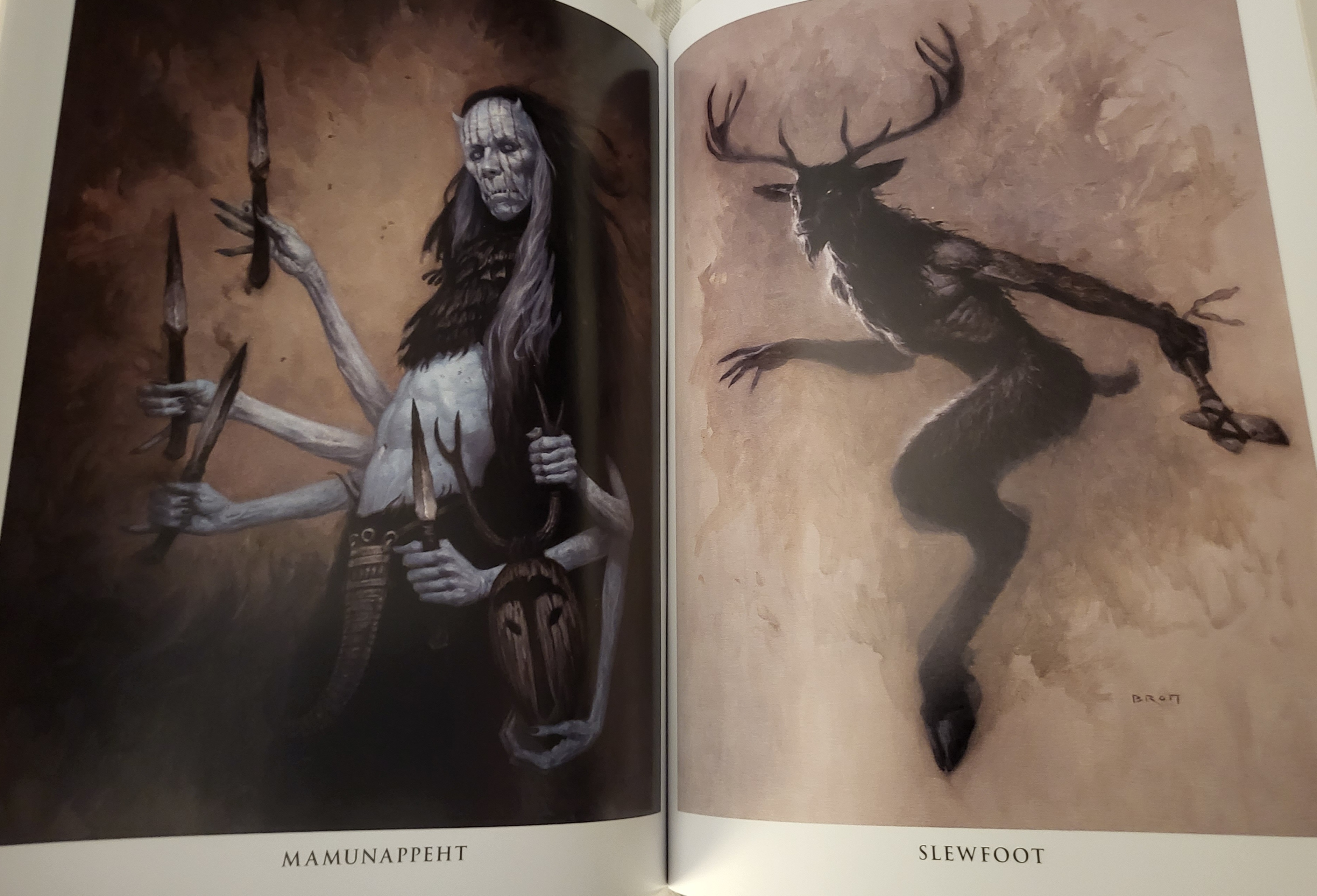
This book, which includes several pages of the author’s own artwork, is a perfect choice for spooky season reading!






 Jessica Crawford