
Book Review: LAY THEM TO REST by Laurah Norton

There aren’t many things I find more intriguing than learning about the journey that begins with finding unidentified human remains, then studying them and investigating to discover who they belonged to, and ultimately, it is hoped, what happened to them.

I have an anthropology degree I’ve never used (changing career tracks and attending nursing school immediately after obtaining it), but have continued my lifelong interest in the subject, most especially with forensic anthropology. I read popular science books that are published on the topic. Oftentimes these are written by scientists in a very factual manner (like Sue Black’s survey of the human skeleton, including examples of specific cases she attended and what she was able to learn about a person from particular bones). This book takes a different approach. Written by a podcaster/writer/researcher/English professor, it describes the investigation into a specific Jane Doe’s identity with a narrative that includes the day to day process of planning and conducting the research.

I assume the decision was made to present it this way to make it more relatable, maybe? More like a story than strictly informational? However, for me, this made for a 50% absolutely fascinating read, and 50% boring drag. I honestly could not have cared less what hairstyle complemented Dr. Amy Michael’s cheekbones, or about the author’s skin care routine or keto diet; nor all the times the author ordered a Coke (Coke Zero twice at Mexican restaurants, Diet Coke at the trampoline park), the times she ordered a salad (including the time it came without dressing), all the times she flew Delta, and whether she then traveled to her hotel via rideshare or however else. I just wanted to get back to the matter at hand!

I also grew a little bored with the explanations of certain science topics with which I was already familiar, but of course the book couldn’t and shouldn’t just assume all readers are already brushed up on those. What I DID find super interesting was the specifics on the research and investigation done to identify this specific person, and several other Does brought up along the way. I also appreciated that the author includes in her writing the names of all the professionals who contributed, as well as some programs and nonprofits that readers might choose to look into more on their own.

Looking past the filler I did not care for, there was still plenty of great interest. Whether you’re a fan of true crime content or forensic anthropology and genealogy, you’ll probably find a lot to like in this book.
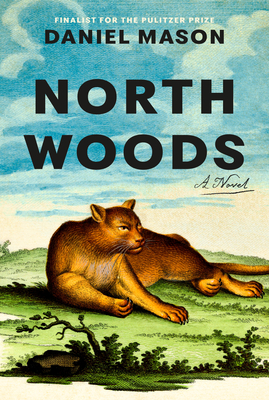
Book Review: NORTH WOODS by Daniel Mason

Sometimes, overwhelmed, she retreats into the forests of the past. She has come to think of them as her private Archive, herself an Archivist, and she has found that the only way to understand the world as something other than a tale of loss is to see it as a tale of change.

The gorgeous, lyrical prose of North Woods by Daniel Mason transports readers to a parcel of land and shows them the changes it undergoes over the course of centuries. A love poem for nature, it teaches of the land’s native flora and fauna, as well as how various outside seeds, spores, insects, and microorganisms make their way there and work changes upon it. Each vignette tells of the succession of people who find their way onto this land, live out their messy lives there, and leave their own indelible marks.

Interspersed with fictional primary accounts such as letters, songs, and speeches, we get peeks into the lives of several generations of people. There are the lovers who flee their Puritan Massachusetts colony to make a life for themselves in the woods, the woman and her child taken captive by native peoples, the escaped slave making her way north to Canada. There is the ex-soldier apple orchardist and his twin daughters, and the landscape painter harboring an illicit love in his breast (“Nature doing her best to draw me into her cloak of melancholy, but I have the memory of my friend”). The robber baron with dreams of a hunting lodge, the vulnerable woman who accidentally invites danger to her home, and the schizophrenic whose hallucinations might be more than they seem (“Diabolical tools, a ruptured earth, words which froze in winter; were it a poem, not a disease, she might find it fascinating”). The amateur historian looking to dig up the past. And then there is the wildlife that makes the place its home in between the people. Sprinkled amongst the stories are love, lust, murder, art, and more.

This literary novel is not for readers looking for fast-paced plot driven stories. I had to take my time reading each line, allowing myself to fully absorb the beauty of it all. And I loved every minute of it!

Bookshop

Goodreads

Book Review: SHARK HEART: A LOVE STORY by Emily Habeck

”What…What are you doing?” she asked groggily. “Just seeing what it’s like to love you when I can’t see you.”

Shark Heart by Emily Habeck is a bittersweet story about life and love.

The world in this book is identical to our own except for one key difference: some people develop a disease that causes them to mutate into a different species. When married couple Wren and Lewis learn that the latter is transforming into a shark, it’s analogous to learning one’s partner has a terminal illness. Or when a relationship undergoes anything unexpected that completely changes how things were “supposed” to be.

Wren is practical, Lewis is a dreamer. When they exchange their wedding vows, they could have never imagined how different their lives would look after only a year of marriage.

In their innocence, they failed to grasp the labor of losing a partner, how the tasks of simple existence would become logistical feats and one person’s burden.

This is a character-driven literary novel told in parts (three, I think), with some “chapters” being only a sentence or two long. In addition to the story of Wren and Lewis, the middle section tells about Wren’s mother, Angela, getting pregnant as a teenager and then trying her best to parent after receiving a life-changing diagnosis of her own. The book is chock full of love and grief, and learning to love with both. It is lovely and sad, although it does end on a hopeful note.

Wren no longer sees life as a long, linear ladder with a beginning, middle, and end. Instead, she considers how life is like a spiraling trail up a mountain. Each circling lap represents a learning cycle, the same lesson at a slightly higher elevation. Wren realizes she likes to rest as much as she likes to climb. She begins to enjoy the view.